
Last updated November 21, 2026
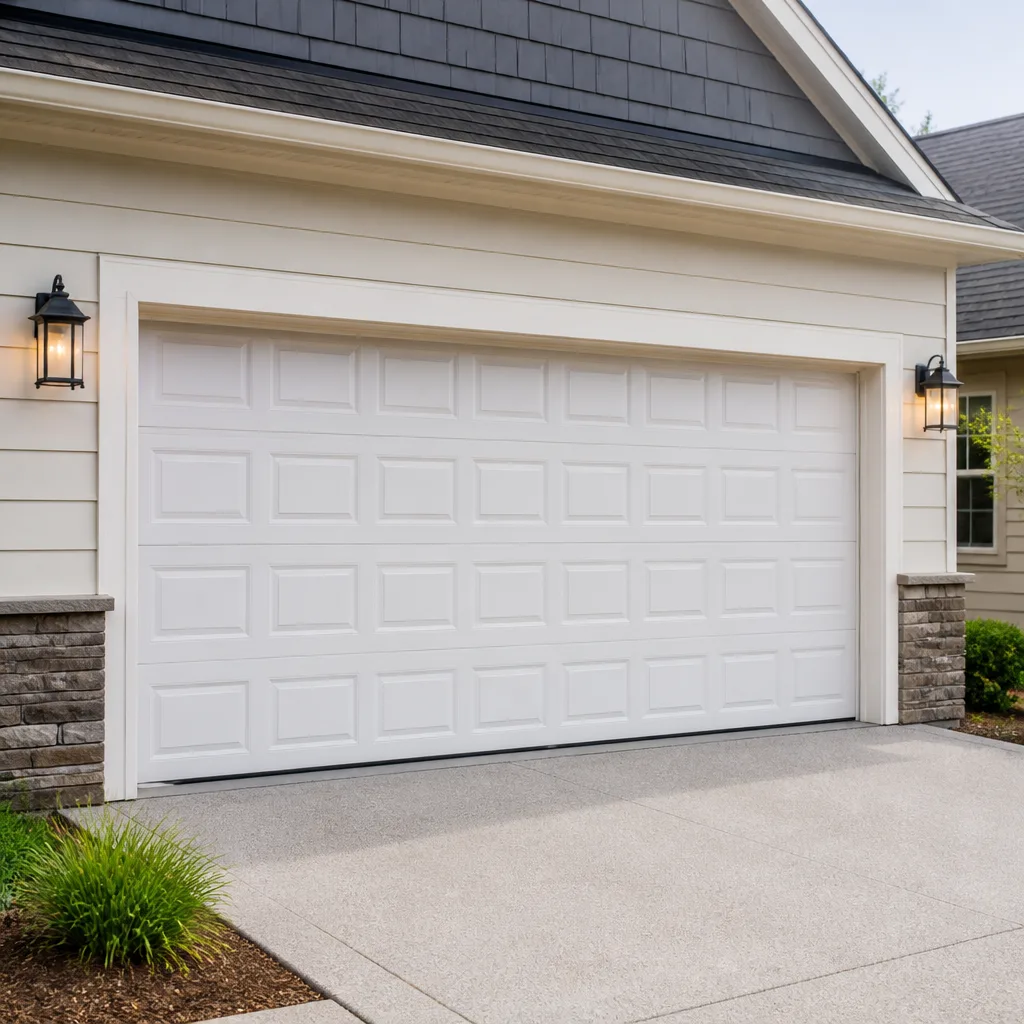 Raised-panel steel
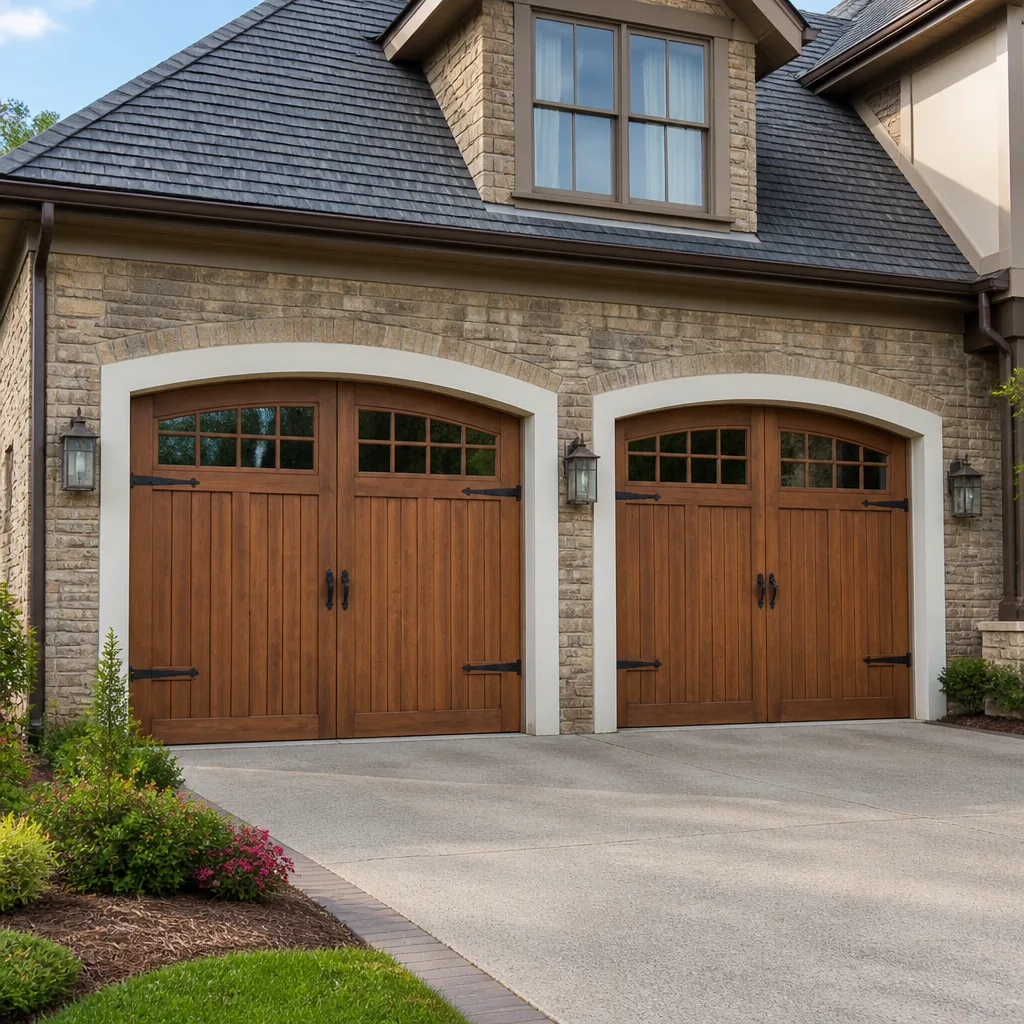 Carriage house
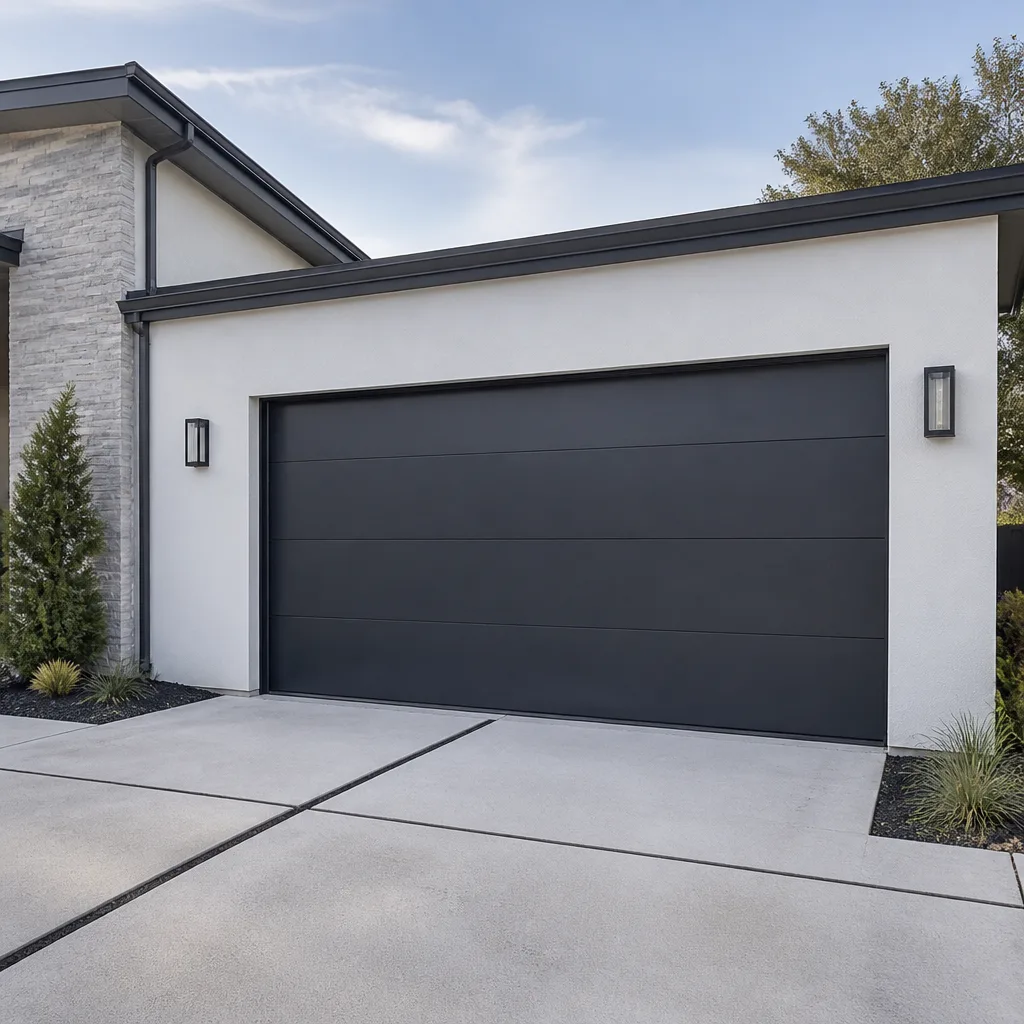 Modern flush
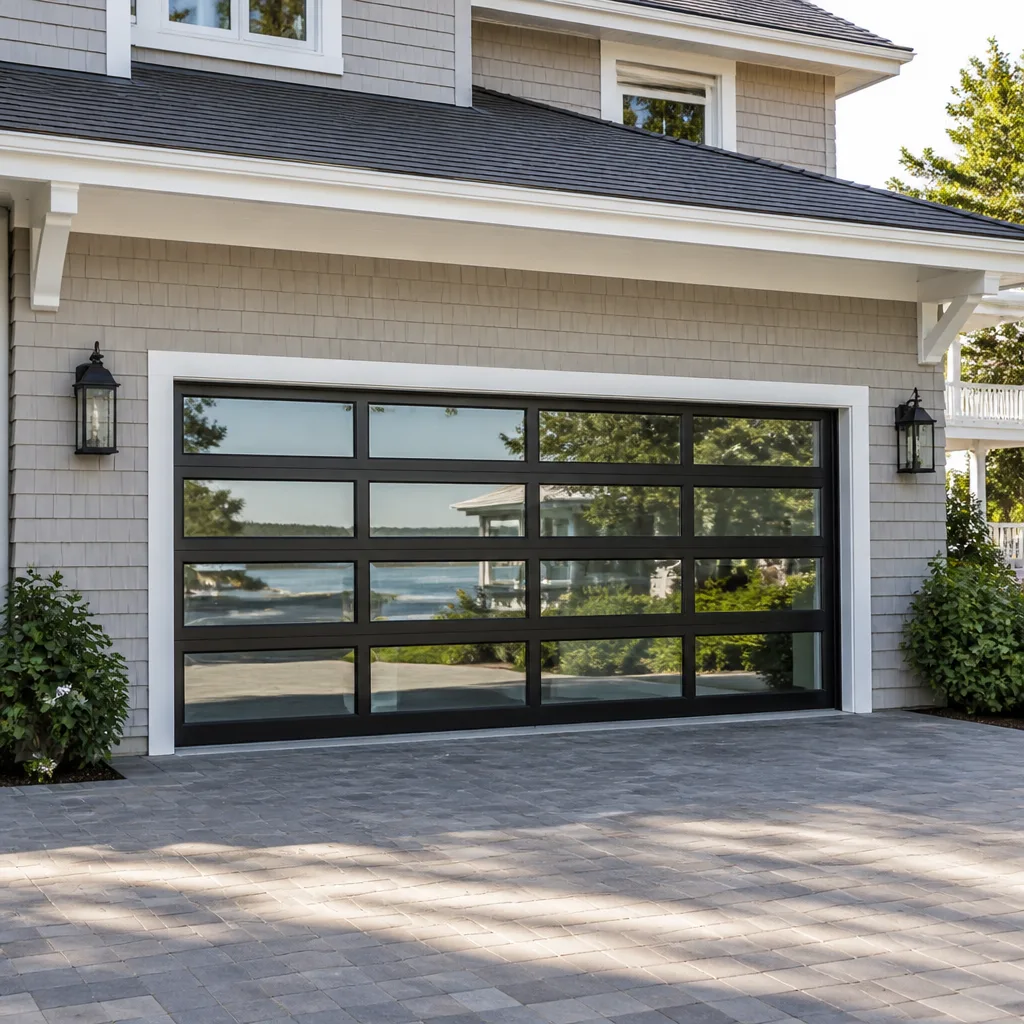 Full-view glass
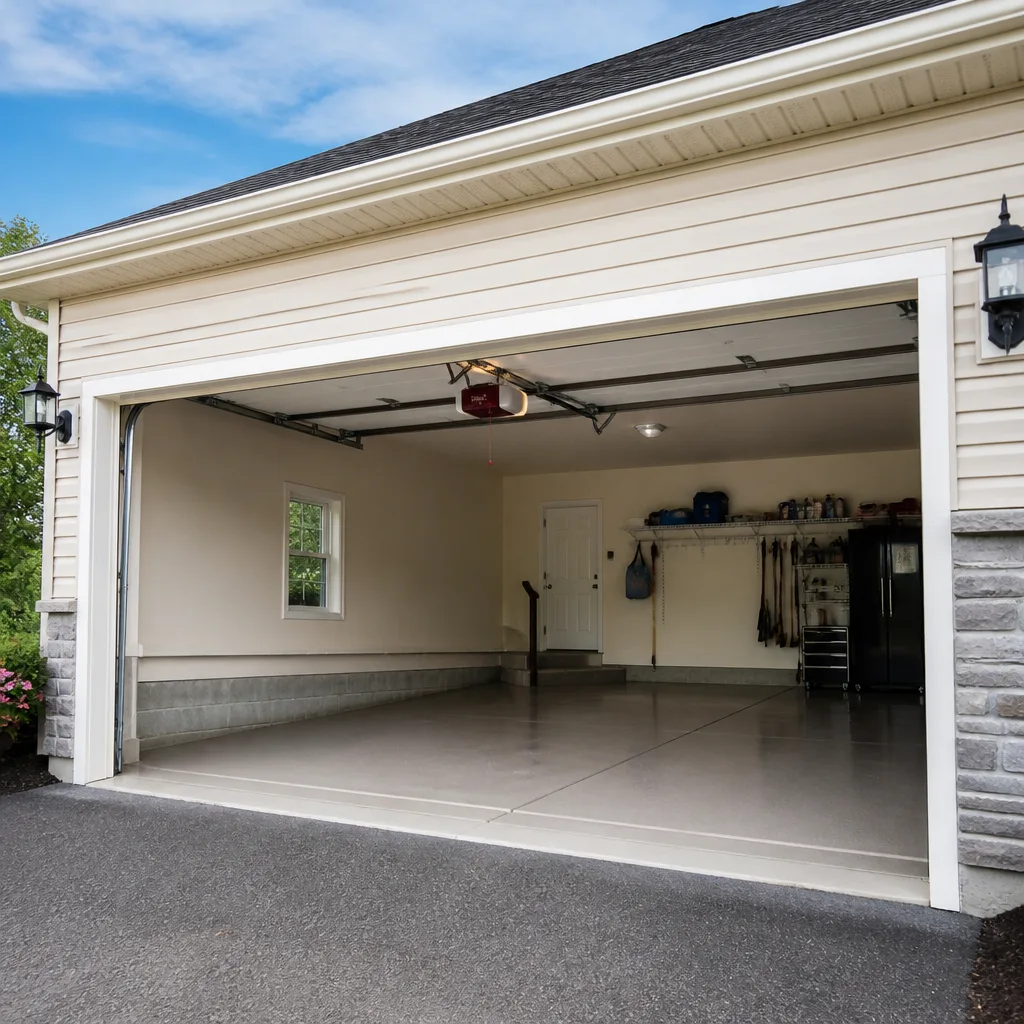 LiftMaster openers
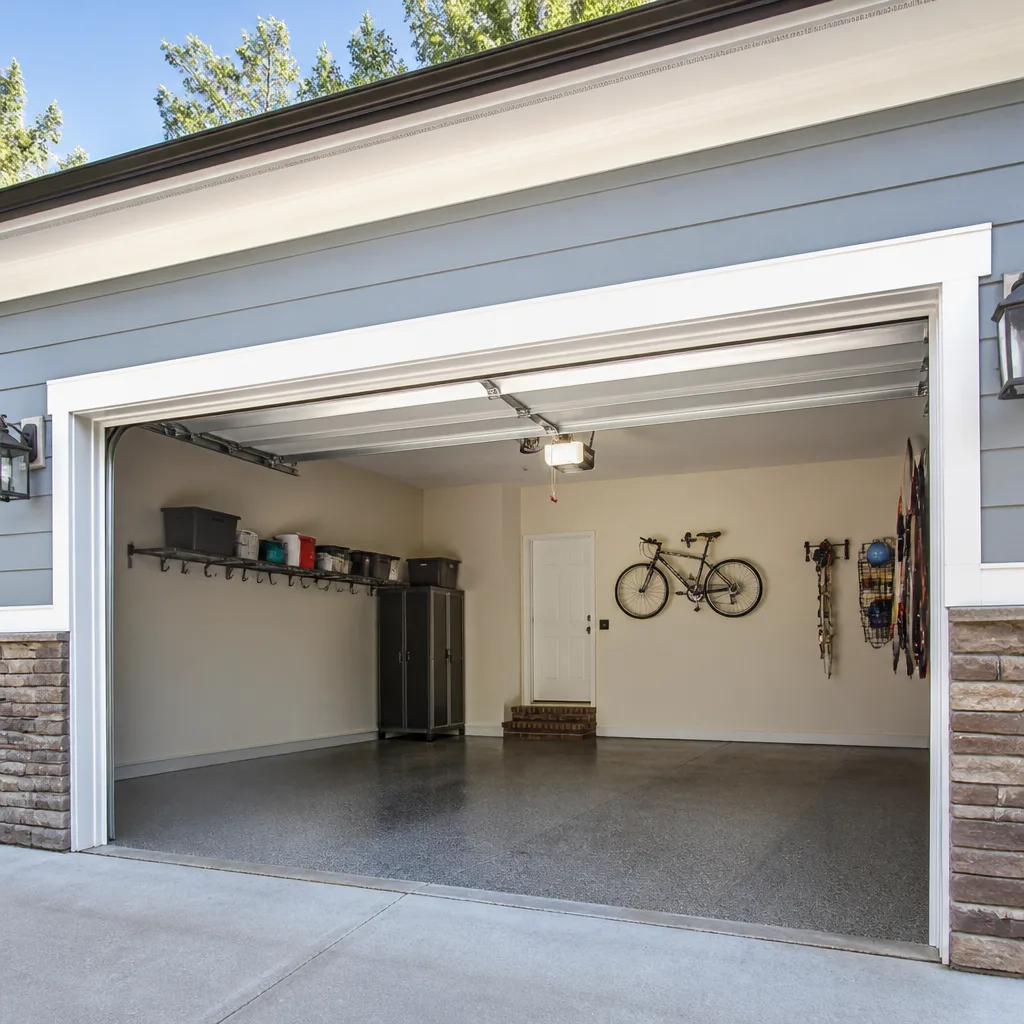 Chamberlain openers
Full 25-point door and opener safety check with every visit - springs, cables, rollers, tracks, and your LiftMaster or Chamberlain opener included
You get a price before we start. It does not change when the pro arrives.
Get your free estimateGarage Door Emergency Preparedness Guide for Apopka Homes
Most garage door emergencies we get called to in Apopka don’t happen because a door is old or cheap. They happen because nobody practiced the one thing that would have made the failure manageable: getting the door open by hand. During Hurricane Ian’s outer bands, the outages that rolled across Orange County didn’t damage most of the doors we saw. They stranded homeowners on the wrong side of them, because the opener had no power and nobody knew where the release cord was, or what to pull, or what to do when it snapped off in their hand. A garage door that won’t move during a storm, a power cut or a Monday-morning deadline is a solvable problem. A garage door you don’t understand is a different situation entirely. This guide walks through the releases, the locks, the first ten minutes after a spring lets go, and the pre-storm check that takes under fifteen minutes. Everything here applies to the doors people actually own in Apopka: Clopay and Amarr panels on newer builds, Chamberlain and Genie openers on homes going back decades, and everything in between. Read it once now, while the power’s on.
Quick Answer
A garage door emergency in Apopka is manageable if you know three things before it happens: where your manual release cord is and how it works, how to secure the door from the inside when the opener fails, and what to check in the first ten minutes after a spring breaks. The single most important rule is that you never try to lift a door with a broken spring by hand. Once those three things are in place, most storm-season and power-outage failures go from an emergency to an inconvenience.
Styles & brands we work with
- Raised-panel steel
- Carriage house
- Modern flush
- Full-view glass
- LiftMaster openers
- Chamberlain openers
Table of Contents
- How to Manually Release Your Garage Door Opener
- What To Do When the Release Cord Is Missing or Stuck
- Locking Your Door From the Inside Before a Storm
- The First 10 Minutes After a Spring Breaks
- Why Springs Are the One Part You Leave Alone
- The Information to Have Ready Before You Call
- The Under-15-Minute Pre-Storm Checklist
- The Four Post-Storm Failure Modes to Expect in Apopka
How to Manually Release Your Garage Door Opener
Every residential opener made in the last forty years has a manual release, and almost every homeowner has never used it. That’s the gap worth closing first. The release disconnects the opener’s carriage from the door so you can move the door by hand. On most openers it’s a cord with a T-handle hanging from the trolley that travels along the rail. Pulling it down and toward the door (never toward the motor) disengages the carriage. The door should then move freely by hand, slowly and under control.
Here’s the sequence to rehearse now, while there’s still power:
- Check the door is fully closed and the opener light is off, so nothing is mid-travel.
- Stand clear of the door’s path and locate the release cord hanging from the trolley. In Apopka garages it’s often hidden behind stored boxes or a surfboard rack.
- Pull the handle straight down and slightly toward the door. You should feel the carriage release.
- Lift the door slowly by hand about a foot, then lower it back. If it fights you or feels unusually heavy, stop and lower it. That’s a spring problem, not a release problem.
- Re-engage the carriage by lifting the door by hand until the trolley clicks back into the carriage, or by running the opener once.
The brand matters less than people expect. A Chamberlain and a Genie use the same basic trolley-and-cord arrangement, and the same goes for the Clopay and Amarr doors sitting under them. If your opener is one of those and the cord pulls cleanly, you’ll get your car out. If it doesn’t, that’s our second section.
What To Do When the Release Cord Is Missing or Stuck
A stuck or missing release cord turns a five-second job into a stuck car. We see it in Apopka garages constantly: the cord has frayed and come off the trolley, or a previous owner zip-tied it out of reach, or the carriage itself has seized on the rail after years of heat and dust. When the cord won’t pull, don’t yank harder. The trolley mechanism is plastic and metal under tension, and forcing it can crack the carriage or bend the rail.
What actually works depends on what you’re facing:
- Cord present but stiff: the carriage may be stuck on the rail rather than the release being broken. Try lifting the door an inch by hand first, then pull the cord again.
- Cord snapped off at the trolley: on most openers there’s a short metal lever on the carriage itself. Reaching up and pulling that lever in the same direction as the cord does the same job.
- No lever, no cord: the opener’s manual release has failed. That’s a repair, not a workaround. Don’t climb a ladder and start dismantling the trolley. Call us and we’ll get a technician out.
- Door won’t budge even with the release pulled: this usually means the springs or cables are involved, and the next section applies.
One Apopka-specific note: garages here get hot. Heat ages the plastic carriage faster than the rest of the opener, so a Chamberlain or Genie that’s still running fine can have a brittle, seized carriage. If your release hasn’t been used in years, test it this week, not during a storm. If it’s seized and you can’t reliably get in and out, our garage door opener repair team can look at it before the next system comes through.
Locking Your Door From the Inside Before a Storm
During a hurricane warning, most of the attention goes to windows and shutters. The garage door is the largest opening on most Apopka homes, and it’s also the one an opener can’t secure if the power fails. When the opener loses power, the door rides on its springs and tracks only. Wind pressure on a wide panel, especially a single-skin builder door, can push the door past its stops. Locking it from the inside adds physical resistance the opener was never designed to provide.
How to secure it:
- Close the door fully and wait for the opener light to go off.
- Engage the manual lock bar if your door has one. Many older doors in Apopka have a sliding barrel bolt that drops into a hole in the vertical track on each side.
- If the door doesn’t have a lock bar, slide a sturdy bar or a length of lumber across the inside of the door at about knee height and brace it against the tracks. The idea is to stop the door from flexing and pushing inward, not to lock the opener.
- Keep the door’s opener switch off so nobody opens it by accident while it’s braced.
An important caution: never barricade a door you might need to get out through in a hurry, and if your only exit from the house is through the garage, don’t lock it in a way that traps you. In Apopka, the safest plan respects your exits first. If your door doesn’t have a proper lock bar, that’s a small upgrade worth having installed before storm season. Ask us about it when we’re out for a garage door repair.
The First 10 Minutes After a Spring Breaks
The sound is unmistakable: a sharp crack, then the door slamming down or hanging lopsided. That’s a torsion or extension spring giving out, and it’s the one garage door failure where your first ten minutes really matter. Here’s what to do and what not to do, in order.
- Stop. Don’t touch the door. Don’t try to raise or lower it, even if the car is stuck inside. A door with a failed spring is held up by the other spring, the cables and the opener’s carriage, and any of those can let go under extra load.
- Clear the area. Move children, pets and anything stored near the tracks away from the door.
- Leave the opener alone. Don’t run the motor. If the door is stuck partway up, the opener may grind and burn out trying to move a door it can’t lift.
- Identify which spring broke. Look up at the horizontal shaft above the door for a torsion spring, or along the sides for extension springs. Don’t touch either one. Just note whether it’s a single spring or a pair, since a pair is almost always replaced together.
- Take a few photos of the broken spring, the door and the opener with your phone. It’s faster than trying to describe it on a call.
- Call. Call (844) 558-0733. We answer 24/7, and fast dispatch runs from 7am to 7pm, Sunday through Friday.
The one thing that makes this a true emergency is the car. If your only vehicle is trapped behind a broken-spring door and you need it, say so when you call. Spring repair in Apopka is a dedicated service, and we do it in-house rather than passing it to another contractor, because it’s a job that needs the right tools and training, not a general handyman. Our technicians have up to 8 years of experience handling exactly this.
Why Springs Are the One Part You Leave Alone
Garage door springs hold the entire weight of the door, and they’re stored under tension whether the door is up or down. When a torsion spring breaks, it releases that energy at once. The thin steel cables that run alongside it can whip loose. That’s why spring repair is the one job in the entire garage door trade we tell homeowners to leave to a technician, and why we’re direct about it rather than just offering to “have a look.”
A few specific safety points:
- Never cut, unwind, loosen or try to remove a spring, cable or the bottom bracket they attach to. The bottom bracket in particular is under the same load as the spring.
- Never use a garage door with a broken or visibly stretched spring, even if it seems to open. The opener is now lifting the door’s full weight, and the door can drop without warning.
- If the door is stuck open, prop it safely from below or leave it and keep people away. Don’t try to lower it by hand.
- Wire or vice grips “holding” a door up is a temporary hazard, not a fix.
Springs are also where a lot of companies quietly step back, and some pass the job to a sub. We handle spring repair directly, both springs and the cables that go with them, so there’s one company responsible for the job from diagnosis through to the test cycle. If a repair reveals the door is beyond saving, we’ll tell you honestly rather than sell you a spring on a door that needs a garage door installation. And if it can be fixed, we’ll fix it. That’s the whole policy.
The Information to Have Ready Before You Call
The difference between a fifteen-minute call and a two-minute one is having your details in front of you. In Apopka, during storm season, our phones get busy, and the callers who get faster, more accurate service are the ones who’ve thought about this beforehand. Print or write out the following and keep it in a drawer in the garage. That way you’re not scrambling in the dark with a flashlight in your teeth.
- The door brand and model: look for a sticker on the inside of the door or the opener rail. Clopay, Amarr, Chamberlain and Genie are the most common here, and knowing which you have tells us what parts and adjustments to expect.
- The opener brand and model: a sticker on the back of the motor unit.
- What failed: a broken spring, the door off its track, the opener running but not lifting, a snapped cable, or a door stuck partway down.
- Whether a car is trapped inside, and whether the door is stuck open or stuck closed. Stuck open means the home is unsecured, which moves you up the list.
- Your address and any gate code, plus which side of the house the garage faces.
- Your contact number and whether you’re home when the technician arrives.
- A photo of the problem, if you can take one safely.
We service the brands you actually own, from a builder-grade door to a premium Clopay or Amarr system, and there are no exclusions. If the door and the opener are both involved, one call covers it. Our technicians diagnose and repair both the mechanical door and the electronic opener under one roof, so nobody’s pointing fingers between two contractors when the door still won’t work. If you’re not sure what’s wrong, just describe what it’s doing. We’ll figure it out.
The Under-15-Minute Pre-Storm Checklist
This is the one to actually do. Set a timer. Fifteen minutes, then you’re done, and the difference between a storm that leaves you stranded and one that doesn’t is usually somewhere on this list.
- Test the manual release (3 minutes). Pull it, lift the door a foot by hand, lower it, re-engage. If the door feels heavier than it should, or the release is stuck, book a repair this week.
- Run the door up and down once (1 minute). Listen for a scraping or popping noise and watch whether it runs straight or drifts to one side.
- Test the safety reverse (2 minutes). Put a piece of 2×4 in the door’s path and close it. The door should reverse. If it doesn’t, the opener needs adjustment before you rely on it.
- Check the balance (2 minutes). Release the door, lift it halfway and let go. A healthy door stays put. One that drops fast or floats up has a spring issue.
- Look at the springs, cables and rollers (2 minutes). Look for gaps in the spring coil, frayed cables or a cable off its drum. Don’t touch, just look.
- Check the tracks and the door’s edges (2 minutes). Dents, loosened brackets or gaps at the bottom seal are the weak points when wind gets under the door.
- Confirm the lock bar or bracing plan (2 minutes). Make sure it’s in the garage and you know how it goes on.
- Note the model numbers and store this guide (1 minute).
The Four Post-Storm Failure Modes to Expect in Apopka
After a storm passes through, the failures we get called about in Apopka follow a pattern. Knowing the four common ones helps you spot them and prioritize. None of these need you to diagnose the cause. Just note what you see and call.
- Opener won’t respond after the power comes back. Usually the logic board or the safety sensors. The door is fine; the opener isn’t. This is where garage door opener repair comes in, and it’s often fixed the same visit.
- Door off its track or bent panels. Wind gets under a door that isn’t braced and pushes it out of the tracks. A bent panel may be repairable, or the door may be at the end of its life. We’ll tell you which.
- Spring broken or stretched. The door feels heavy and won’t stay up. Same rule as always: don’t lift it, call us.
- Door stuck open with no way to close it. The most urgent of the four, because the home is unsecured. If the opener’s dead and the release doesn’t work, this is a priority call.
The reason this list matters is that the outer bands of a hurricane can throw a garage door out of adjustment without any obvious damage. A door that runs two inches off its line, a cable that’s jumped its drum, or a bent roller will wear itself out over the following weeks. Get a professional to check it after every storm that affects you. A free estimate and a written quote before any work starts is the cost of finding out. Call (844) 558-0733. We answer 24/7 and dispatch from 7am to 7pm, Sunday through Friday. We’re closed on Saturday. If a door fails on a Saturday, call and we’ll book you for Sunday.
Common Mistakes to Avoid
- Yanking on a release cord that’s stuck. If the cord won’t pull, stop. Forcing the trolley cracks the carriage and bends the rail, and turns a quick repair into a bigger one.
- Lifting the door by hand with a broken spring. This is the number one serious injury mistake we see, and in Apopka it happens most during storms when a car is trapped. The door’s weight is far more than it feels, and a failed spring makes it worse.
- Waiting for storm season to test the release. Test it now. A release that’s seized after years of heat will fail on the night you need it, not on a quiet afternoon.
- Running the opener while the door is jammed. If the door won’t move, the motor keeps trying. That burns out the opener and can snap a cable under the extra load.
- Locking the garage door without checking your exits. In Apopka, the garage is the main door for a lot of homes. Barricade it only if you can still get out safely through a front door.
- Calling without the model numbers. The brand and model of the door and opener is the fastest way to get accurate service. For a Clopay or Amarr door or a Chamberlain or Genie opener, that extra detail is the difference between a technician who’s prepared and one who has to order parts.
- Assuming a post-storm door is fine because it opens. A door running off its line wears the tracks and rollers for weeks after. Get it checked after every storm that affects you.
See the difference
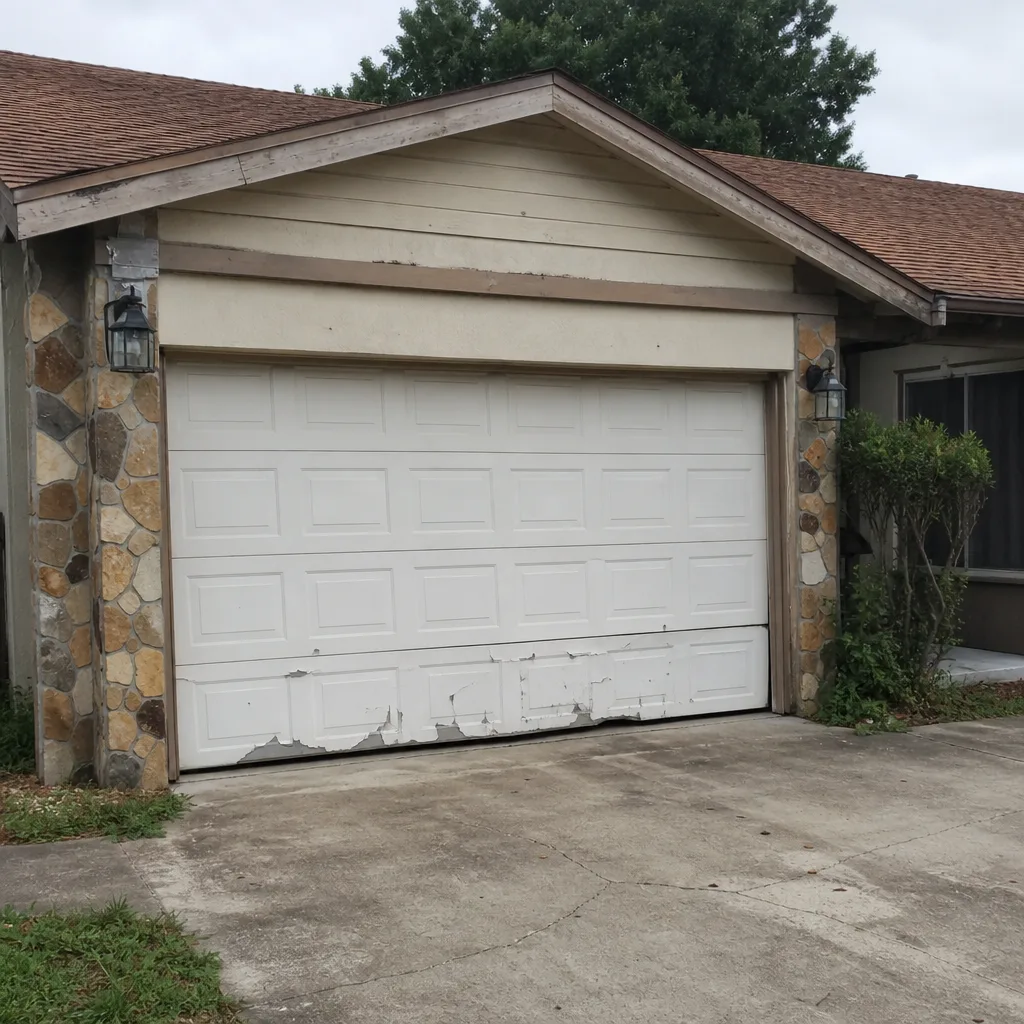 Before
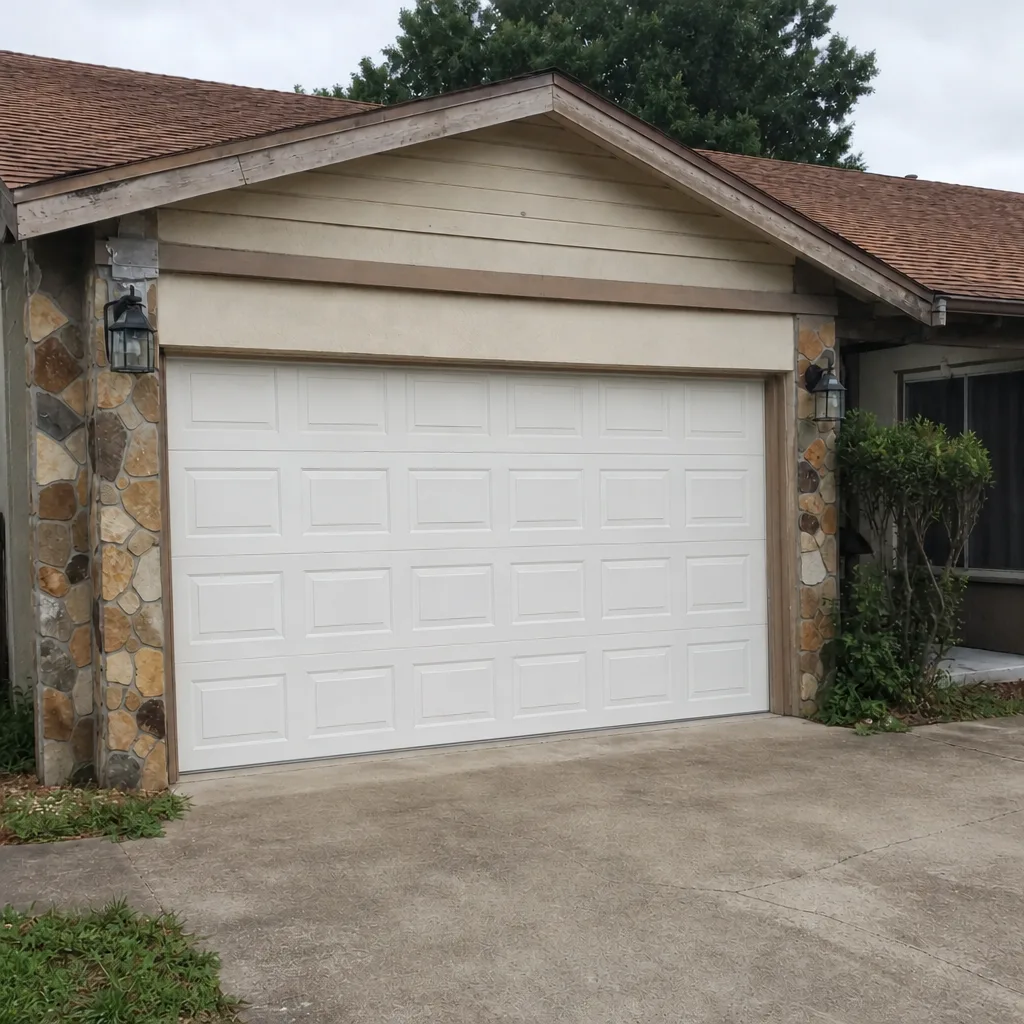 After
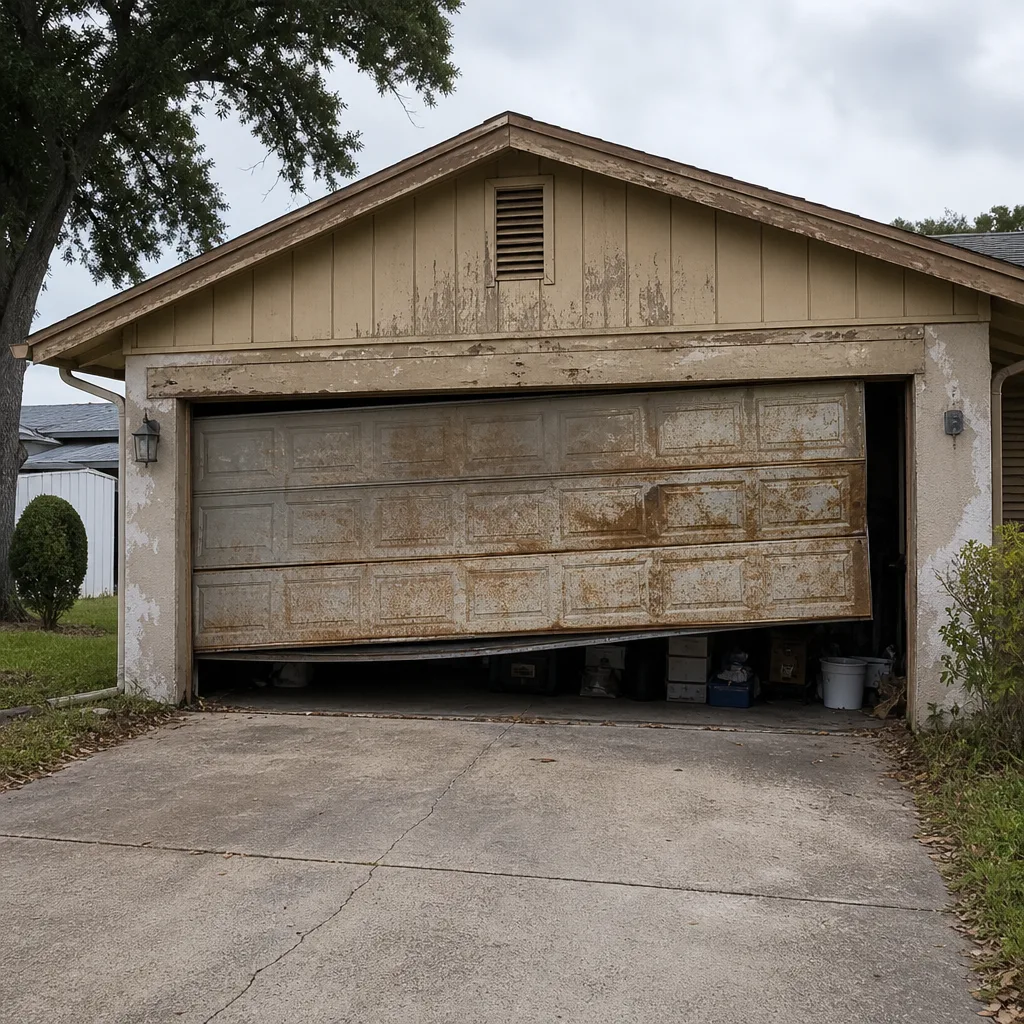 Before
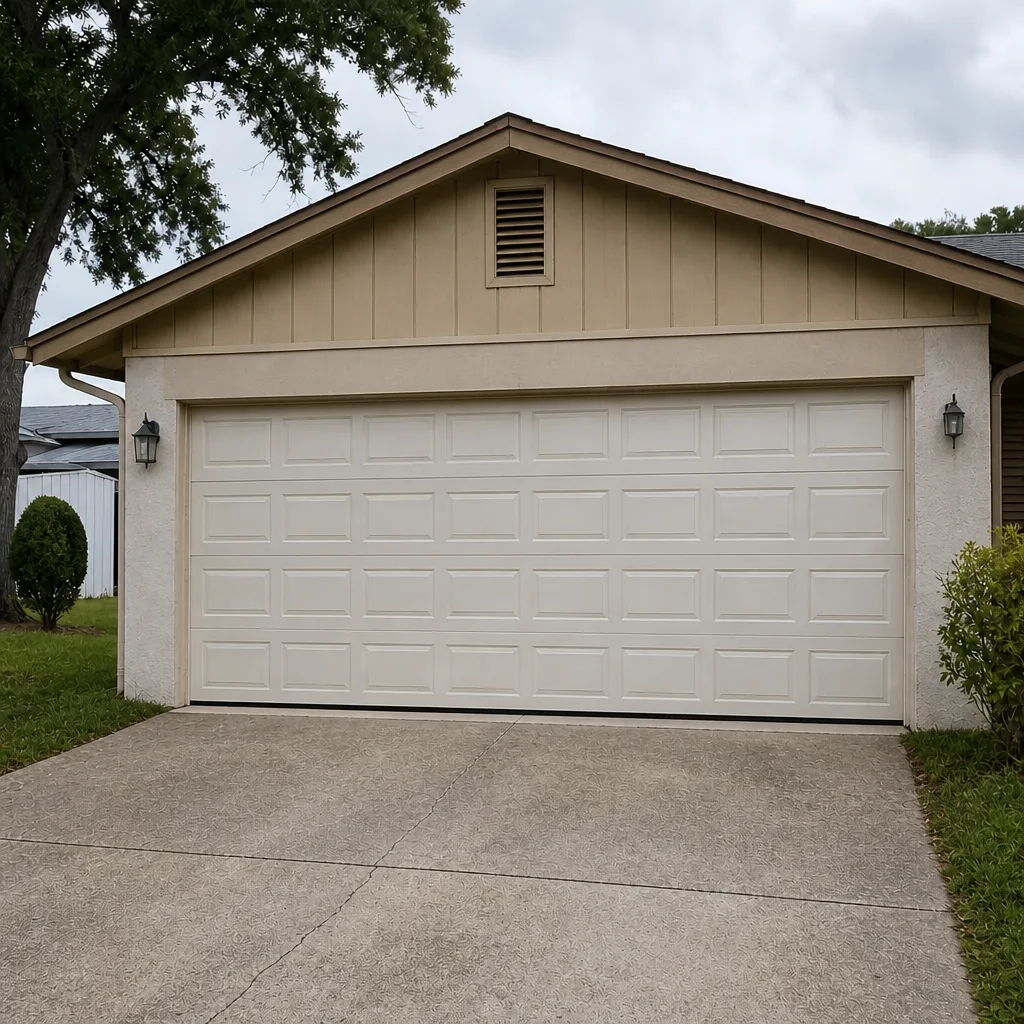 After
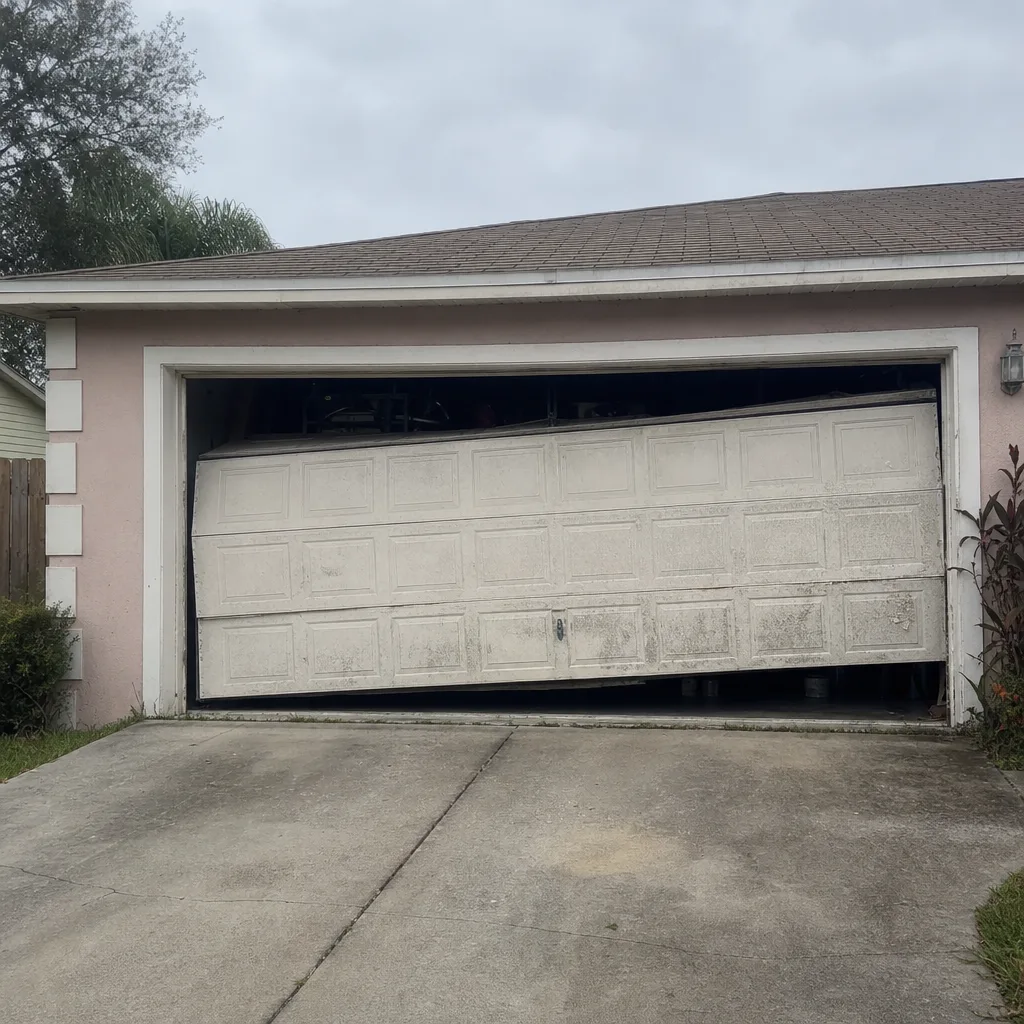 Before
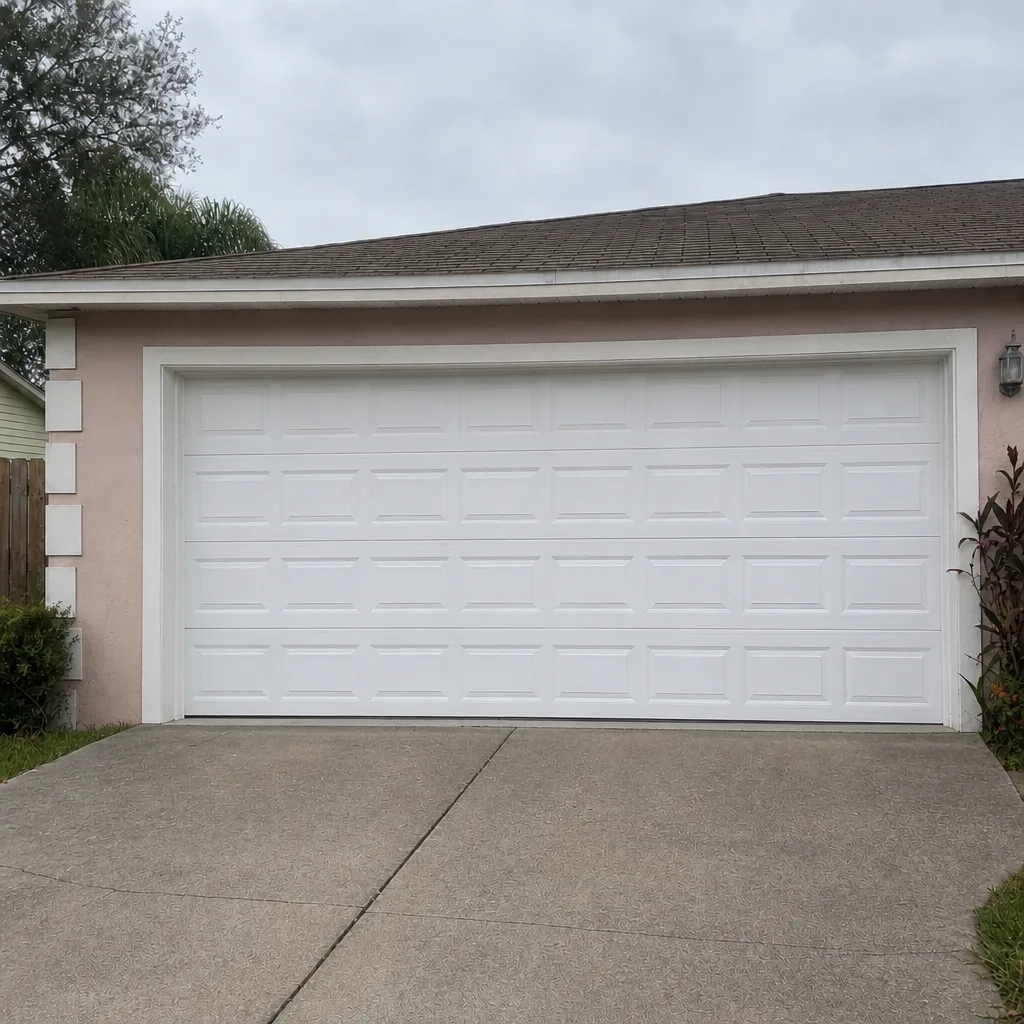 After
When to Call a Professional
Some garage door problems are cosmetic and patient, and some need a call today. Call us for a broken or stretched spring, a snapped cable, a door off its track, a door stuck open when the home is unsecured, or an opener that runs but won’t lift the door. All of those involve either stored tension or an unusable door. Call for a post-storm inspection if the door runs unevenly, makes new noises, or a panel is bent. And call if the manual release is seized, because that’s the piece your whole storm plan depends on.
Apopka Garage Door Repair Pros offers free estimates in Apopka. Call (844) 558-0733. We answer 24/7, and fast dispatch runs from 7am to 7pm, Sunday through Friday. Every job is quoted and agreed before any work starts, so there are no surprises when the invoice arrives. We service LiftMaster, Chamberlain, Genie, Clopay, Amarr, Wayne Dalton, Craftsman and Raynor equipment. Whatever you own, we work on it. For the full picture of what we cover, see our Apopka Garage Door Repair Pros home page.
Frequently Asked Questions
Pull the manual release cord hanging from the opener’s trolley, then lift the door slowly by hand. The release disconnects the opener from the door, and on most openers, including Chamberlain and Genie, it’s the cord with a T-handle. If the door feels unusually heavy or won’t move, stop and call us. That’s a spring issue, not a release issue. Call (844) 558-0733 for help. Estimates are free.
No. Don’t use the door until it’s repaired. A door with one broken spring puts the full weight on the remaining spring, the cables and the opener, and it can drop without warning. Don’t try to lift it by hand, either. Call (844) 558-0733 for spring repair in Apopka. We do the work in-house and quote before we start.
Locking from the inside helps by adding resistance the opener can’t provide, especially on a wide single-skin door, but it doesn’t make the door wind-rated. The aim is to stop the door flexing and pushing past its stops. Combine the lock bar or bracing with a repaired door that runs true, and you’ve done what you can. If your door doesn’t have a lock bar, ask us about it. Call (844) 558-0733.
Typical spring repair in Apopka runs roughly $180 to $340 for one spring, and a matched pair is usually replaced together, so a pair costs about twice that. The written estimate sets the final price, and we quote and agree it before any work starts. Call (844) 558-0733 for an exact price. Estimates are free.
A heavy door after a storm usually means the spring is compromised or the door is off its track. Don’t lift it by hand or run the opener. Note whether the door is stuck open or stuck closed, take a photo, and call. Fast dispatch runs from 7am to 7pm, Sunday through Friday, and we answer 24/7. Call (844) 558-0733.
Have the door and opener brand and model numbers, what failed, whether a car is trapped inside, whether the door is stuck open or closed, and your address and contact number ready. That’s it. Photos help, too. Call (844) 558-0733. We answer 24/7 and dispatch from 7am to 7pm, Sunday through Friday. We’re closed Saturday, but if your door fails then, call and we’ll book you for Sunday.
The Bottom Line
Garage door emergencies in Apopka follow a pattern, and the pattern is usually preventable. The release cord is the piece that decides whether a power outage leaves you stuck or gets you moving in thirty seconds. The lock bar and bracing plan are what protect the door and the opening during a storm. And the spring is the one thing that stays out of reach, no matter how urgent it feels. Test the release, check the balance and the safety reverse, note your model numbers, and know what you’ll do in the first ten minutes. Then you can call for repair knowing exactly what you’re dealing with. Whether your door is a builder-grade panel or a premium Clopay or Amarr, we work on what you own, and we’ll tell you honestly whether it can be fixed.
Call (844) 558-0733 for a free estimate. We answer 24/7, and fast dispatch runs from 7am to 7pm, Sunday through Friday. We’re closed on Saturday. Every price is quoted and agreed before any work starts, and our technicians have up to 8 years of experience with the door and the opener alike.
Written by the team at Apopka Garage Door Repair Pros.