
Last updated November 21, 2026
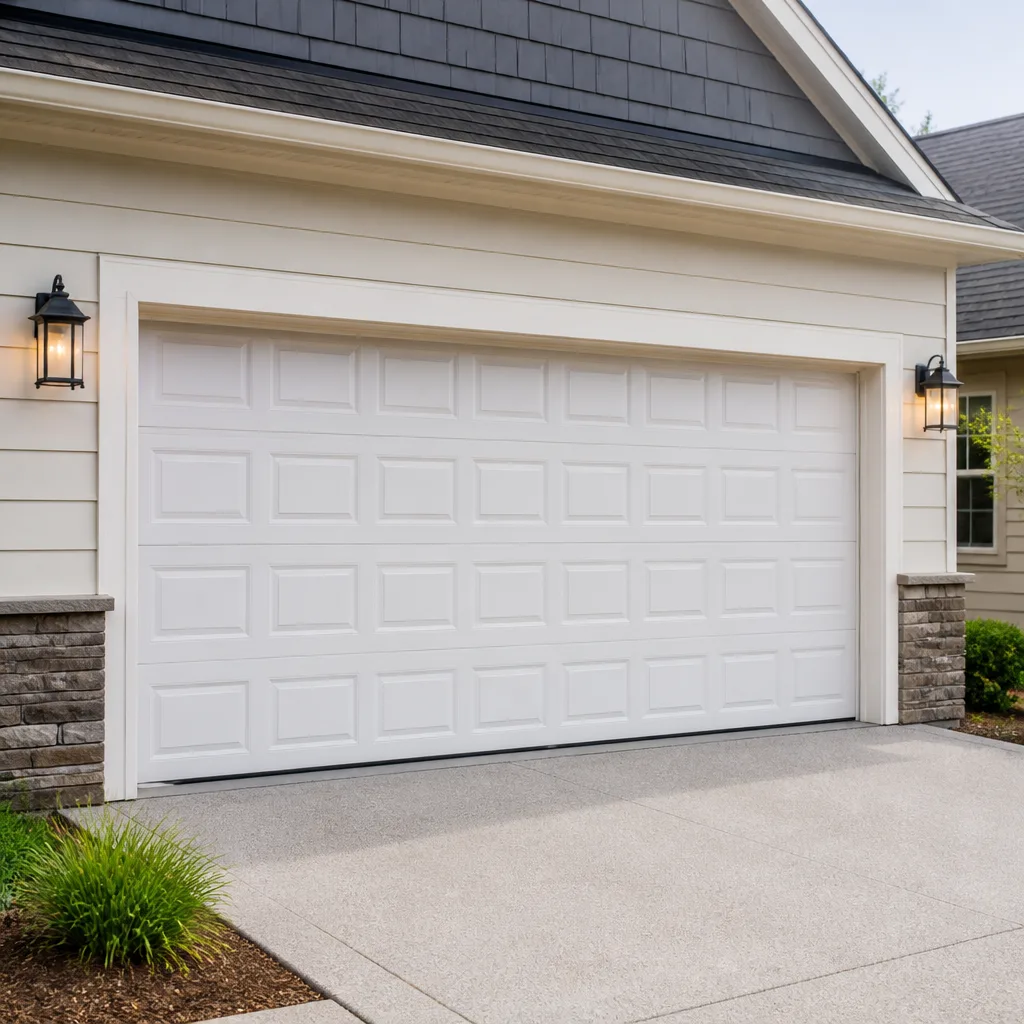 Raised-panel steel
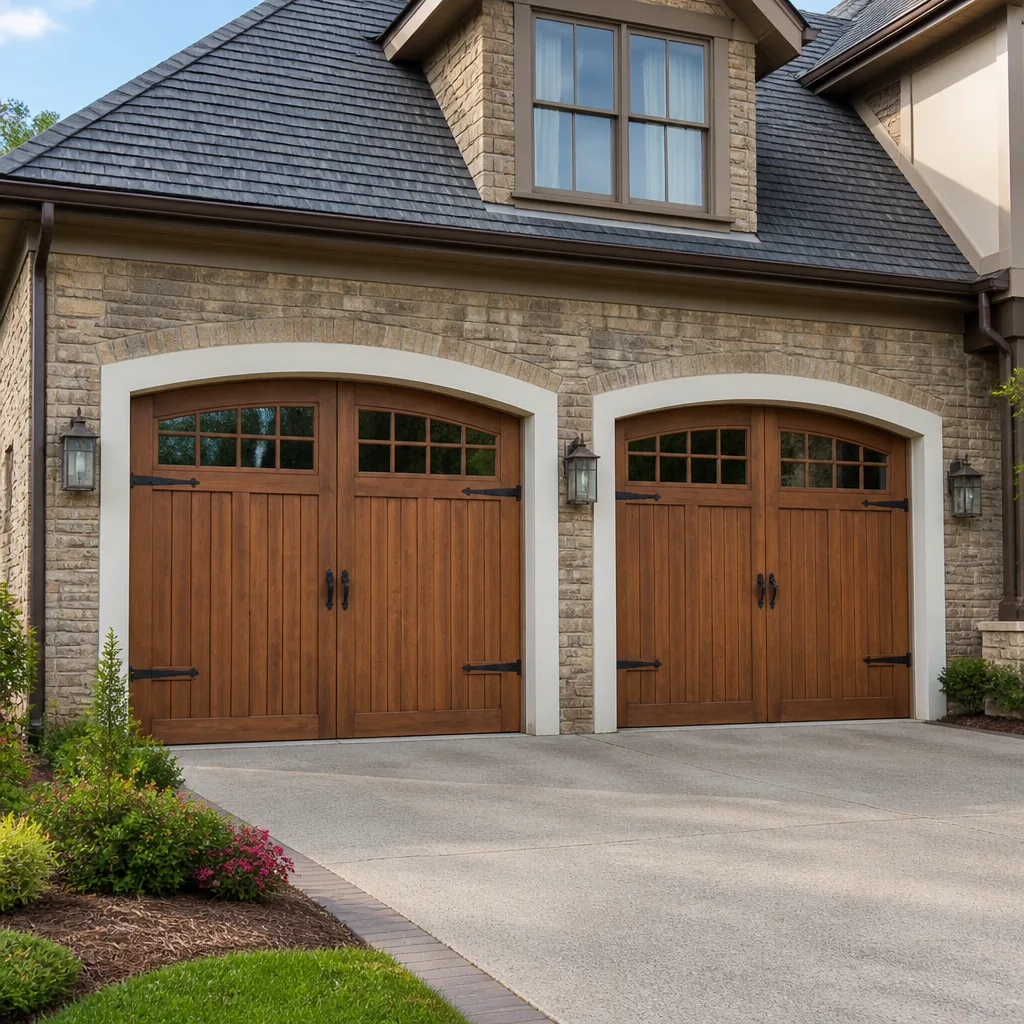 Carriage house
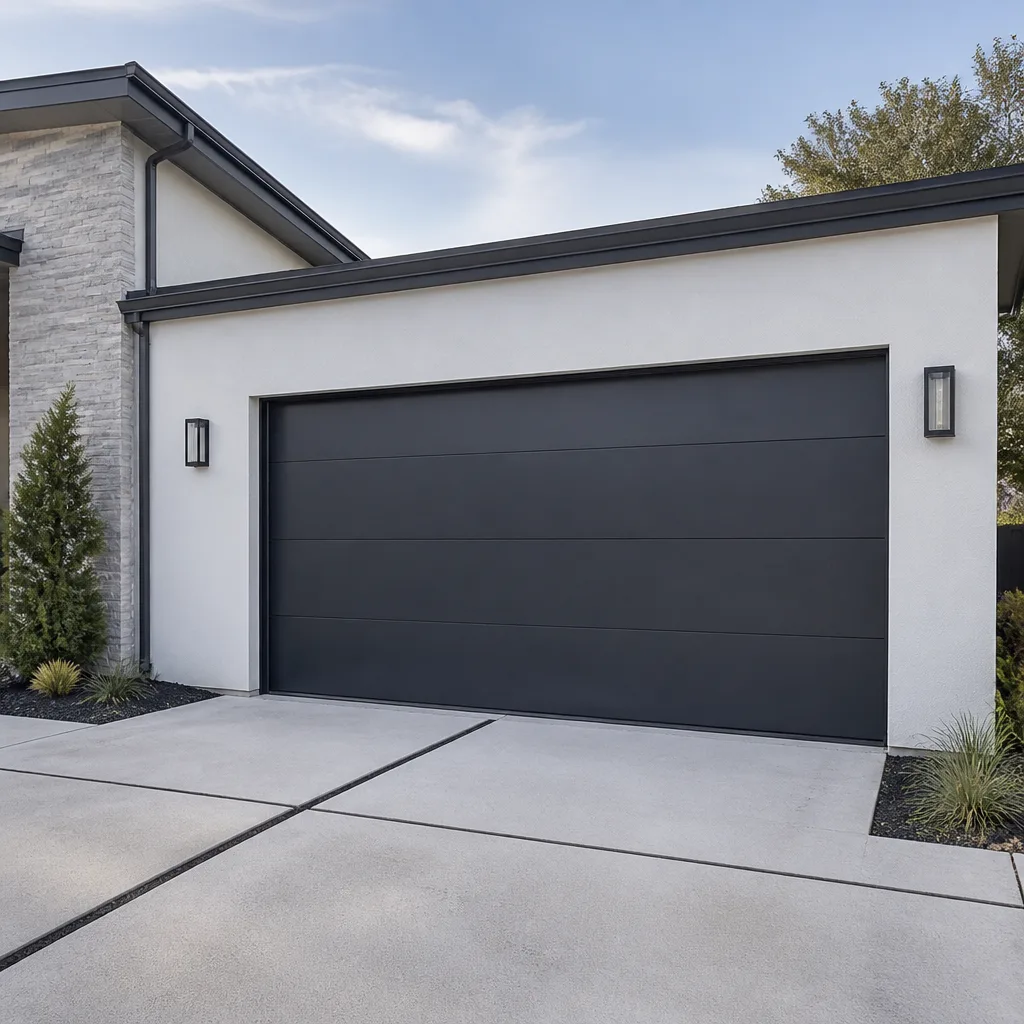 Modern flush
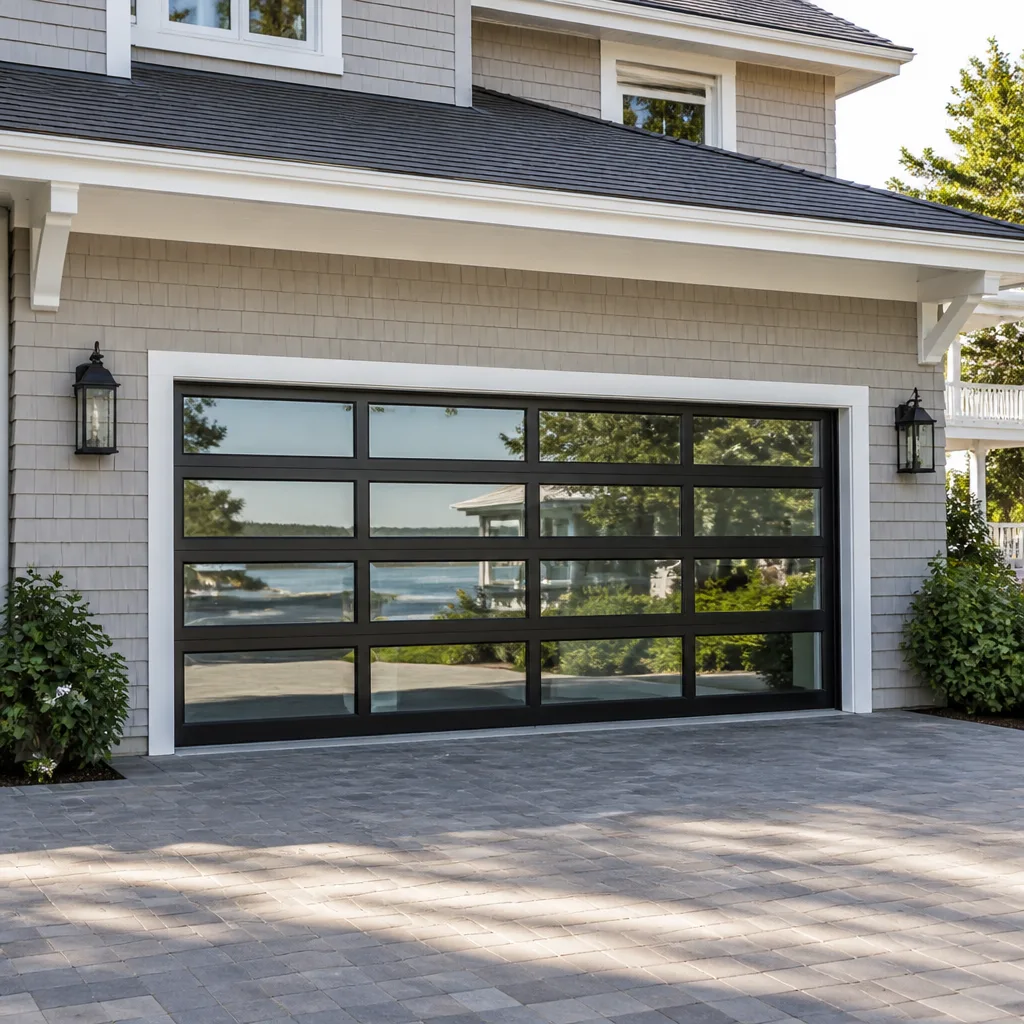 Full-view glass
 LiftMaster openers
 Chamberlain openers
Full 25-point door and opener safety check with every visit - springs, cables, rollers, tracks, and your LiftMaster or Chamberlain opener included
You get a price before we start. It does not change when the pro arrives.
Get your free estimateGarage Door Warning Signs: An Apopka Homeowner’s Reference Guide
A garage door that “just needs a little extra push” to close isn’t a harmless quirk. It’s a door whose safety reversal system is struggling, and that same system is what’s supposed to stop the door on a child or a pet. Most of the failures we get called out for in Apopka didn’t start as emergencies. They started as a sound, a wobble, or a hesitation that got explained away for weeks. Garage doors rarely fail without warning. They telegraph it. This guide translates the specific sounds, movements, and visual cues into plain language and a repair timeline, so you can schedule a fix instead of panicking over one at 8pm.
Quick Answer
The main warning signs of a failing garage door are grinding or popping sounds, a door that reverses before touching the floor, visible gaps in the spring coils, frayed or hanging cables, and an opener that strains, hesitates, or stops partway. Any sign tied to springs, cables, or the safety reversal system means stop using the door and call a professional. Slowness, squeaks, and remote lag can usually be scheduled as a normal appointment.
Styles & brands we work with
- Raised-panel steel
- Carriage house
- Modern flush
- Full-view glass
- LiftMaster openers
- Chamberlain openers
Table of Contents
- Symptom-to-Cause: What Each Sound and Sign Is Telling You
- Spring and Cable Warnings You Can See From the Ground
- Slow Door vs. Weak Spring: Telling the Difference
- Rollers, Hinges, and Tracks: The Wear Parts
- Opener Behavior Patterns, Decoded
- Urgency Triage: Stop the Door or Schedule the Visit?
- Why Apopka Doors Age the Way They Do
- Common Mistakes to Avoid
Symptom-to-Cause: What Each Sound and Sign Is Telling You
Your door speaks a fairly consistent language. The same handful of sounds show up again and again, and each one points to a component. Learning to hear the difference turns a mystery into a to-do list. Here’s how we map the most common symptoms.
Sounds and what produces them
- Grinding: usually a dry or worn torsion spring, or metal-on-metal contact where a roller has seized. Grinding that starts suddenly and gets louder is a warn-off signal.
- Popping: often a cable jumping off a drum or a spring coil shifting under load. Popping from overhead is a stop-using-the-door sound.
- Scraping: the door panel or a roller rubbing a bent track. Scraping that leaves a mark on the panel means the alignment is off.
- Squealing: usually a dry roller or hinge pin. This is the most forgiving sound on the list and often responds to proper lubrication.
- Rattling: loose hinges, bolts, or a panel that’s working loose from its stile.
Visual and behavioral signs
- The door reverses a few inches off the floor instead of closing flush.
- The opener runs but the door doesn’t move, or moves a few inches and stops.
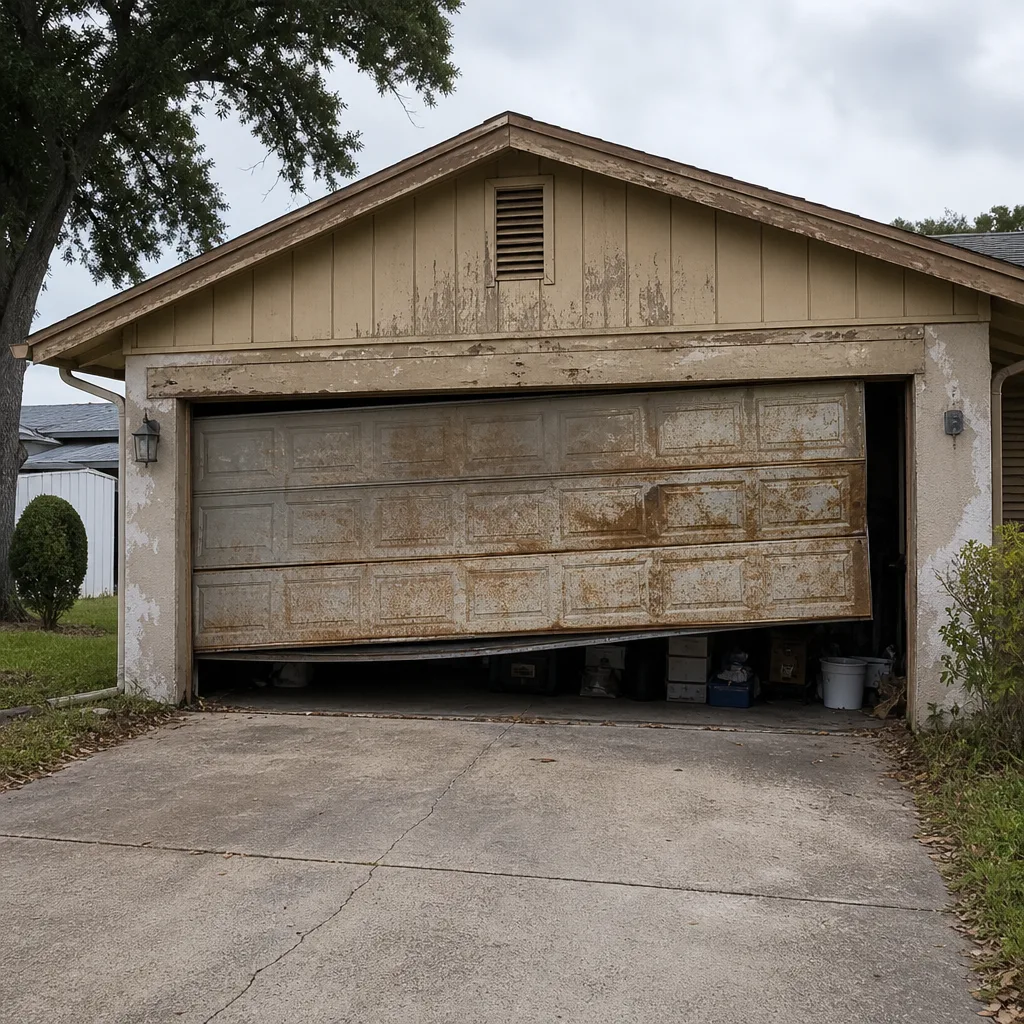
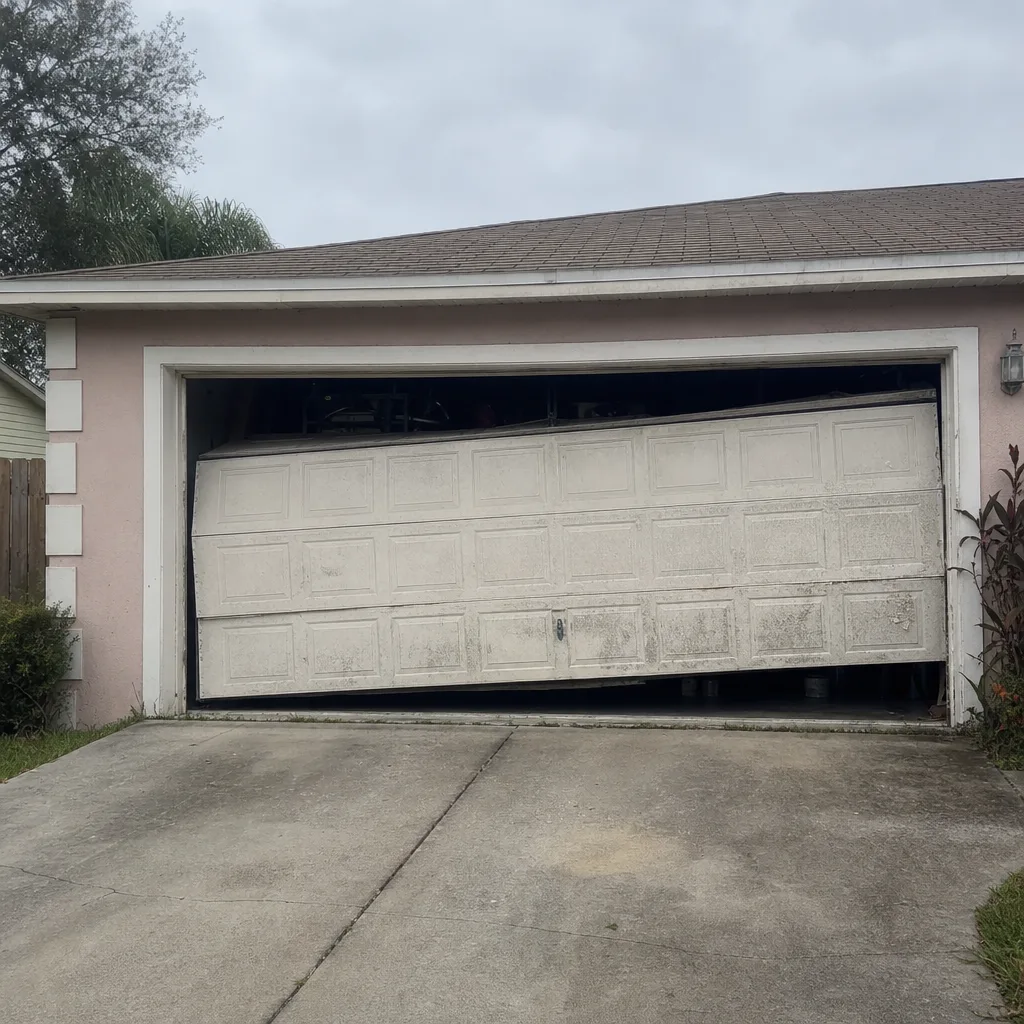
- The door sits crooked in the opening, with one side higher than the other.
- You can see a gap between the coils of a torsion spring (more on this below).
- The door slams down faster than it used to, or drops the last foot hard.
- The whole door shakes and shudders on the way up.
In our experience running service across Apopka, a door rarely shows just one of these at a time. Grinding and a crooked panel usually travel together. Scraping and a strained opener tend to arrive as a pair. When two or more symptoms show up at once, that’s a door asking for a same-day look rather than a “someday” appointment.
Spring and Cable Warnings You Can See From the Ground
The springs and cables are the most dangerous parts of any garage door system, and they’re also the parts with the clearest visible warning signs. You do not need a ladder or any tools to spot them. You need to know what to look for and keep your hands off the parts themselves.
Spring warning signs
- A visible gap in the torsion spring coil, which usually means the spring is cracked or broken.
- A torsion spring that looks stretched out or has lost its tight, even coil spacing.
- For extension springs (the ones that run along the horizontal tracks), a stretched-out spring or one with a visible bend.
- The door feels unusually heavy when you lift it by hand, or won’t stay up when lifted partway.
- A loud bang from the garage, followed by a door that won’t open.
Cable warning signs
- A cable that looks frayed, with broken strands showing.
- A cable hanging loose or off the drum at either corner.
- Cables that have gone slack on one side but are tight on the other.
- Rust streaks or dark staining along the cable path.
- The door sits crooked, which often means one cable is doing more work than the other.
Here’s the hard safety line on this whole section: do not attempt to adjust, remove, or repair a spring or cable yourself. Torsion springs and the cables that run through them are under heavy tension. Releasing that tension the wrong way can cause serious injury or worse. Trained technicians use the right tools and follow a controlled procedure. If you see any of the signs above, leave the door closed, take a photo from a safe distance, and call a professional. You can read more about how we handle this work on our garage door repair page, or call us to talk it through.
Slow Door vs. Weak Spring: Telling the Difference
A slow door is one of the most common things homeowners ask us about, and the answer genuinely splits two ways. Sometimes it’s lubrication. Sometimes it’s a spring that’s quietly losing tension. Getting the call right matters, because one is a quick service visit and the other is a component on its way to failing.
Signs it’s lubrication and general wear
- The door moves at a normal pace but complains with squeaks and groans.
- The slowness is consistent from day to day, not getting worse.
- You can lift the door by hand with reasonable effort and it stays up.
- The rollers look dry, or the hinges have no trace of lubricant.
- The opener isn’t straining or overheating.
Signs it’s a spring losing tension
- The door gets noticeably heavier to lift by hand over a few weeks.
- The opener strains, hums, or stops partway up, then works after a rest.
- The door drops faster than usual on the way down, or slams at the bottom.
- The door won’t stay open when you lift it partway by hand.
- The whole door shakes and shudders on the way up.
A spring that’s losing tension doesn’t just make the door slow. It forces the opener to work harder than it was designed to, which shortens the life of the opener motor and the gears inside it. In Apopka, where doors get used heavily all year, a slow door that’s actually a weak spring tends to show up as an opener that quits before the door does. If you’re not sure which category you’re in, stop using the door and get it looked at. If it’s lubrication, you’ll know quickly. If it’s a spring, you’ll have caught it before it broke. We cover the mechanical side of this on the repair page and the electronic side on our garage door opener repair page, since the two often fail together.
Rollers, Hinges, and Tracks: The Wear Parts
Rollers, hinges, and tracks are the underappreciated parts of the system. They don’t fail dramatically the way springs do, but they’re the source of most of the noise, drag, and wobble that homeowners notice first. Reading them correctly lets you schedule a tune-up instead of waiting for a bigger repair.
Rollers
- Steel rollers are common on builder-grade doors, including many Wayne Dalton and Craftsman setups, and they can develop flat spots that make a knocking sound as they roll.
- Nylon rollers run quieter but can crack or lose their bearings with age and heat.
- Rollers that look cracked, chipped, or flattened are ready to be replaced.
- Rollers that have wandered out of the track are a stop-using-the-door sign.
Hinges and track
- Loose hinge bolts are the number one source of rattle. They can usually be tightened during a routine visit.
- Hinges that are bent or worn where the roller sits are a rattle that tightening won’t fix.
- Tracks that are bent, dented, or visibly out of line will cause the door to bind and scrape.
- Track brackets that have worked loose let the whole door shift as it moves.
For Apopka homeowners, one local consideration shapes the timeline here: heat. Central Florida garages get hot, and heat ages nylon rollers and dry lubricant faster than in cooler climates. That makes a yearly look at rollers and hinges more valuable than it might be elsewhere. If your door has started to rattle or knock, it’s worth having a technician look rather than living with it. Small wear parts are inexpensive to replace, and catching them early prevents the track damage that comes from a door that’s been rolling off-kilter for months.
Opener Behavior Patterns, Decoded
Your opener’s behavior is a separate diagnostic channel from the door’s. When the opener hesitates, reverses, or responds late to the remote, it’s telling you something about either the opener, the door it’s pushing, or the safety sensors at the bottom. Decoding it correctly avoids replacing an opener that’s actually fine.
Hesitation and reversal
- Reverses a few inches off the floor: almost always a safety sensor problem. The photo-eye sensors at the bottom of the tracks are misaligned, dirty, or blocked.
- Starts up, then stops and reverses: often the opener hitting resistance from a binding door, a weak spring, or a worn roller.
- Hesitates before moving: frequently the opener’s internal start capacitor or a binding door that’s loading the motor.
- Strains and hums but doesn’t lift: usually the door is too heavy for the opener because a spring has lost tension.
Remote lag and range issues
- Remote works only close up: usually a weak remote battery, a metal object disrupting the signal, or an aging receiver. Worth checking the simple things first.
- Remote works intermittently: often a compatible-brand mismatch (a LiftMaster opener paired with a Genie remote, for example) or a worn receiver.
- Opener works from the wall switch but not the remote: usually the remote or receiver, not the opener itself.
- Opener loses its travel settings: a sign the logic board or the limit switches need attention.
Here’s where single-source service pays off. The weight of the door and the performance of the opener are the same problem viewed from two sides. If the opener reverses because the door is binding, replacing the opener fixes nothing. If the door is heavy because the spring is failing, adjusting the opener makes it worse. We work on the brand you own, whether that’s a LiftMaster or Chamberlain opener pushing an Amarr door, a Genie on a builder-grade setup, or a Raynor system that’s been quietly doing its job for years. Because we diagnose the door and the opener together, you don’t get stuck between two contractors each blaming the other.
Urgency Triage: Stop the Door or Schedule the Visit?
Not every warning sign is an emergency, and treating them all like one leads to expensive panic. The practical question is simple: does this sign mean the door could fail dangerously, or does it mean a component is wearing and needs attention soon? Here’s how we triage it.
Stop using the door immediately (call today)
- Any sign of a broken or damaged spring, including a gap in the coil or a stretched-out spring.
- Any cable that is frayed, hanging, or off its drum.
- A door that’s come off its track or is visibly crooked in the opening.
- The door reverses on its own, won’t close flush, or slams at the bottom.
- A loud bang from the garage followed by a door that won’t open.
- The door can be lifted by hand more easily than it should be.
For any of these, leave the door closed, keep the family and vehicles clear, and call us. We keep emergency service as a real offering, not an upsell, because a broken door can trap a car or leave a home unsecured. We answer 24/7, with fast dispatch from 7am to 7pm, Sunday through Friday.
Schedule a normal appointment (soon, but not urgent)
- Squeaks, groans, or rattles that are new but not accompanied by the signs above.
- An opener that’s a little slow to respond to the remote but otherwise works.
- Rollers or hinges that look worn but the door runs straight and true.
- Remote range that’s shortened but consistent.
- A single symptom that hasn’t gotten worse over a week or two.
If you’re honestly not sure which category you’re in, err on the side of calling. We’d rather tell you it’s a lubrication job over the phone than have you find out from a bent track. The price is quoted and agreed before any work starts, so a diagnosis never turns into a surprise invoice.
Why Apopka Doors Age the Way They Do
Apopka is hard on garage doors in a specific, predictable way. The area’s heat and humidity speed up wear on rubber and nylon parts, dry out lubricant faster than you’d expect, and put steady thermal stress on door panels and springs. A door that would last years in a cooler climate can show wear parts aging noticeably faster here. That makes the warning signs in this guide more valuable than they might be elsewhere, not less.
Two practical local points follow from that. First, the lubrication interval that works elsewhere tends to be too generous for an Apopka garage. If your door is squeaking, it’s already overdue. Second, a door that’s running rough going into the hot months is worth having looked at before the wear compounds. The heat doesn’t cause failures on its own, but it shortens the runway.
There’s also the housing stock. Apopka has a wide spread of homes, from newer construction with builder-grade doors to older properties whose doors have been through many cycles. A builder-grade door with steel rollers behaves differently from a premium Amarr or Clopay system with nylon rollers, and the warning signs show up at different points. We work on the brand you already own, whether it’s a budget door that came with the house or a premium installation, and we don’t treat one as more worth fixing than the other. If the door’s beyond saving, we’ll tell you honestly and can handle the full garage door installation rather than sending you to find a second company.
Common Mistakes to Avoid
- Ignoring a single warning sign because the door still works. A door can operate with a failing spring for a while before it breaks. The sign is the notice, and using the door through it wears the opener and risks the door coming down hard.
- Greasing the springs and cables to stop the noise. Lubrication belongs on rollers, hinges, and the door’s moving wear parts. Coating springs and cables doesn’t fix tension problems and can hide the very signs you need to see.
- Adjusting the opener’s force and travel settings to make the door close. This doesn’t fix a binding door or a weak spring. It masks the problem and can override the safety reversal system that’s meant to protect your family and pets.
- Diagnosing a slow door as an opener problem. In Apopka’s heat, springs and rollers wear faster than the opener’s electronics, so a slow door is often the door system asking for service, not the opener failing.
- Calling a general handyman for springs or cables. These are the most safety-critical parts of the system and need the right tools and training. A specialist spring repair is worth waiting for over a shortcut that risks injury.
- Assuming a warning sign is a fluke if it comes and goes. Intermittent symptoms, like a door that sometimes reverses and sometimes doesn’t, are often the earliest stage of a real problem. Intermittent doesn’t mean harmless.
- Waiting for the door to break before calling. A warning sign gives you the chance to schedule a repair on your terms. A wait gives the door the chance to break on its own schedule, which is usually the least convenient day possible.
See the difference
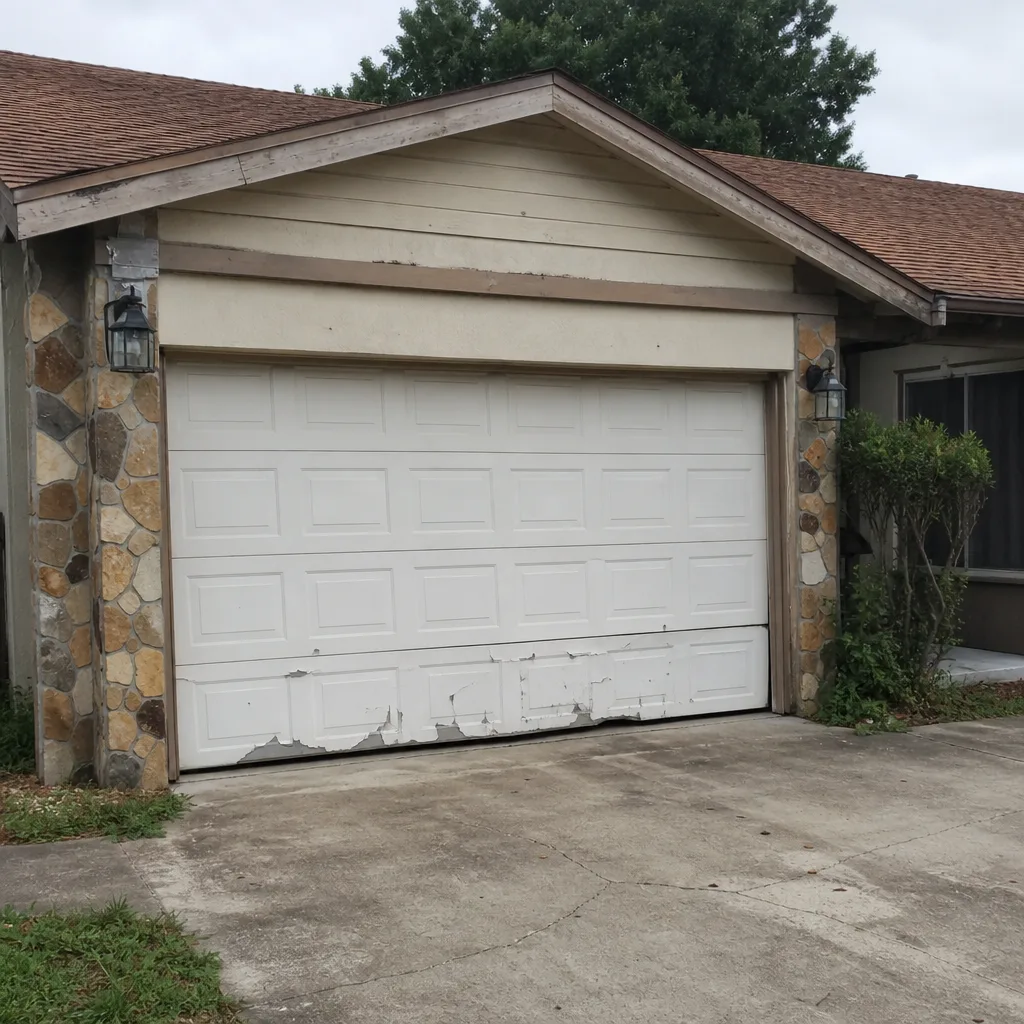 Before
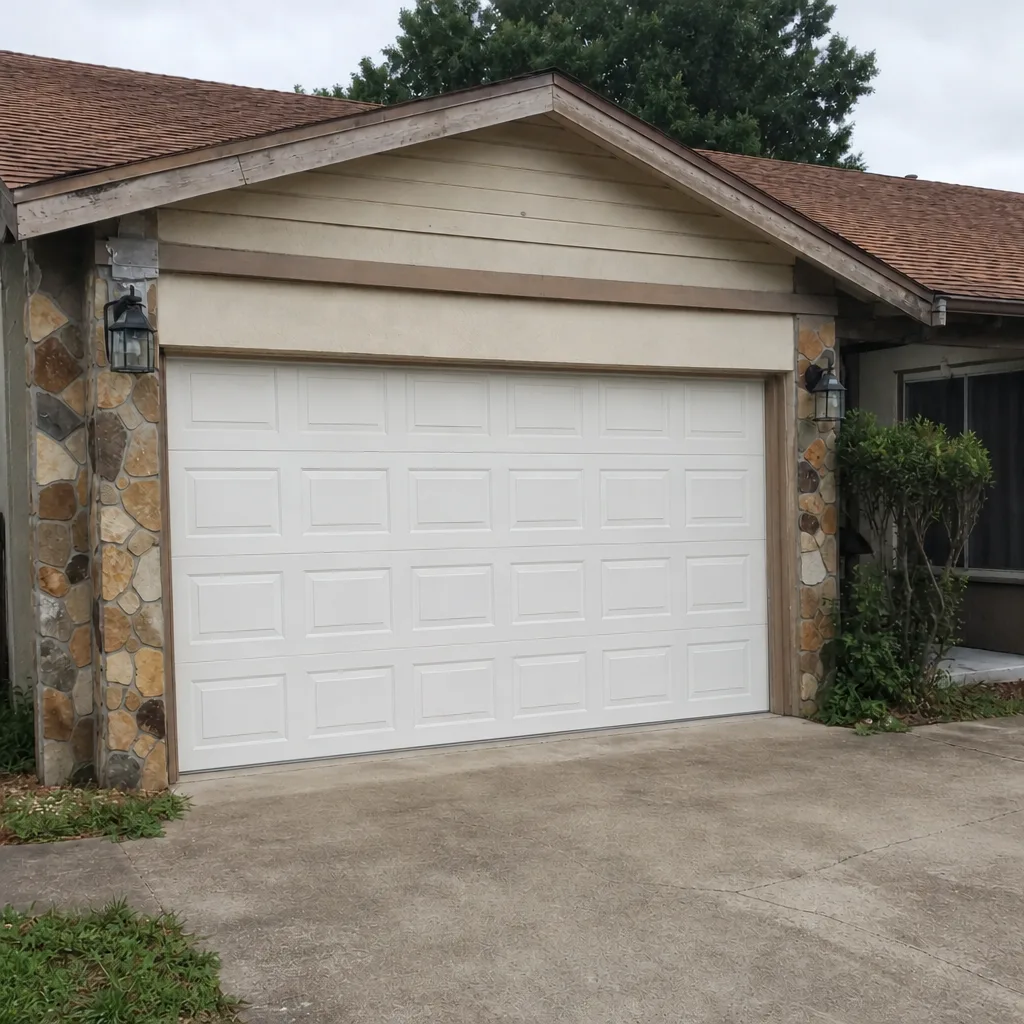 After
 Before
 After
 Before
 After
When to Call a Professional
Call a professional the moment you see any sign that the door could fail dangerously: a spring with a visible gap, a hanging or frayed cable, a door off its track, or any reversal or slamming behavior. Those aren’t jobs to live with for a while. Less urgent signs, like squeaks, a little remote lag, or worn rollers, are worth scheduling rather than ignoring, because they’re the early stages of the bigger problems. And if the opener is struggling but the door looks fine, call anyway, since the two are often the same problem seen from different sides.
Apopka Garage Door Repair Pros offers free estimates in Apopka. Our technicians have up to 8 years of experience, and we work on the brand you already own. Call (844) 558-0733. We answer 24/7. Fast dispatch from 7am to 7pm, Sunday through Friday.
Frequently Asked Questions
A visible gap in the torsion spring coil, or a door that suddenly feels much heavier to lift by hand. A loud bang followed by a door that won’t open is also a common first sign, though by that point the spring has already broken. If you spot either, stop using the door and call a professional.
No, a grinding noise is a stop-using-the-door warning sign. Grinding usually means a dry or worn spring, or a seized roller, and continuing to run the door forces the opener to work harder while the failing part gets worse. Stop the door, then call for a same-day look.
No, a gradual slowdown is a sign that something is losing tension or gaining friction. A slow door in Apopka is often a spring losing tension or lubricant that’s dried out in the heat, and a technician can tell the difference in a few minutes. If the door also feels heavier by hand, treat it as a spring problem and stop using it.
Almost always a safety sensor problem. The photo-eye sensors at the bottom of the tracks are misaligned, dirty, or blocked, and the door reverses because it thinks something is in the way. That sensor is also the mechanism that stops the door on a person or pet, so it’s not a sign to live with.
Spring replacement is priced per spring, and the exact cost depends on the door and the spring setup, so we give a written price after looking at it. The price is quoted and agreed before any work starts, so you’ll know the number before we begin. Call (844) 558-0733 for an exact quote; estimates are free.
No, the written estimate is the price. We look at the door, quote the work in writing, and get your agreement before we start. If the job turns out to need something different, we tell you and re-quote before anything proceeds.
Yes, same-day emergency service is available for doors that are stuck, off their track, or left unsecured. We answer 24/7, with fast dispatch from 7am to 7pm, Sunday through Friday. A call outside dispatch hours is booked into the next opening.
Yes, the local professional who performs the work is licensed and insured as the state requires. Spring repair in particular is a job that should only go to a trained specialist, given the tension stored in those parts. Call us to confirm details for your job.
The Bottom Line
Garage door failures are rarely sudden. They follow a trail of warning signs that most homeowners dismiss as quirks: a grind, a wobble, a door that needs a little push. This guide is the translation. Springs, cables, and anything that affects the safety reversal system are stop-the-door signs. Squeaks, worn rollers, and remote lag are schedule-the-door signs. Learning to tell them apart means you plan your repair instead of panicking over it. If you’re in Apopka and something about your door has started to feel off, call us at (844) 558-0733 for a free estimate. If it can be fixed, we’ll fix it. If it can’t, we’ll tell you honestly.
For a full look at what we do, start at Apopka Garage Door Repair Pros.
Written by the team at Apopka Garage Door Repair Pros.