
Last updated November 21, 2026
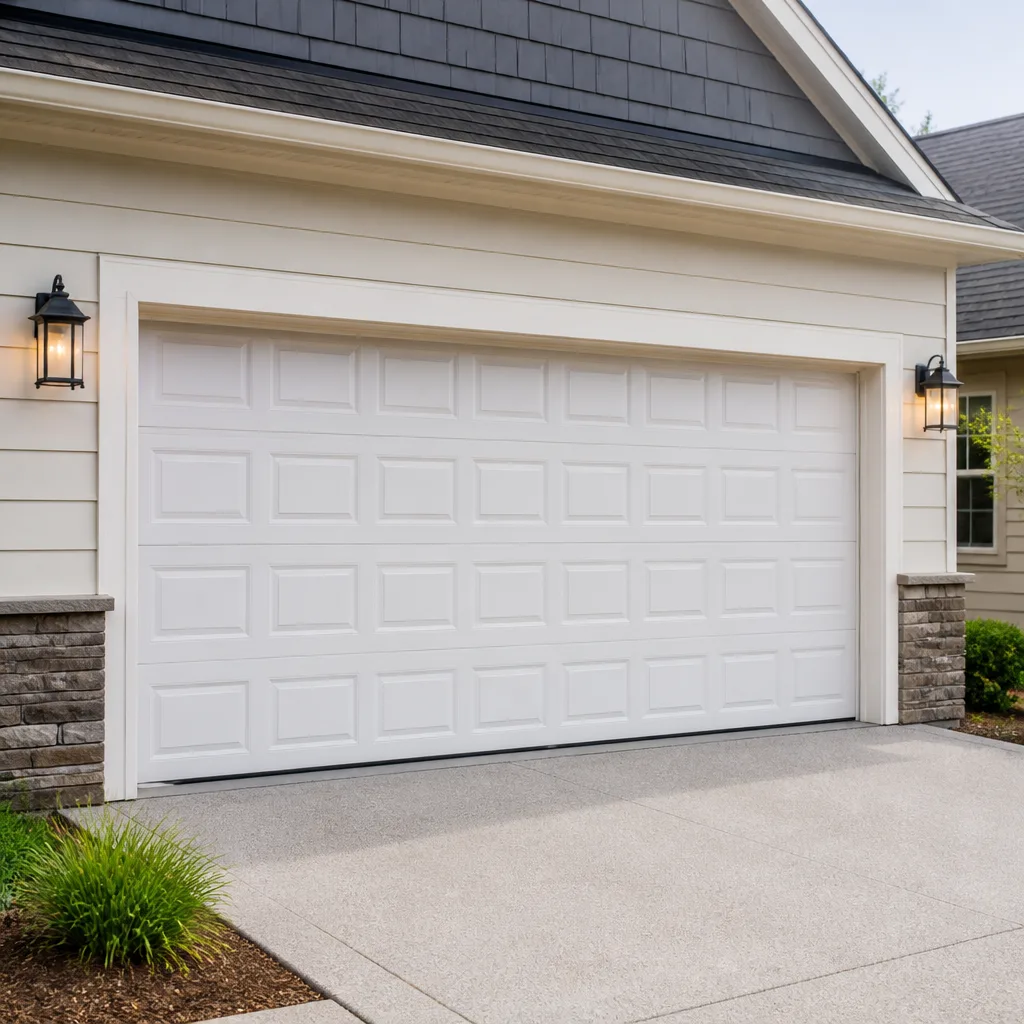 Raised-panel steel
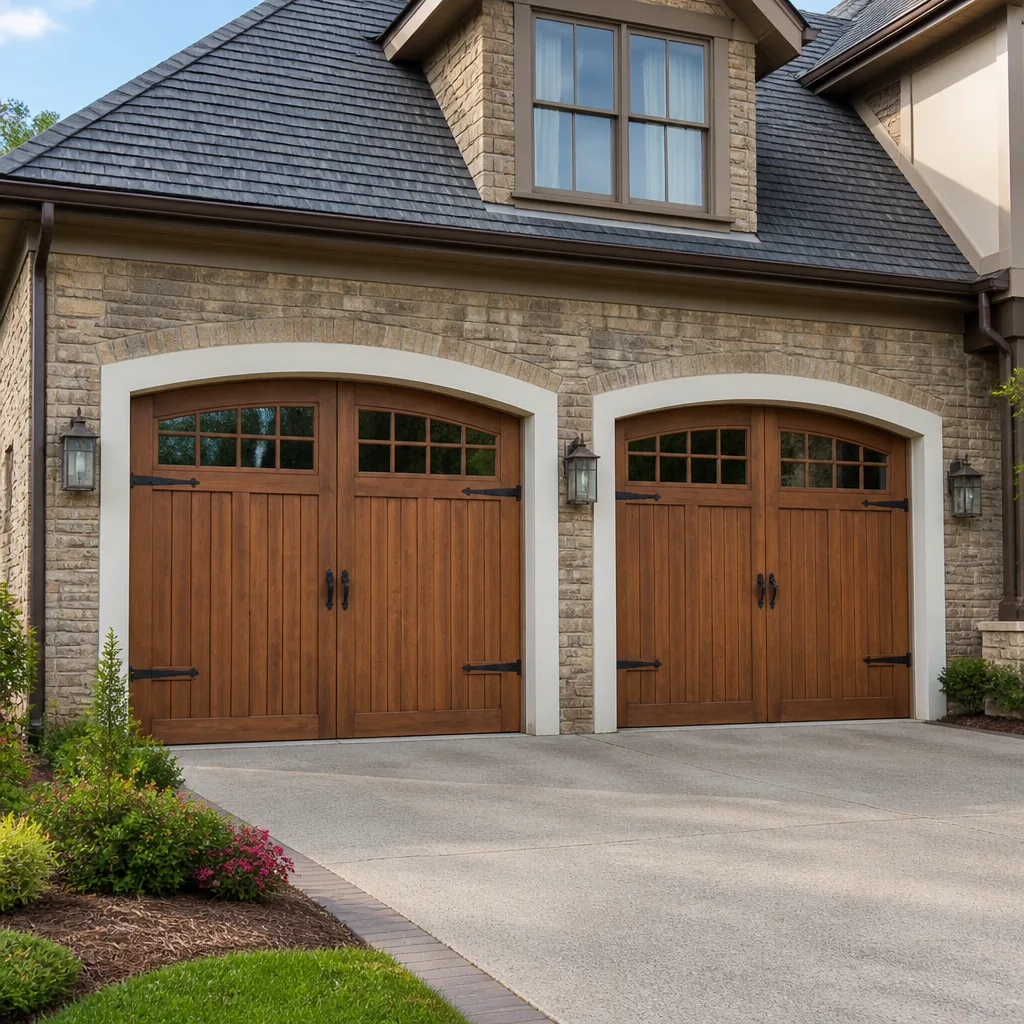 Carriage house
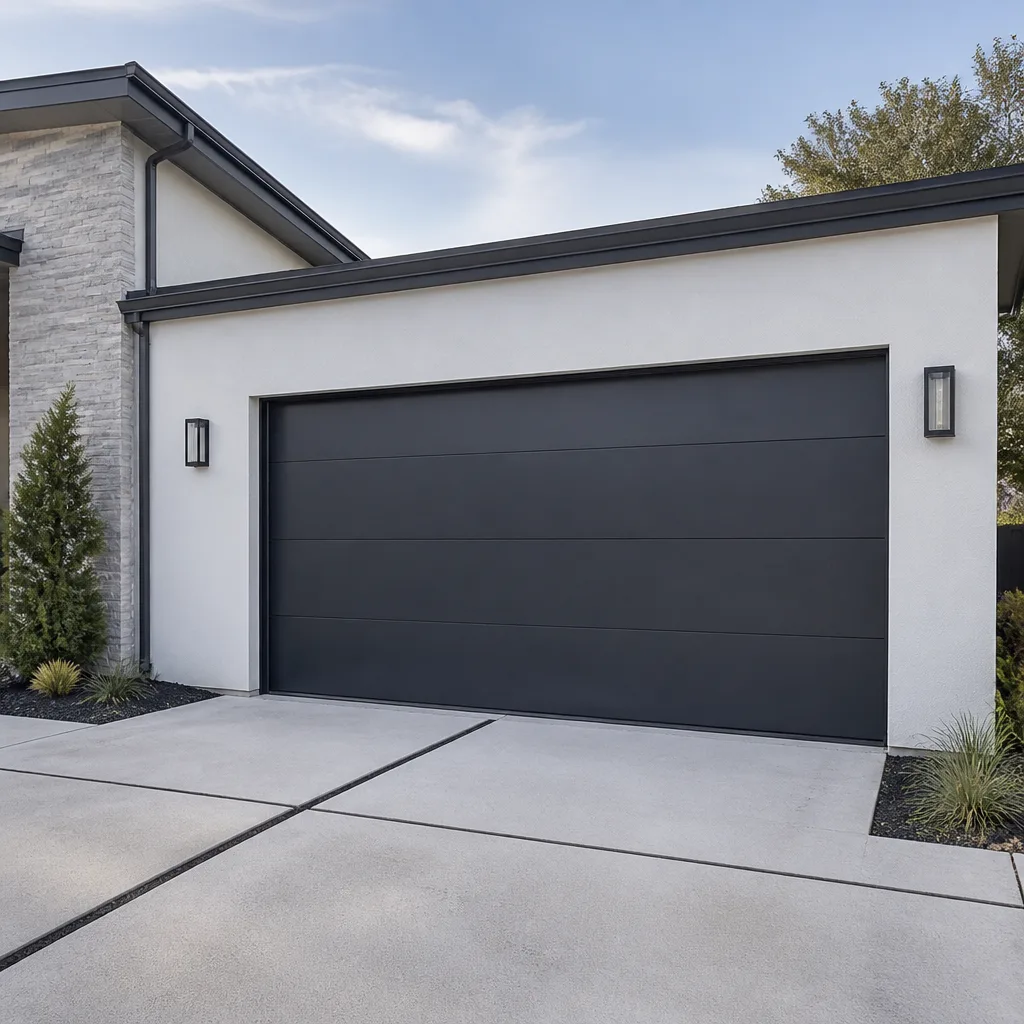 Modern flush
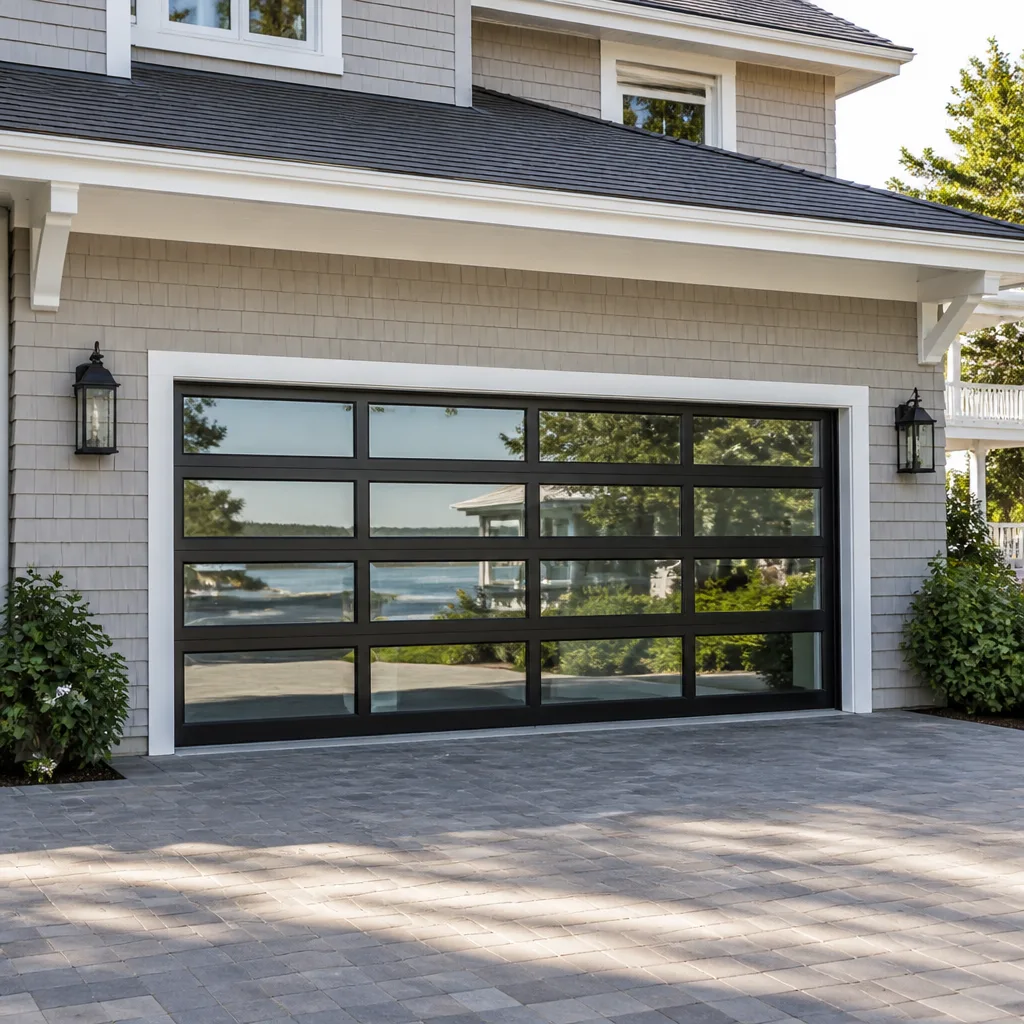 Full-view glass
 LiftMaster openers
 Chamberlain openers
Full 25-point door and opener safety check with every visit - springs, cables, rollers, tracks, and your LiftMaster or Chamberlain opener included
You get a price before we start. It does not change when the pro arrives.
Get your free estimateSeasonal Garage Door Care for Apopka: Year-Round Homeowner’s Guide
Most homeowners assume summer is the hardest season on a garage door. In Apopka, it’s usually the opposite. The dry season – roughly late October through February – is when we see the most spring failures, because the sharp drop in humidity after the rainy season lets metal components contract and exposes fatigue cracks that summer moisture was quietly hiding. A door that ran quietly all summer can snap a spring on the first genuinely cool morning. This guide maps garage door care to the two seasons that actually matter here, hurricane season and the dry season that follows, so you know what to check and when to call.
Quick Answer
Seasonal garage door maintenance in Apopka means inspecting and lubricating moving parts before hurricane season (June through November) and again before the dry season (late October through February), when springs are most likely to fail. Prioritize wind-load hardware, bottom seal integrity, and emergency release function before storms, and watch for spring fatigue, cracked weatherstripping, and opener strain as humidity swings. A trained technician should handle anything involving springs, cables, and tension.
Styles & brands we work with
- Raised-panel steel
- Carriage house
- Modern flush
- Full-view glass
- LiftMaster openers
- Chamberlain openers
Table of Contents
- Why Apopka Has Two Garage Door Seasons, Not Four
- Pre-Hurricane Season Inspection Checklist
- Post-Storm Inspection: The Doors That Weren’t Hit
- The Dry Season Window: When Springs Break
- Summer Heat and Your Seals, Weatherstripping, and Opener
- How Spring Tension Expectations Change as a Door Ages
- A Simple Monthly Walk-Around for Apopka Homes
- What You Should Never Adjust Yourself
Why Apopka Has Two Garage Door Seasons, Not Four
Apopka sits in a stretch of Central Florida where the year splits into a wet season and a dry season more than it splits into spring, summer, fall, and winter. From roughly June through November, humidity stays high, afternoon storms roll through, and the air holds moisture against every surface of your garage. Then the pattern flips. Late October into February brings cooler, drier air, and that transition is where garage doors feel the most stress.
Here’s why the dry season matters so much. When the air is humid, the steel in your torsion springs, cables, hinges, and track sits in a damp environment. The metal is slightly expanded and moisture softens the surface. As the dry air arrives, that metal contracts. Fatigue cracks that had been held tight or masked by moisture can open up suddenly. A spring that was already near the end of its cycle count doesn’t fail gradually – it lets go. That’s why so many Apopka homeowners call us on the first cool morning of the season with a door that worked fine the day before.
The two-season reality also means your maintenance calendar should look different from what a northern guide tells you. Instead of “spring cleanup and fall winterization,” think in terms of a pre-hurricane pass around late May and a pre-dry-season pass around late October. Between those two checkpoints, monthly walk-arounds catch the small stuff before it turns into a repair. In our experience, doors that get both checkpoints tend to need fewer emergency visits than doors that only get attention when something breaks.
One more thing specific to this area: garages here are often uninsulated and absorb heat all day. That heat exposure is a separate stressor from the humidity, and we’ll come back to it when we talk about seals and openers.
Pre-Hurricane Season Inspection Checklist
Hurricane season runs June through November, and the inspection that matters most happens before the first storm threat, not after. The goal is to confirm your door’s wind-load hardware, its bottom seal, and its emergency release all do their jobs when it counts. You can check several of these yourself; anything involving springs, cables, or tension belongs with a trained professional.
Work through this list in late May:
- Wind-load hardware. Look at the tracks, hinges, and the brackets that anchor the door to the wall and header. Check for loose bolts and for any bracket pulling away from the wood or masonry. These are the parts that hold the door against wind pressure. A loose bracket is a wind-load weakness.
- Bottom seal integrity. The rubber seal along the bottom edge keeps wind-driven rain out and helps the door seat against the floor. Run your hand along it and look for tears, flattening, or sections that no longer touch the concrete. A sealed bottom edge also reduces the pressure that gets underneath the door during a storm.
- Emergency release function. With the door closed, pull the red release handle once to confirm the trolley disconnects from the opener. Reconnect it and cycle the door to make sure it re-engages. If the release is stuck or the door won’t reconnect, that’s a call.
- Roller and hinge condition. Worn steel rollers develop flat spots. Nylon rollers crack. Either one lets the door rattle and shake in wind, which works the hardware loose.
- Panel fasteners. Check that the screws holding each section are snug. Loose fasteners let panels flex in a storm.
- Track alignment. Look down the length of each track. It should run straight and parallel. Bends or gaps in the track mean the door can bind under pressure.
If you find anything you’re not sure about, especially at the brackets or the tracks, get it looked at before the season peaks. Apopka’s storm season is real, and a door that’s properly secured before June is a lot less likely to need attention during it.
Post-Storm Inspection: The Doors That Weren’t Hit
After a storm passes, most homeowners check for obvious damage and move on if the door still opens. That misses something important. A door on a block that saw strong wind and low pressure got stressed even if it looks untouched. Pressure changes flex the panels and work the hardware, and debris contact can bend a track or nick a seal without leaving a visible mark from a distance.
Here’s what to check after a storm, even one that didn’t seem severe:
- Panel alignment. Stand inside the garage and look at the gaps between sections. If one gap is wider than the others, a panel has shifted.
- Track shape. Run your eye down each vertical and horizontal track for dings or bends. Even a small bend can cause the door to bind and wear the rollers unevenly.
- Debris contact points. Look for scuffs, dents, or scratches on the panels and along the bottom edge. A branch that glanced off the door can leave a dent that eventually cracks.
- Opener performance. Listen to the opener on the first cycle after a storm. Grinding, straining, or a door that reverses on its own can indicate the door is binding or the safety sensors got knocked out of alignment.
- Bottom seal and weatherstripping. Wind-driven rain can tear a bottom seal or pull weatherstripping loose along the sides and top. Check for gaps.
One more thing: if a storm knocked your safety sensors out of alignment, the opener may refuse to close the door. That’s a safety feature working as designed, not a broken opener. If you can’t realign the sensors yourself and the door won’t close, that’s an urgent situation, and our garage door opener repair team can sort out the alignment and confirm nothing else was affected.
The Dry Season Window: When Springs Break
Late October through February is the highest-risk window for spring failures in Central Florida, and it’s the opposite of what most people expect. Summer is humid, the metal stays damp and slightly expanded, and any fatigue is masked. When the dry air arrives, the steel contracts and cracks that were held together suddenly open. The first genuinely cool morning after a stretch of dry air is when a lot of torsion springs let go.
What should you watch for during this window?
- Loud bang from the garage. A torsion spring failing usually makes a sharp, loud report that sounds like a gunshot. If you hear it, don’t try to raise the door yourself.
- Door feels unusually heavy. If you disconnect the opener and the door won’t lift with normal effort, the spring has lost tension or broken.
- Door won’t open, or opens a few inches and stops. The opener may be straining against a door it can no longer lift on its own.
- Visible gap in the spring coil. Look at the torsion bar above the door. A gap in the spring means it’s broken. Don’t touch it. Torsion springs are under extreme tension even when broken.
- Cables hanging loose. A snapped spring often lets the cable go slack. A loose cable is dangerous and the door should not be operated.
Springs are the most dangerous part of any garage door repair. A torsion spring under tension can cause serious injury if handled wrong, and we don’t recommend homeowners attempt replacement. If you suspect a spring problem during the dry season, call us. Our technicians have up to 8 years of experience with this exact failure, and our garage door repair service treats spring replacement as a core job, not an afterthought. If a spring fails and your car is trapped, emergency service is available, and we answer 24/7.
Summer Heat and Your Seals, Weatherstripping, and Opener
Summer in Apopka brings a different set of stresses. Your garage is likely uninsulated, which means the interior can get hot enough to affect the rubber and electronic parts of your system. The heat doesn’t break things overnight, but it accelerates wear in a few predictable places.
Weatherstripping and bottom seals. The rubber seals around the perimeter and along the bottom harden and shrink with repeated heat cycles. A seal that was pliable in spring can be brittle by late summer. When it hardens, it stops sealing, which lets in rain, insects, and hot air. Run your hand along the bottom seal and the side weatherstripping and look for cracking, flattening, or sections that have pulled away. Replacing a bottom seal is a straightforward job and makes a noticeable difference in how well the garage holds up to the next storm season.
Opener circuit boards. The opener’s circuit board and motor sit in the hottest part of the garage, near the ceiling. Heat shortens the life of capacitors and can cause intermittent failures – a door that opens some days and not others, or a remote that loses its range. If your LiftMaster or Chamberlain opener starts behaving oddly in August, heat is a real suspect. A technician can check the board and the safety sensors together rather than guessing. We work on the brand you already own, whether that’s a LiftMaster, a Chamberlain, or a Genie, so there’s no compatibility question.
General lubrication. Heat also drives off lubricant faster. Hinges and rollers that ran smoothly in spring can start to squeal by mid-summer. A silicone-based lubricant on the hinges, rollers, and bearings (not the tracks, and never the spring) quiets things down and reduces wear.
How Spring Tension Expectations Change as a Door Ages
Every garage door spring has a cycle count – a rated number of open and close cycles before it’s expected to fail. As your door ages through Apopka’s humidity cycles, the spring’s performance changes gradually. The tension that lifted the door easily a few years ago may now leave it feeling heavy, and the opener compensates by working harder. Left alone, that extra strain wears the opener and the door hardware.
Here’s what to expect as the door ages:
- The door gets heavier to open by hand. As a spring loses tension, the door’s weight no longer balances out. If you can’t lift it easily with one hand when disconnected, the spring tension has drifted.
- The opener runs longer or sounds strained. The opener motor takes up the slack, which is why an aging spring often shows up first as opener noise or a door that slams or reverses near the floor.
- The gap at the bottom changes. As tension drops, the door may not lift as high or seat as tightly. A bottom seal that used to touch the floor may start showing a gap.
- A matched pair ages together. Doors usually have two springs, and they sit in the same environment, so they wear at roughly the same rate. If one is tired, the other is close behind. Replacing them as a pair is a decision for a technician to make after measuring tension, not something to guess at from how the door feels.
If your door feels heavier than it used to, or the opener is working harder than it should, have the springs measured and the whole system checked. We handle spring repair directly, so you’re not bounced to a different contractor for the safety-critical part of the job. As a frame of reference, single spring replacement in the Apopka market typically runs roughly $180 to $340, and a matched pair costs about twice that because both springs are usually replaced together. Your written estimate sets the final price, and the price is quoted and agreed before any work starts.
A Simple Monthly Walk-Around for Apopka Homes
A ten-minute walk-around once a month catches small problems before they become expensive ones. It’s especially useful during the two transition windows – late May and late October – but it holds up year-round. Here’s the routine:
- Listen first. Open and close the door once and listen. Squealing, grinding, or banging means something needs attention.
- Check the balance. Disconnect the door with the emergency release and lift it halfway. It should stay put. If it drops or rises on its own, the spring tension is off.
- Test the safety reverse. Put a roll of paper towels on the floor under the door and let the door close. It should reverse on contact with the object.
- Test the safety sensors. Wave your hand through the beam while the door is closing. It should reverse immediately. Realign the sensors if they’re bumped.
- Look at the seals. Run a hand along the bottom seal and side weatherstripping. Look for cracks, tears, or gaps.
- Check the hardware. Look at the hinges, brackets, and rollers for loose bolts or obvious wear. Snug up anything that’s working loose, but leave the springs and cables alone.
- Lubricate. Apply silicone lubricant to the hinges, rollers, and bearings. Wipe up excess.
Doing this in Apopka’s two transition windows matters more than doing it randomly. The dry season’s onset is when springs fail, and late spring is when you want your wind-load hardware tight before storms.
What You Should Never Adjust Yourself
Some garage door repairs are safe for a homeowner with basic tools: replacing a bottom seal, snugging up a loose hinge, lubricating rollers, realigning safety sensors. Others aren’t. Torsion springs, extension springs, and cables are under extreme tension at all times, and a mistake can cause serious injury. We don’t recommend homeowners adjust tension, replace springs, or handle cables – that’s a job for a trained professional, and it’s one we take seriously.
Beyond the obvious danger, there’s a second reason to call rather than improvise. A door that’s out of balance and being forced by the opener can damage the opener motor, wear the hardware unevenly, and create a binding problem that’s more expensive to fix than the original issue. Getting the diagnosis right the first time is worth the call.
If your door is beyond repair, we also handle installation. Whether you’re replacing a tired builder-grade door or upgrading to a Clopay or Amarr system, the garage door installation team can measure and quote a replacement so you’re not hunting for a second company.
Common Mistakes to Avoid
- Ignoring the dry-season window. Many Apopka homeowners only think about their door in summer. The late October to February stretch is when springs fail, so schedule your inspection before the dry air arrives, not after something breaks.
- Treating summer as the only risk. Heat and humidity are real stressors, but the contraction that comes with the dry season is the bigger spring-failure trigger here. Balance your maintenance calendar around both.
- Lubricating the tracks. It seems logical, but lubricant on the tracks attracts dirt and grit that wears the rollers. Lubricate the hinges, rollers, and bearings, and leave the tracks clean.
- Trying to adjust spring tension yourself. Torsion springs are under extreme tension even after they break, and a wrong adjustment can cause serious injury. Leave tension work to a technician.
- Confusing heat-related opener glitches with a dead opener. An opener that misbehaves only on the hottest days may have a heat-affected circuit board or a sensor knocked out of alignment, not a motor that’s failed. Get it diagnosed before replacing it.
- Overlooking the bottom seal before storm season. A torn or flattened bottom seal lets wind-driven rain and debris underneath the door. Replacing it before June is simple and protects the whole system.
- Assuming a storm didn’t touch a door that looks fine. Wind pressure flexes panels and works hardware loose even when the door isn’t hit directly. A quick post-storm check catches shifted panels and bent tracks early.
- Skipping the balance test. The easiest way to spot a failing spring is to test the door’s balance by hand. It takes a minute and reveals problems the opener is quietly compensating for.
See the difference
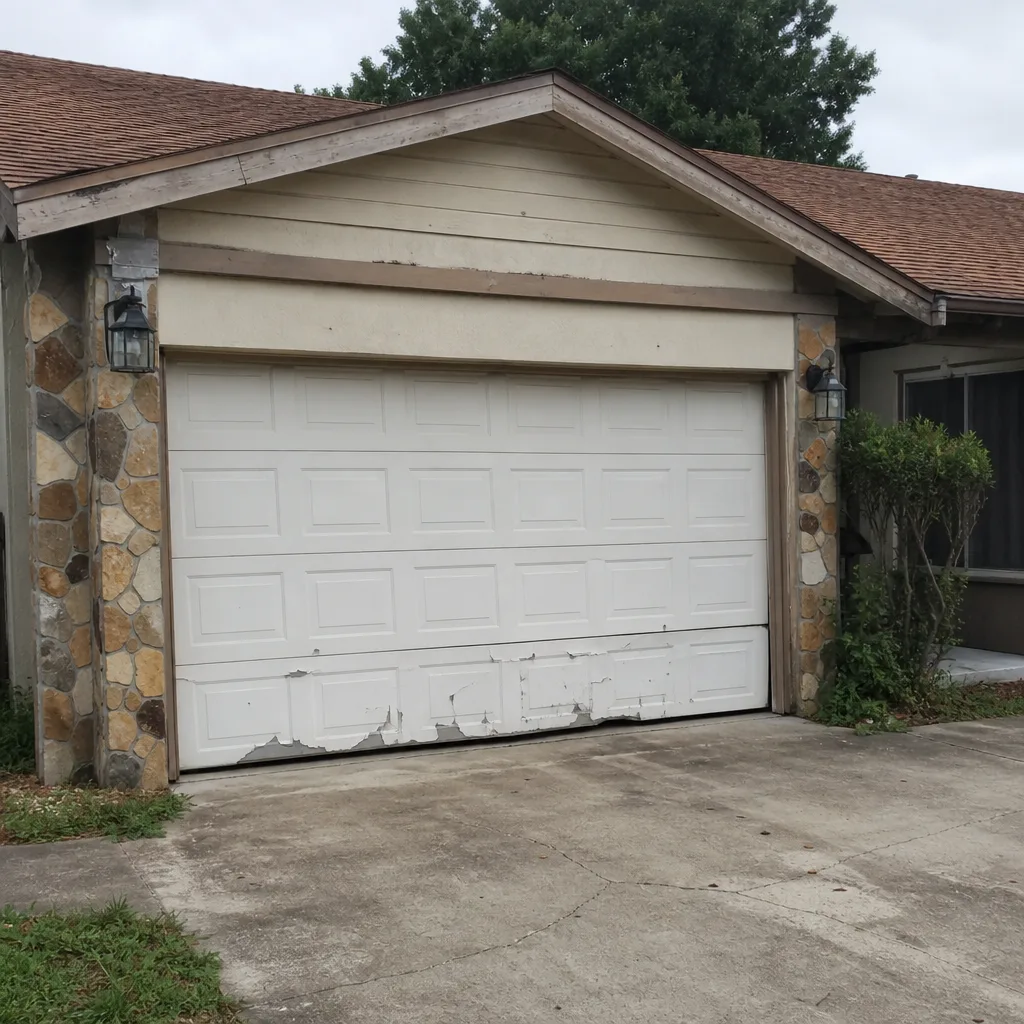 Before
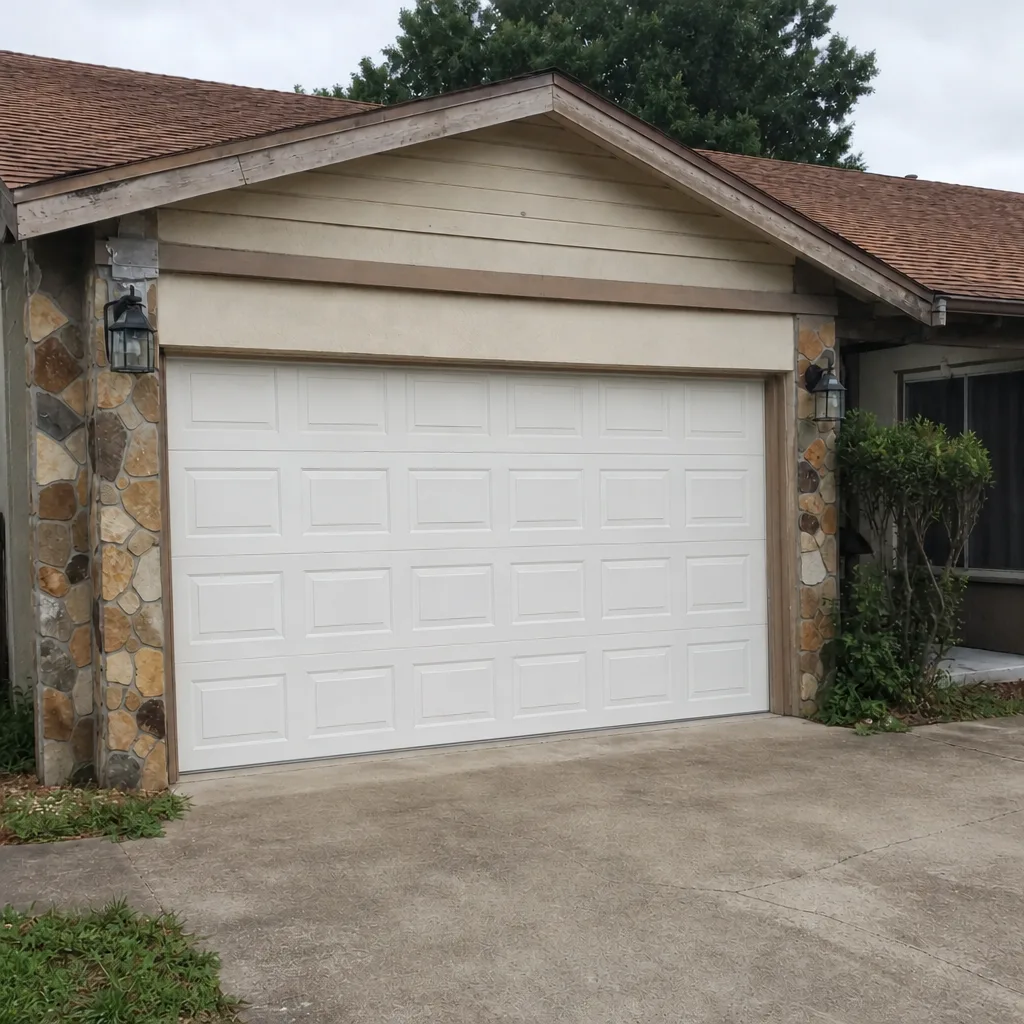 After
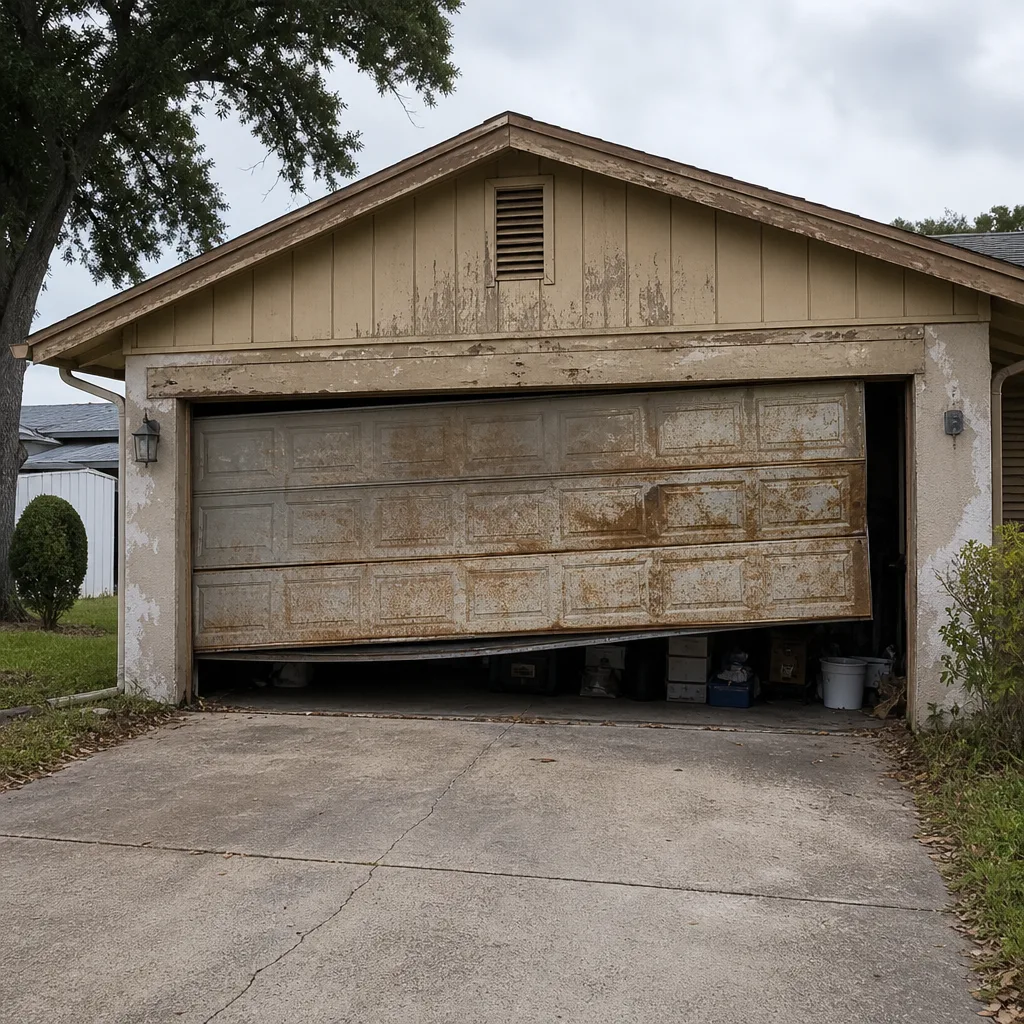 Before
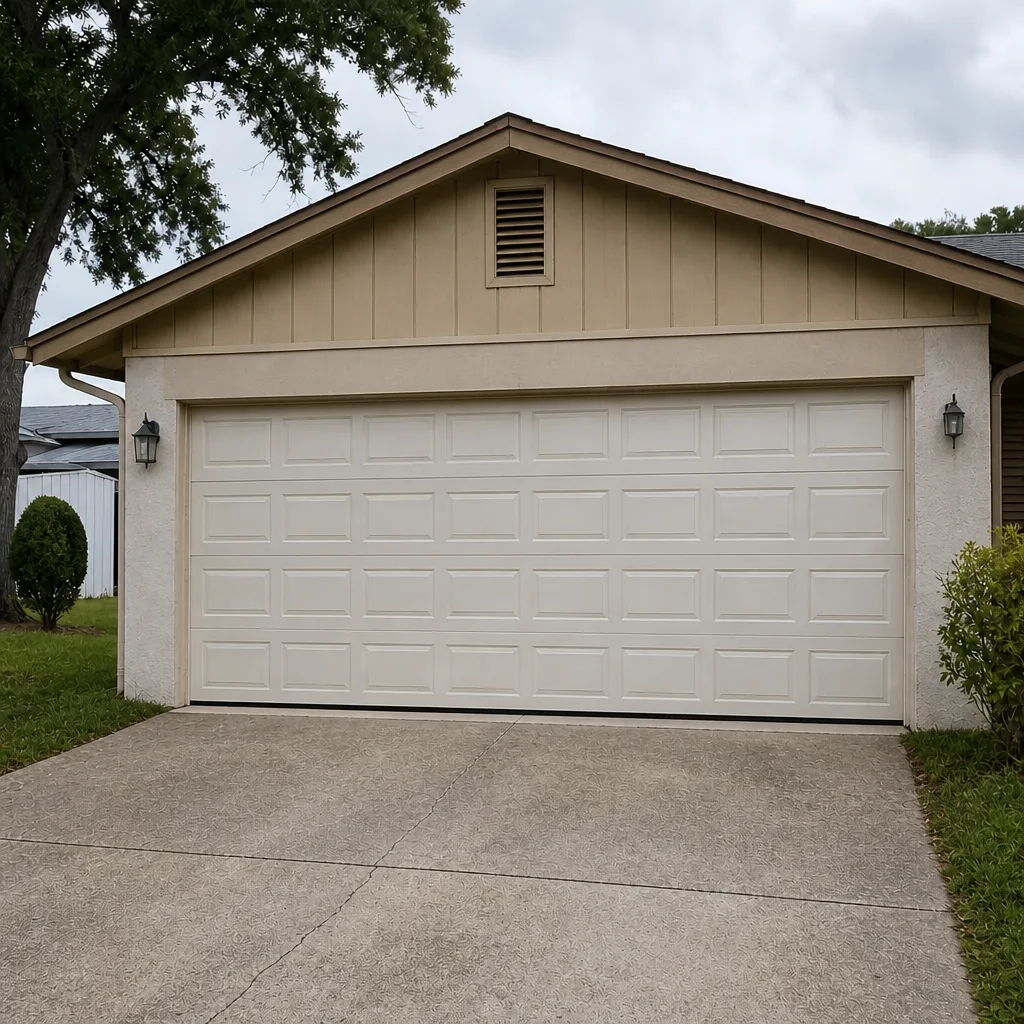 After
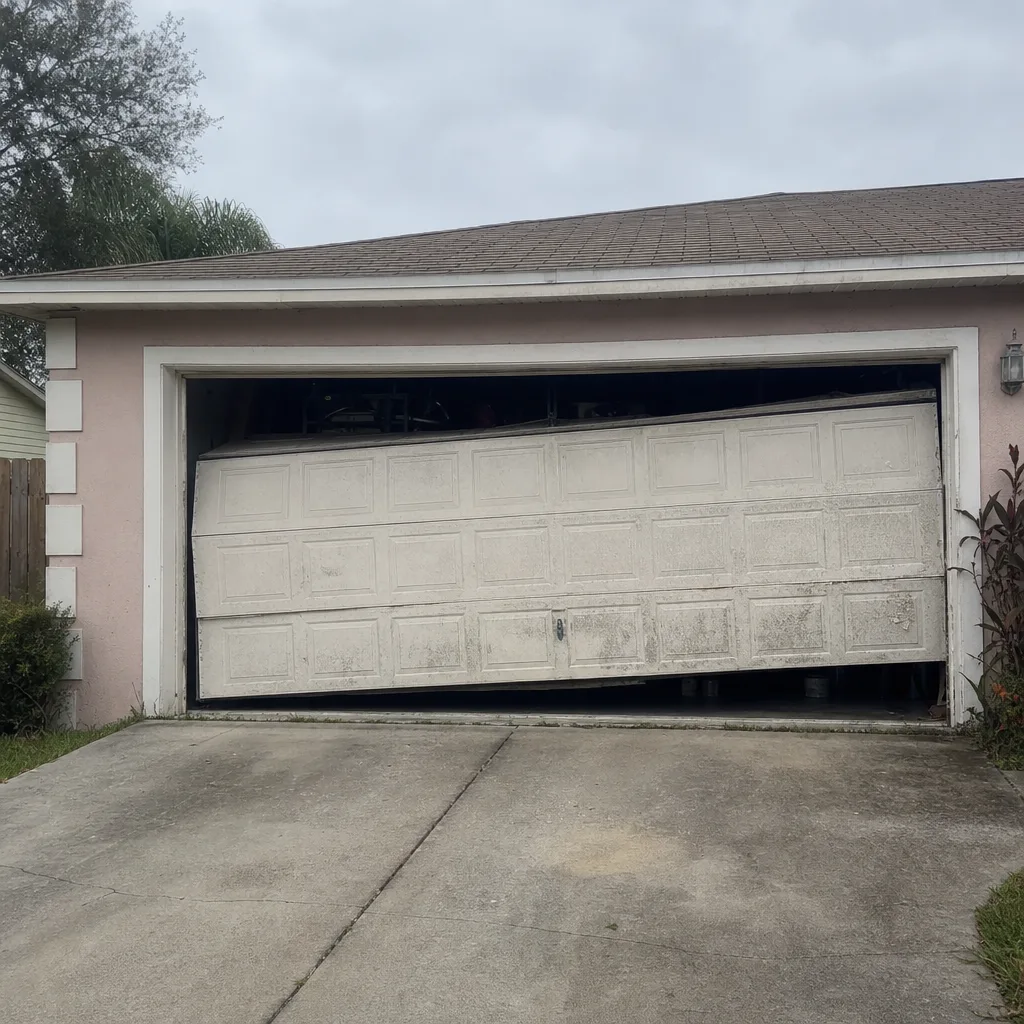 Before
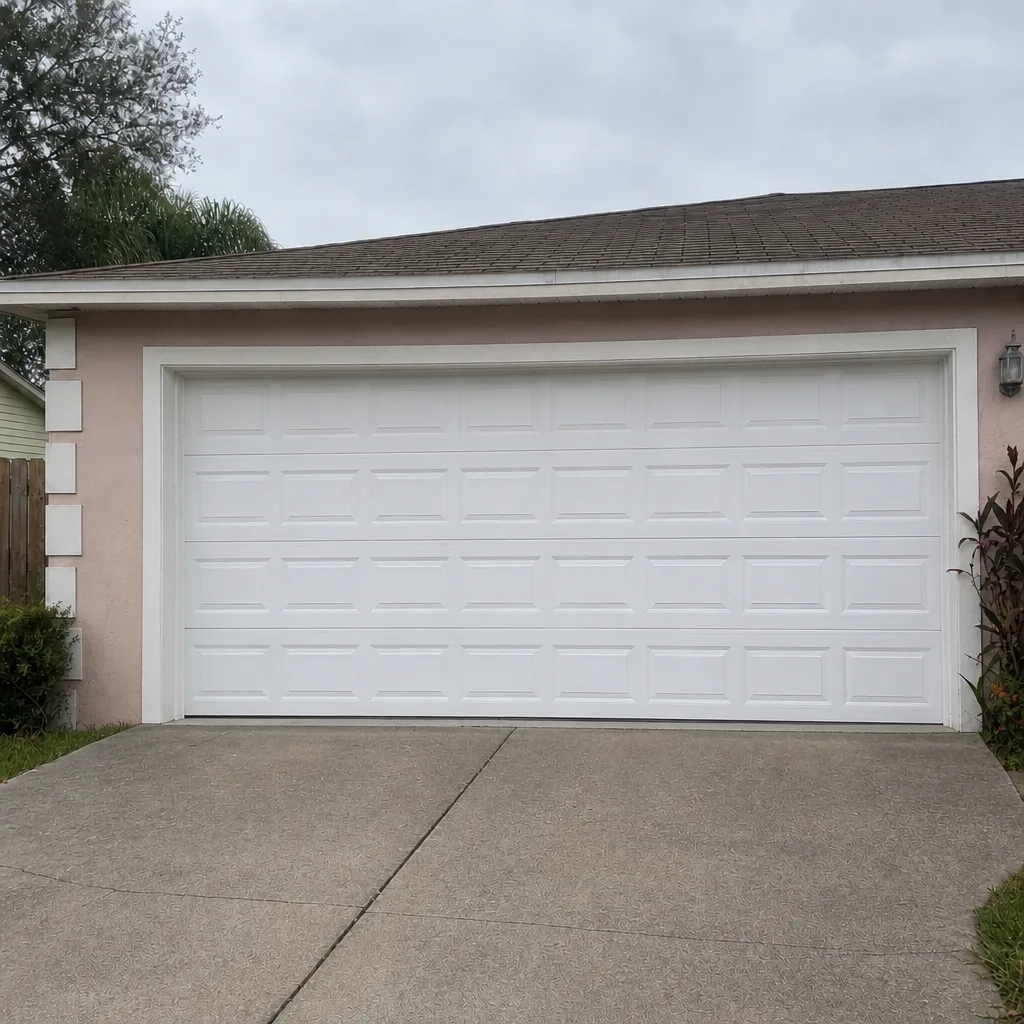 After
When to Call a Professional
Call a professional for anything involving springs, cables, and tension, and for any door that’s stuck, won’t close, or reverses on its own. Call urgently if a spring has broken, the door won’t open at all, or a car is trapped inside. Call before storm season if you find loose brackets or bent tracks, and before the dry season if the door feels heavier than it used to. If your opener is straining, the door is louder than it was, or a seal has failed, a free estimate gets you a straight answer and a written price, quoted and agreed before any work begins. Apopka Garage Door Repair Pros offers free estimates in Apopka – call (844) 558-0733. We answer 24/7. Fast dispatch from 7am to 7pm, Sunday through Friday. Our technicians have up to 8 years of experience, and we work on the brand you already own. One call covers the door and the opener. If it can be fixed, we’ll fix it. If it can’t, we’ll tell you honestly.
Frequently Asked Questions
Schedule maintenance twice a year: once in late May before hurricane season peaks, and once in late October before the dry season begins. Those two checkpoints line up with the actual stress cycles Apopka’s climate creates – wind and rain before storm season, then spring fatigue as the dry air arrives. Call (844) 558-0733 for a free estimate.
Springs break more in the dry season because the sharp drop in humidity after the rainy season causes steel components to contract, exposing fatigue cracks that summer moisture had been masking. The first cool, dry mornings of late October and November are when a lot of Apopka spring failures happen. If you hear a loud bang from the garage, don’t raise the door – call us at (844) 558-0733.
Single spring replacement in the Apopka market typically runs roughly $180 to $340, and a matched pair costs about twice that because both springs are usually replaced together. The written estimate sets the final price, and it’s quoted and agreed before any work starts. Call (844) 558-0733 for an exact quote – estimates are free.
Same-day service is available for urgent failures, and emergency garage door service is a core offering for situations where a broken door means a car is trapped or the home is unsecured. We answer 24/7, with fast dispatch from 7am to 7pm, Sunday through Friday. Call (844) 558-0733.
The price is set by the written estimate and quoted and agreed before any work starts. If we find something different once we’re on site, we tell you before doing any additional work so there are no surprises at the end. Call (844) 558-0733 for a free estimate.
The local professionals we connect you with are licensed and insured as their state requires, and they’re experienced with the major brands homeowners own here, including LiftMaster, Chamberlain, Genie, and Clopay. Our technicians have up to 8 years of experience. Call (844) 558-0733 to book an estimate.
No. Torsion springs are under extreme tension even after they break, and a wrong move can cause serious injury. Spring replacement is a job for a trained professional, and it’s one we handle directly. Call (844) 558-0733 if you suspect a spring problem.
The Bottom Line
Apopka’s garage doors live through two seasons that matter: the wet hurricane season and the dry stretch that follows. Each creates a different stress, and each deserves its own inspection window. Pre-hurricane checks focus on wind-load hardware, bottom seals, and emergency release function. The dry season is when springs fail, so a pre-dry-season check and a quick monthly balance test are the best defenses. Summer heat hardens seals and stresses opener circuit boards, so watch both. Above all, leave springs, cables, and tension to a trained professional. If you’re not sure how your door is holding up, we offer free estimates in Apopka and will give you a straight answer. Start with Apopka Garage Door Repair Pros – call (844) 558-0733. We answer 24/7. Fast dispatch from 7am to 7pm, Sunday through Friday.
Written by the team at Apopka Garage Door Repair Pros.