
Last updated November 21, 2026
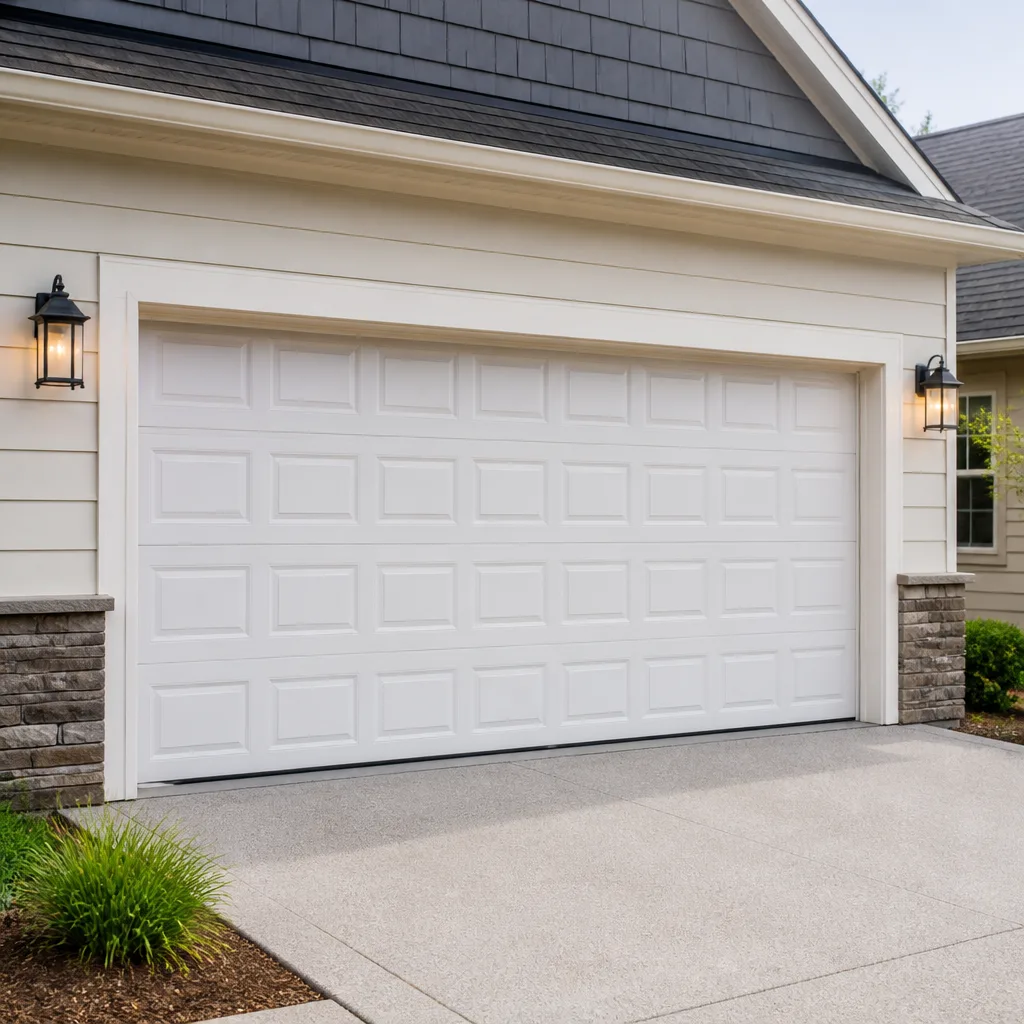 Raised-panel steel
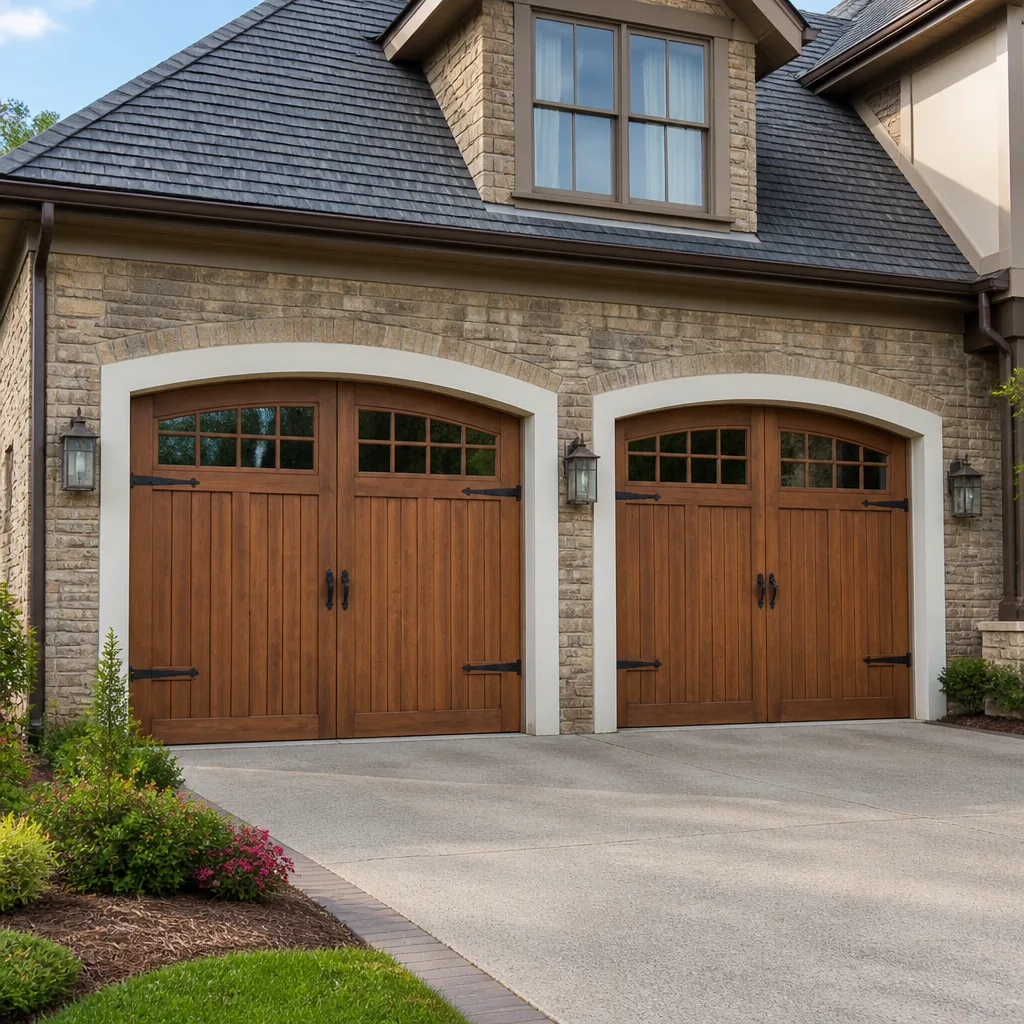 Carriage house
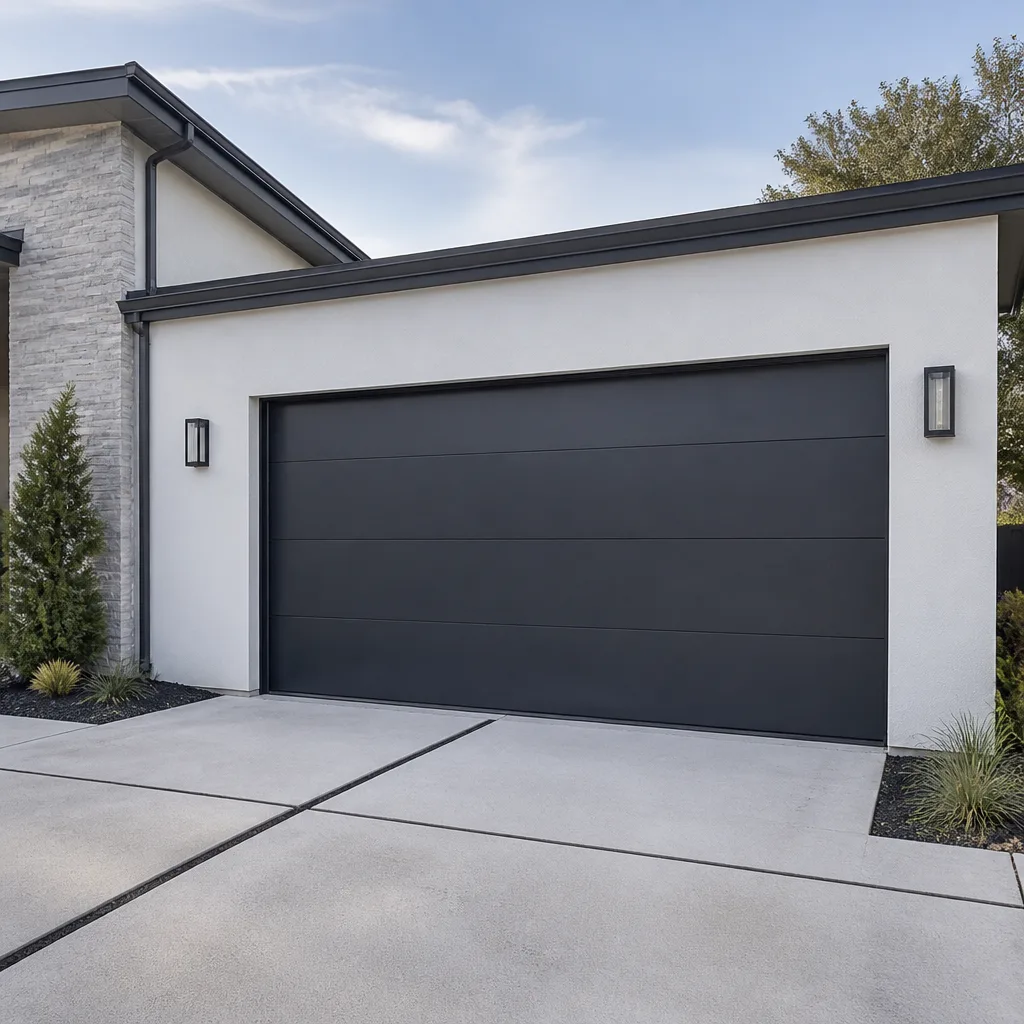 Modern flush
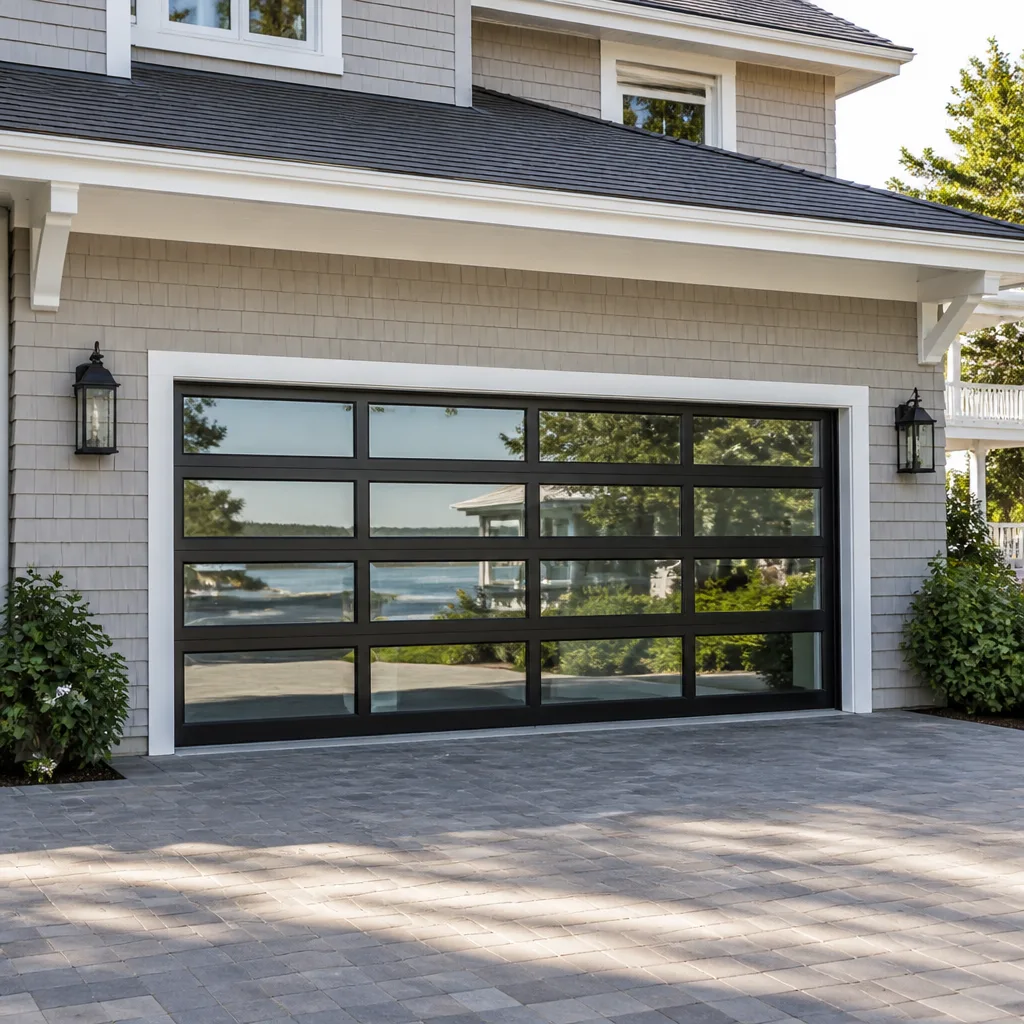 Full-view glass
 LiftMaster openers
 Chamberlain openers
Full 25-point door and opener safety check with every visit - springs, cables, rollers, tracks, and your LiftMaster or Chamberlain opener included
You get a price before we start. It does not change when the pro arrives.
Get your free estimateGarage Door Repair Maintenance Checklist for Apopka Homeowners
Most garage door maintenance advice is organized like an anatomy chart – springs here, rollers there, opener over there – which tells you nothing about what will actually strand your car in the driveway first. The order matters more than the list. In Apopka’s heat and humidity, some components degrade on a predictable schedule while others barely move, and a checklist that ranks tasks by failure frequency saves you far more money than one that ranks them by location on the door. This guide gives you that ranked checklist, the lubricants that survive Apopka summers, the visual cues that a part is weeks or months from failing rather than already gone, and a logging method that pays off at resale time.
Quick Answer
The single highest-value garage door maintenance task is lubricating the torsion spring and all moving metal contact points – it prevents the most common emergency repair calls and takes about four minutes. Build a ranked checklist around spring lubrication, roller and hinge inspection, balance testing, safety-reverse testing, and weather seal checks, then repeat the whole thing twice a year with a lighter pass after hurricane season. If your door is already making noise, running rough, or won’t close evenly, that’s a repair call, not a maintenance one.
Styles & brands we work with
- Raised-panel steel
- Carriage house
- Modern flush
- Full-view glass
- LiftMaster openers
- Chamberlain openers
Table of Contents
- The Ranked Checklist: Failure Prevention in Order of Impact
- Which Lubricants Survive Apopka Heat (And Which Make Things Worse)
- Visual Cues That Signal a Component Is 60-90 Days From Failure
- What Resets After Hurricane Season vs. What’s Annual
- How to Log Maintenance for Faster Diagnostics and Home Resale
- The Apopka Maintenance Calendar
- What You Should Never Check Yourself
- Opener-Specific Checks Most Checklists Skip
The Ranked Checklist: Failure Prevention in Order of Impact
Here’s the point most published checklists bury: a small number of tasks prevent the vast majority of emergency calls, and a long list of low-value tasks makes the whole thing feel like homework. We rank by failure frequency in central Florida, not by door anatomy. Start at the top and stop when your time runs out – you’ll still have covered the items that actually matter.
Tier 1 – Prevents the most emergency calls
- Lubricate the torsion spring. Four minutes, one can of lubricant. This single step heads off the dry, binding friction that accelerates spring fatigue. Most springs fail from metal-on-metal wear, not from age alone.
- Lubricate rollers, hinges, and the track’s pivot points. Same four-minute window, same can. Focus on the hinges between panels and the roller stems, not the flat face of the track.
- Test the safety reverse. Place a piece of wood flat on the ground under the closing door. The door should reverse on contact. If it doesn’t, that’s a stop-and-call situation, not a fix-it-later item.
- Test the balance. Pull the release handle with the door closed and lift it halfway by hand. A properly balanced door stays put when you let go. A door that slams down or drifts up means the spring tension is off – a spring problem, not a door problem.
Tier 2 – Prevents wear and mid-range repairs
- Inspect rollers for flat spots and wobble. Nylon rollers should turn freely and look round. Flat spots are the start of a rough ride and premature opener strain.
- Check the weather seal along the bottom. A cracked or flattened seal lets water and insects in and forces the door to close harder than it should.
- Look at the cable drums and cables. Look – don’t touch. Fraying or slack cables are a professional call.
- Clean the track with a damp cloth. No solvent, no grease. Track wear comes from grit, and grit comes from Apopka’s sandy soil blowing in through an open garage.
Tier 3 – Extends service life
- Tighten the hinge and bracket bolts that work loose. A quarterly pass with a socket wrench keeps the door from developing a rattle that mimics a failing opener.
- Check the photo-eye alignment. Wipe the lenses and confirm the indicator lights are steady, not blinking.
That’s the whole checklist, ranked. If you only do the first four items, you’ve covered roughly what a maintenance visit covers. When a repair does come up, that’s where a garage door repair call fits in, whether it’s a broken spring, a bent panel, or a door that’s come off its track.
Which Lubricants Survive Apopka Heat (And Which Make Things Worse)
Apopka’s heat and humidity are hard on lubricants in a specific way: light oils evaporate or run off within weeks, and thick greases turn into grit magnets that trap the fine sand that blows through central Florida. The right product sits in the middle – a lubricant that stays put under heat but doesn’t collect debris. Here’s the practical breakdown.
- Use silicone spray or a lithium-free garage door lubricant for springs and hinges. These are the workhorses. They penetrate the coil, stay slick through summer, and don’t collect grit.
- Use white lithium grease for the opener rail and the drive screw or chain. These contact points move more slowly and want a heavier film. A white lithium product holds up well through the heat that builds inside an Apopka garage.
- Avoid WD-40 as a long-term lubricant. It’s a useful solvent for freeing a stuck bolt, but it evaporates and attracts dust. A door sprayed with it will be noisier within a month.
- Avoid thick axle grease on the spring. It’s a magnet for the grit that turns a smooth coil into a grinding one.
- Avoid anything labeled “penetrating oil only.” Same problem – it’s designed to loosen, not to protect.
One can of the right lubricant covers the full checklist and lasts multiple applications. Keep a dedicated can in the garage rather than borrowing from a general-purpose spray. The technicians who handle spring service have up to 8 years of experience, and the lesson they repeat most often is that a well-lubricated spring outlasts a neglected one by a meaningful margin. It’s a close cousin to the reason a garage door opener repair call so often traces back to friction the homeowner could have stopped with a four-minute spray.
Visual Cues That Signal a Component Is 60-90 Days From Failure
The most useful skill in garage door maintenance is reading the early warning signs – the small changes that precede a failure by weeks or months rather than announcing it the morning your car is trapped. We look at these cues on every service call. Here’s what to watch for in Apopka, where heat and humidity accelerate most of them.
- A faint shine or rust sheen on the torsion spring. A healthy spring has a matte finish. A bright or rusty patch where the coils meet means the metal is working harder than it should – typically a 60-to-90-day warning.
- A slight mismatch in roller sound. If one side of the door is louder than the other, a roller is starting to flat-spot. It’ll fail within the season.
- A visible gap or sag along the bottom seal. The seal compresses and hardens in the heat. Once water can get under the door, the bottom panel starts to hold moisture – an Apopka-specific issue given summer afternoon storms.
- A door that hesitates for a half-second at the start of travel. That’s usually a hinge binding from dry metal, not a failing opener. Left alone, the opener starts straining and eventually quits.
- Fraying at the cable ends and loose cable clips. Any fraying is a professional inspection, not a “keep an eye on it.”
- A photo-eye that flickers or a safety light that dims. The lens is clouding or the sun is hitting at an angle that disrupts it. This is a replace-it-now item because a failing safety sensor is a real safety issue.
- A door that develops a rattle at high travel speed. Usually loose hinge bolts. Failing to tighten them erodes the panel seams.
- A weather seal that’s sticking to the ground when it opens. That means the seal or the door height is off, and the opener is fighting it.
None of these mean the door is going to fall tomorrow. They mean the component is on a countdown, and fixing it during the countdown is cheaper than fixing it afterward. A door in Apopka that shows any one of these deserves a look. One that shows three or more deserves a call.
What Resets After Hurricane Season vs. What’s Annual
Central Florida’s hurricane season runs from the start of June through the end of November, and the doors in Apopka live through wind, rain, and the pressure changes that come with a season of storms. Some maintenance tasks reset after each season. Others are on a fixed annual clock regardless of weather. Knowing which is which keeps you from over-inspecting what rarely moves and under-inspecting what does.
Tasks that reset after each hurricane season:
- The full checklist, top to bottom. Run the ranked list once right after the season ends, usually mid-December. Storm-season cycling, combined with the heat and the heavy afternoon rains, wears a door faster than the rest of the year.
- Weather seal inspection. The bottom seal takes the most storm-cycle abuse. Check it monthly through the season and replace it right after the last named storm pattern passes.
- Track alignment. Wind pressure and temperature swings can shift a track slightly. A post-season straightedge check catches it before it eats a roller.
- Photo-eye and safety sensor cleaning. Rain, dust, and storm debris cloud the lenses faster in humid months.
Tasks that stay annual regardless of season:
- Spring inspection. Springs aren’t on the hurricane calendar. They’re on a cycle count, so inspect them on the same schedule every year.
- Opener drive train service. Chain, belt, or screw inspection is an annual pass regardless of weather. The opener on a Clopay or an Amarr door runs the same cycle count all year.
- Cable and drum inspection. Look at these twice a year but don’t reset the calendar based on storms.
- Panel and hardware condition assessment. An annual look at the door surface catches anything a storm caused that you’d otherwise miss.
The two-track system is what separates a real Apopka maintenance routine from a generic checklist. A door that’s checked only once a year misses the storm-season resets. A door that’s checked only after storms misses spring fatigue. You need both.
How to Log Maintenance for Faster Diagnostics and Home Resale
A maintenance log does two things for an Apopka homeowner: it shortens a repair diagnosis, and it documents for a future buyer that the door has been cared for. Both are practical. A loose-leaf folder in the garage or a note on a phone works fine. What matters is the format and what you record.
Step 1: Set up a simple log sheet.
- Date of inspection.
- What you inspected (spring, rollers, hinges, seal, track, opener).
- What you found (a note – “right spring showing rust at coil,” “bottom seal gap at center”).
- What you did (lubed, tightened, replaced, noted for repair).
- Who did the work (self or a technician, with a business name).
Step 2: Photograph the spring and seal at each inspection.
A dated photo of the torsion spring and the bottom seal catches the slow changes you’d otherwise never notice. Two photos, once a season, on a phone is enough.
Step 3: Record every professional visit.
When a technician replaces a spring, adjusts a track, or installs a new opener, note the brand and the date. A door that has a documented service history sells better and reassures a buyer’s inspector. The brands matter – our team works on the brand you already own, whether it’s a budget builder-grade door or a premium Clopay or Amarr system, and a log that lists the brand shortens the next visit.
Step 4: Keep the repair receipts with the log.
If a spring is replaced, the receipt goes in the folder. Same for a new opener or a weather seal. When a future buyer asks what’s been done to the door, the log answers.
Step 5: Hand the log forward at resale.
An honest maintenance log is a small selling point, and a real one. “Door maintained every six months” in a listing is worth something when the record backs it up.
If a door is beyond saving and the log shows it, the next step is usually installation rather than another repair. That’s where garage door installation comes in, and the log gives the installer a full picture of what the door has been through.
The Apopka Maintenance Calendar
Here’s how the ranked checklist spreads across the year for an Apopka home. The calendar assumes a standard residential door. Homes with more use, or doors facing west into the afternoon sun, may want a heavier cadence.
January – Post-storm reset
- Full ranked checklist, top to bottom.
- Replace the weather seal if it compressed during the storm season.
- A visual spring check and a photo for the log.
March – Heat prep
- Lubricate every metal contact point before the first hot stretch.
- Check the opener rail for grit from winter dust.
- Test the safety reverse.
June – Storm season start
- Balance test and full hardware tightening pass.
- Photo-eye cleaning and clarity check.
- Confirm the door closes flush against the seal.
August – Mid-season check
- Quick lubrication pass on the spring and hinges.
- Roller inspection for flat spots.
- Look at the track for any shift from storm pressure.
October – Pre-season-end
- Full hardware and cable inspection.
- Opener drive-train service.
- Clear the log for the January reset.
December – Spring focus
- A close visual on the torsion spring and cables.
- Any early warning cue gets a call now, not after the holidays.
This calendar is what we recommend for a door in Apopka, and it’s a plan a homeowner can adjust. A door that’s only a few years old may not need every item on the January reset. A door approaching its service-life window benefits from a heavier pass.
What You Should Never Check Yourself
Some parts of a garage door are genuinely dangerous, and we’d rather you know which ones than learn the hard way. The torsion spring, the cables, the drums, and the bottom brackets all hold stored tension. A torsion spring under load can cause serious injury if it releases unexpectedly, and cables that are still under tension are just as dangerous. This is a professional job for good reason – it’s not a matter of skill, it’s a matter of the stored energy involved.
The safe division of labor looks like this:
- You can safely: lubricate, clean the track, tighten hinge bolts, test the safety reverse, test the balance by hand with the door released and fully closed, and check the photo-eye alignment.
- A trained technician should handle: spring replacement, cable replacement, drum work, bottom bracket adjustment, track realignment, and any repair that requires releasing stored tension.
- Never: adjust or remove a torsion spring yourself, cut a cable, or try to “test” a spring by hand-turning the winding cone. These are exactly the operations that lead to injury, and no published guide can make them safe.
We handle springs as a dedicated service rather than an outsourced add-on, because it’s the most safety-critical repair on the door and it deserves a team that does it regularly. Wayne Dalton and Craftsman doors have their own spring and hardware details, and a specialist knows the differences. That’s the practical reason to leave it to a professional: safety first, and accuracy second.
Opener-Specific Checks Most Checklists Skip
A garage door is a mechanical system and its opener is an electronic one, and most maintenance checklists treat the opener as if it were invisible. In our experience, that misses half the door’s service life. Here’s what to check on the opener side.
- Chain, belt, or screw tension. A chain that’s sagging more than a half inch has lost tension, and that means strain on the drive gear. A belt that’s walking off its sprocket is a repair, not an adjustment.
- Travel limits. The door should open fully and close flush against the seal. If the opener is opening it short of full travel, the limits need adjusting – a common issue on doors that have settled a little in Apopka’s heat.
- Force settings. The opener’s force setting should be calibrated to the door, not cranked up to compensate for a binding hinge. A high force setting is a symptom, not a fix.
- Photo-eye alignment. The two lenses should line up with a steady (not flickering) indicator light on each. A misalignment is the most frequent cause of a door that won’t close.
- Remote and keypad batteries. Fresh batteries once a year are cheap insurance. A dead remote is the most common “my door won’t open” call that isn’t a repair at all.
- The manual release. The emergency release cord should move freely and re-engage cleanly. A release that’s stuck is a real problem in an emergency.
The practical advantage of a single-source team is that we diagnose both sides of the system. When an opener is straining, we can confirm whether the cause is the opener, the door’s balance, or a failing spring – and fix the actual problem rather than treating a symptom. Our team works across LiftMaster, Chamberlain, Genie, and Craftsman openers, plus Clopay, Amarr, Wayne Dalton, and Raynor doors, so that diagnosis doesn’t hit a brand wall.
Common Mistakes to Avoid
- Treating the checklist as a rare event. A checklist run once every few years catches nothing in time. Twice a year is the practical minimum for an Apopka door.
- Spraying WD-40 on the spring and calling it maintenance. It’ll be quieter for a week, then noisier than before. The right lubricant matters more than the frequency.
- Ignoring the noise. A noise that develops gradually is usually a dry hinge or a flat-spotting roller. A noise that appears suddenly is a symptom of a load problem. Both deserve attention.
- Forcing a door that won’t close. Holding down the wall button to power through a stuck door is a common mistake. The opener isn’t designed to overcome a jammed track, and it’ll strip the gear.
- Skipping the post-storm reset. Apopka homeowners who run the checklist only in the spring miss the wear that the storm season added. Run it in December too.
- Over-tightening the hinge bolts. Tighten to snug, not to crush. Over-tightening deforms the hinge and creates the wobble it was supposed to fix.
- Doing spring work yourself. The most dangerous mistake on this list. Springs and cables hold stored tension – leave them to a trained technician.
- Not logging anything. A door with no service history tells a technician nothing. Two minutes of logging once a season saves diagnostic time and helps a future buyer.
See the difference
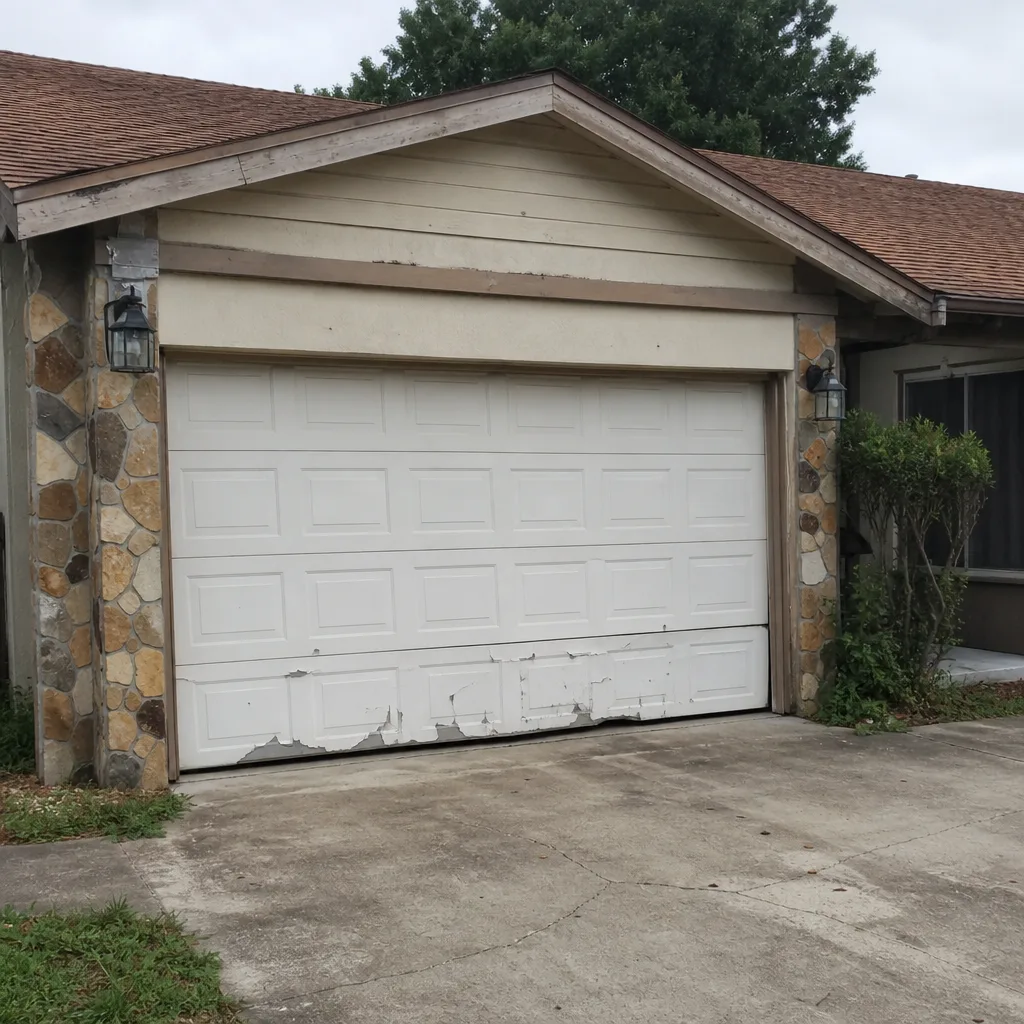 Before
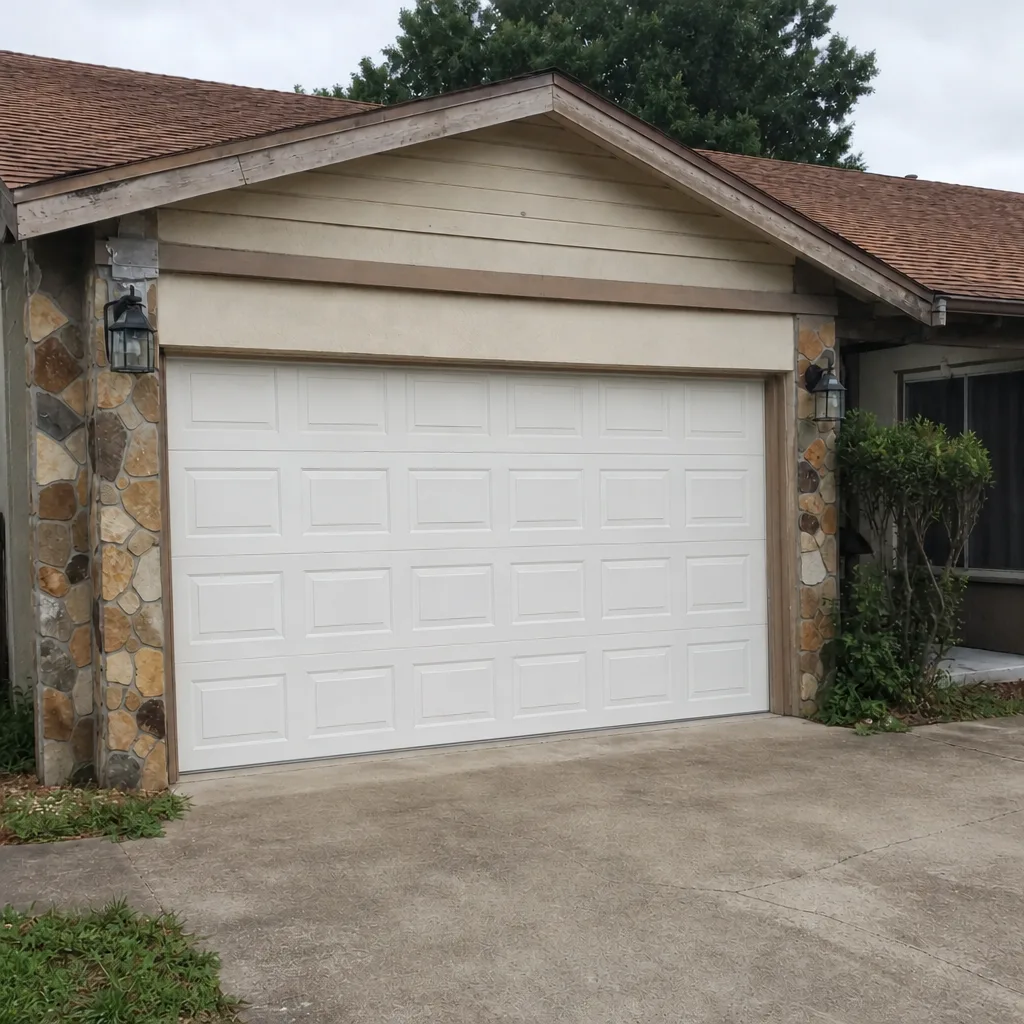 After
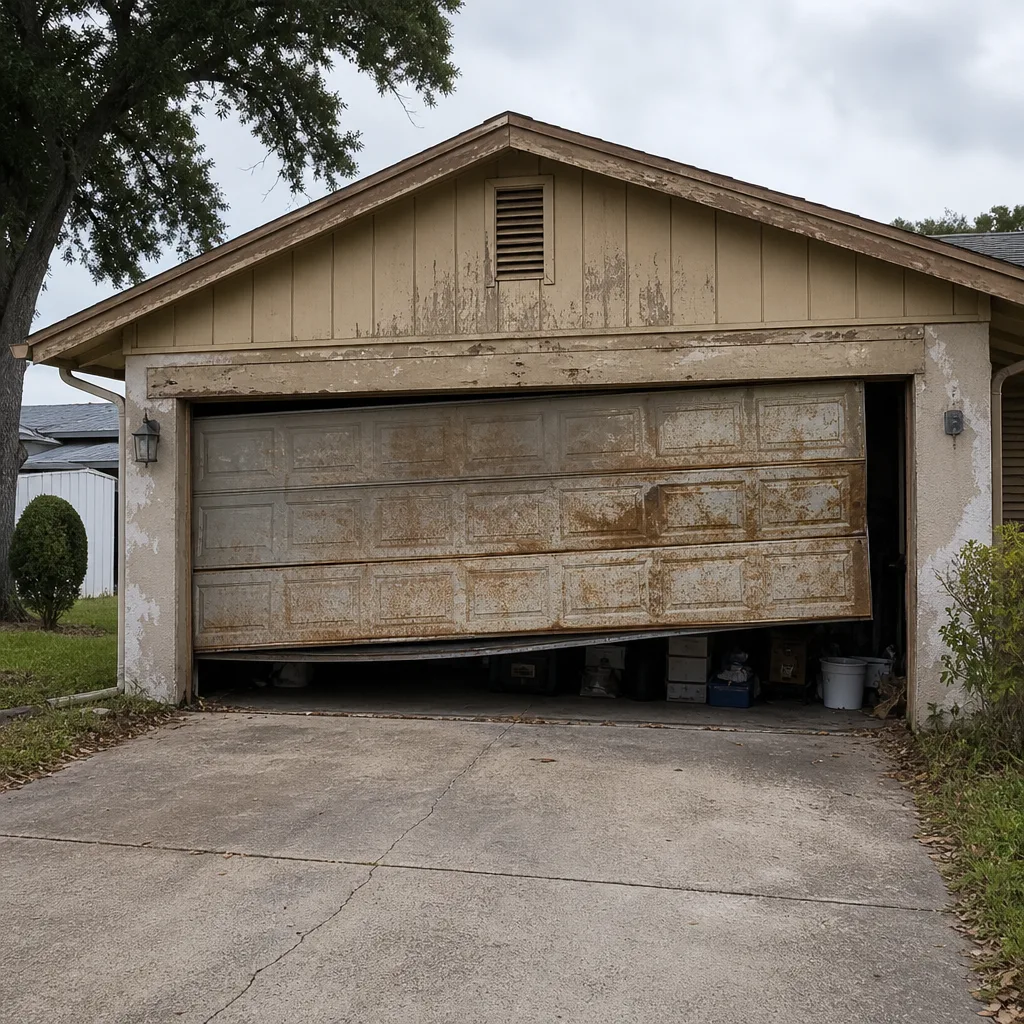 Before
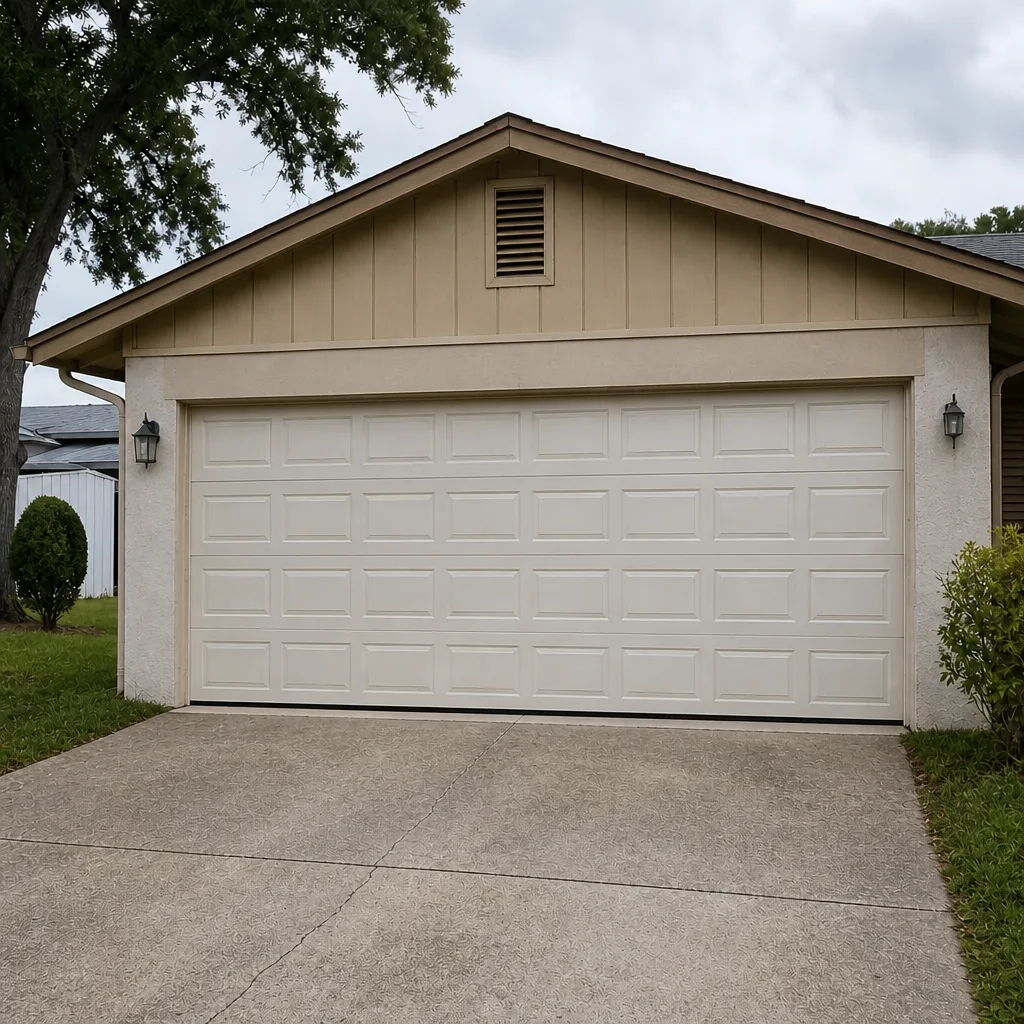 After
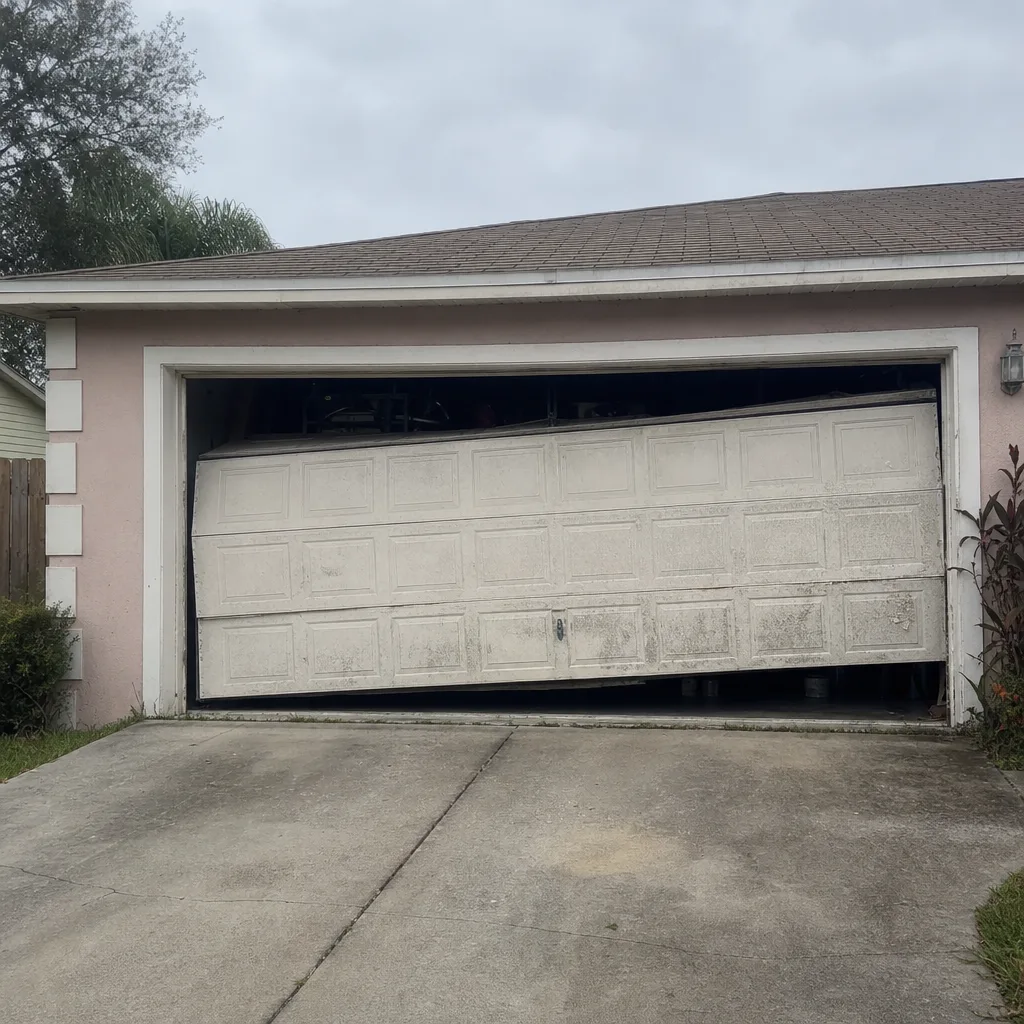 Before
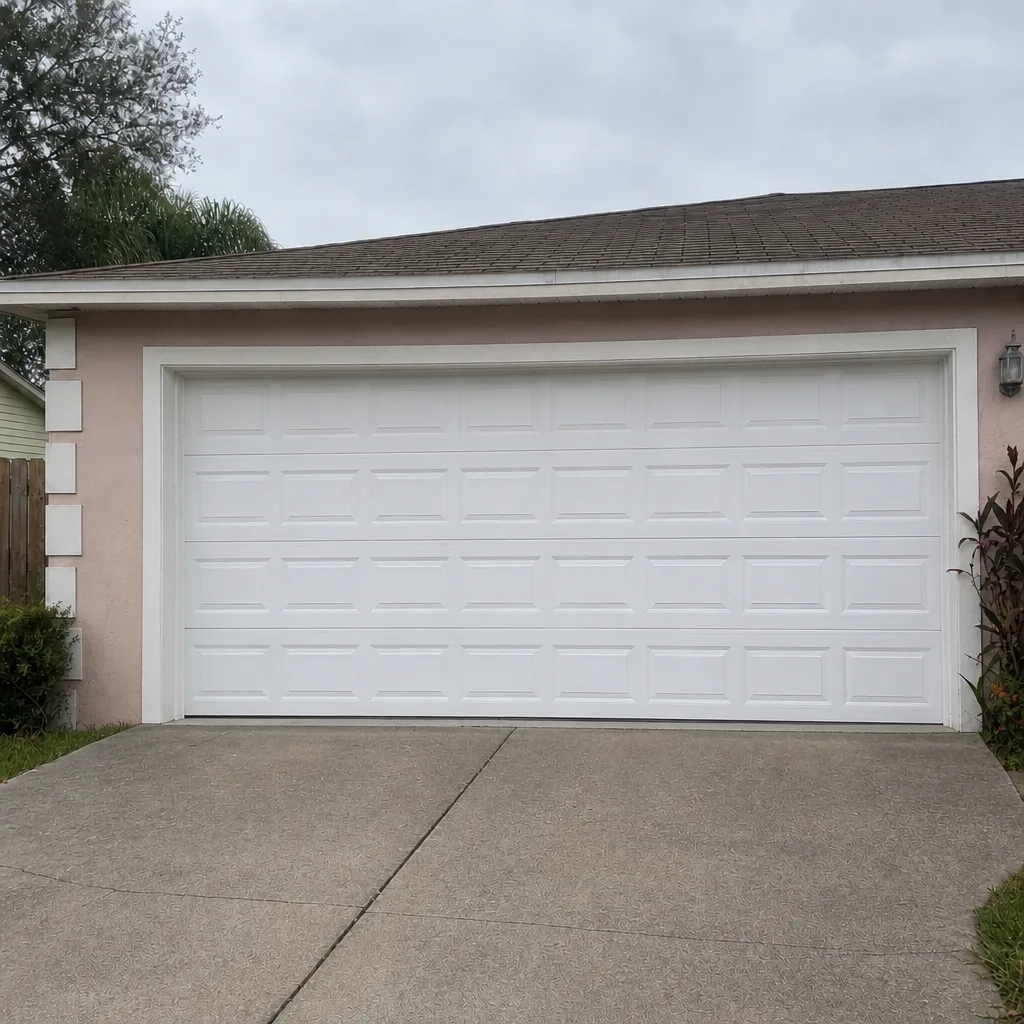 After
When to Call a Professional
Some situations go beyond a homeowner’s checklist. Call a professional when the door won’t open or close evenly on one side, when you hear a loud snap from the spring area, when a cable is visibly frayed or slack, when the safety reverse fails, or when the door is visibly off its track. Call us if your car is trapped or your home is unsecured – emergency service is a real offering here, not an upsell, and a failed door that leaves a car stuck or a house open is exactly what it’s for. You can also call if the noise, wobble, or rough operation has simply gotten to the point where a homeowner inspection won’t find the cause. Apopka Garage Door Repair Pros offers free estimates in Apopka – call (844) 558-0733. We answer 24/7, with fast dispatch from 7am to 7pm, Sunday through Friday.
Where a repair turns out to be a replacement, we also handle the install. You don’t have to find a second company when the door is beyond saving.
Frequently Asked Questions
Twice a year is the practical minimum – once in January after storm season and once in June before it starts. Apopka’s heat and humidity wear moving parts faster than a mild climate would, so the twice-a-year cadence keeps ahead of spring fatigue, seal compression, and roller wear. Call (844) 558-0733 if you’d rather have a technician walk it with you – estimates are free.
Lubricating the torsion spring is the highest-value task because spring failure is the most common emergency call and lubrication is the cheapest way to prevent it. It takes about four minutes and one can of the right lubricant. Pair it with a visual spring inspection each time. Call (844) 558-0733 for a spring inspection if you’re not sure what you’re looking at.
Yes – lubricating the spring is safe and a homeowner can do it with a silicone or lithium-free garage door lubricant. Adjusting or replacing the spring is not a homeowner job; it holds stored tension and requires a trained technician. If the spring is rusted, shiny, or visibly deformed, stop and call a professional rather than spraying it. Call (844) 558-0733 for an inspection.
No. The written estimate sets the price, and the written estimate is what you agree to before any work starts. If a technician finds something the initial call didn’t flag – a cable that needs attention, a hinge that’s failing – that’s a separate quote, not a surprise addition to the original. Call (844) 558-0733 for a free estimate.
Yes – the local professional we connect you with is licensed and insured as Florida requires. Our team has up to 8 years of experience on spring repair, opener service, and full door installation across Clopay, Amarr, Wayne Dalton, Craftsman, LiftMaster, Chamberlain, Genie, and Raynor equipment. Call (844) 558-0733 for a free estimate.
Yes for most repair calls, and same-day is common when the call comes in early. Emergency service is available for doors that leave a car trapped or a home unsecured. We answer 24/7; fast dispatch runs from 7am to 7pm, Sunday through Friday. Call (844) 558-0733. A call outside dispatch hours is booked into the next opening.
A loud snap followed by a door that won’t lift usually means a broken torsion spring. Stop trying to open it – the door is now very heavy and the opener won’t lift it. Call a professional; spring replacement is a trained-technician job, not a DIY one. Call (844) 558-0733 for emergency service.
Yes, and it pays off twice – a technician diagnoses faster with a service history, and a documented maintenance log helps at resale by showing the door has been cared for. Keep dates, findings, and technician visits. Two minutes per inspection is enough. Call (844) 558-0733 if you want a baseline inspection to start the log.
The Bottom Line
A garage door maintenance checklist works when it’s ranked by failure frequency, timed to Apopka’s storm season, and logged so the next technician has a history to work from. Start with spring lubrication, safety-reverse testing, and balance testing – those three steps prevent the most emergency calls and cost almost nothing. Add the storm-season reset and the annual calendar, use the right lubricants, and watch the early-warning cues rather than waiting for a failure. When a repair does come, whether it’s a spring, a cable, or a door beyond saving, we handle the whole system – the door and the opener. Apopka Garage Door Repair Pros is one call for repair, spring service, opener work, and installation. Call (844) 558-0733 for a free estimate. We answer 24/7, with fast dispatch from 7am to 7pm, Sunday through Friday.
Written by the team at Apopka Garage Door Repair Pros.