
Top Signs You Need Garage Door Service – Don’t Ignore These
A garage door that’s slightly slow to open isn’t a nuisance. It’s often a spring that’s lost tension, and when a torsion spring fails under load, it releases enough stored energy to snap a cable, bend a track, and crack a panel in the same instant. Most homeowners wait for the bang. You don’t have to.
The signs below are ordered by what happens next, not by how loud they are. Read them with that in mind, because a $200 fix this month is usually a $600 repair two months from now. If you’d rather not climb a ladder to check, call (844) 558-0733.
Key Takeaways
- Slow opening and a door that won’t stay halfway up are spring symptoms, not opener symptoms.
- Worn parts fail in a chain: spring, then cable, then drum, then track. Catching the first link keeps the rest intact.
- A 30-second balance test tells you more about spring wear than any noise the door makes.
- In Apopka’s humidity, rust on spring coils and a sagging bottom seal are early warnings worth acting on.
Why Warning Signs Matter More Than the Breakdown Itself
Here’s the part most checklists skip. Garage door components don’t fail independently. They fail in a sequence, and each step in that sequence costs more than the one before it.
A torsion spring loses tension gradually. As it weakens, the opener works harder to lift the same door. That extra load wears the opener’s gear and drive. Meanwhile the cable on the slack side starts to rub and fray. When the spring finally lets go, the door drops, the frayed cable snaps, the cable drum spins free, and the door’s weight lands on a track that was never built to catch it.
Where a worn spring is a straightforward replacement, a snapped cable plus a bent track plus a cracked panel is a different job entirely. In our experience across Apopka, the homeowners who call at the slow-opening stage spend far less than the ones who call after the bang. The chain runs like this:
- Spring loses tension – door feels heavy or slow.
- Opener overworks – gears wear, motor strains, travel settings drift.
- Cable frays – rubbing against a slack drum.
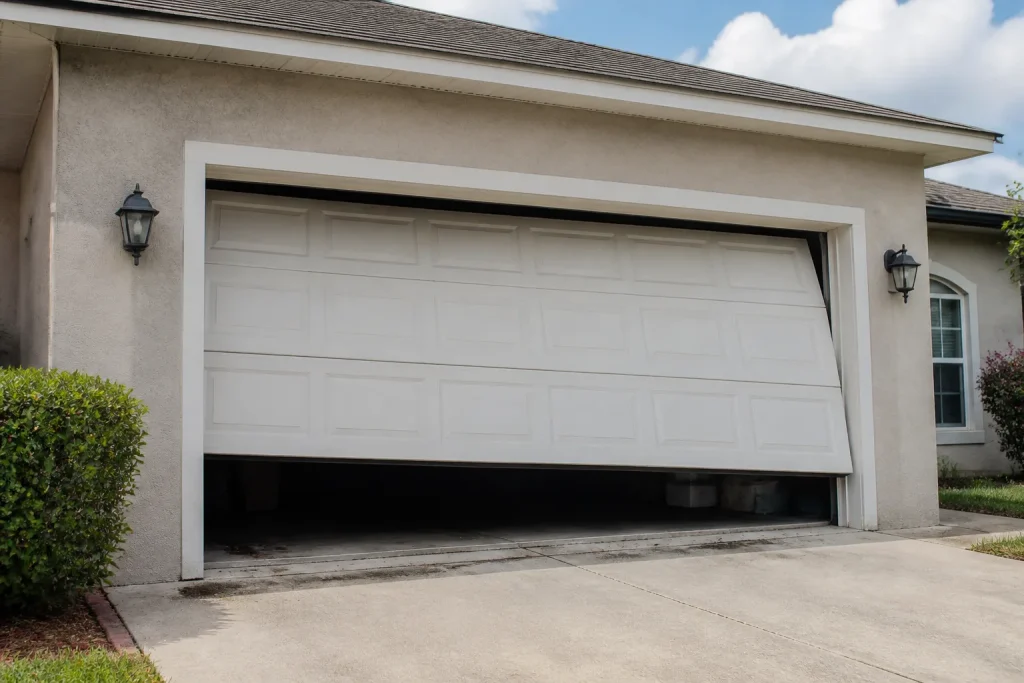
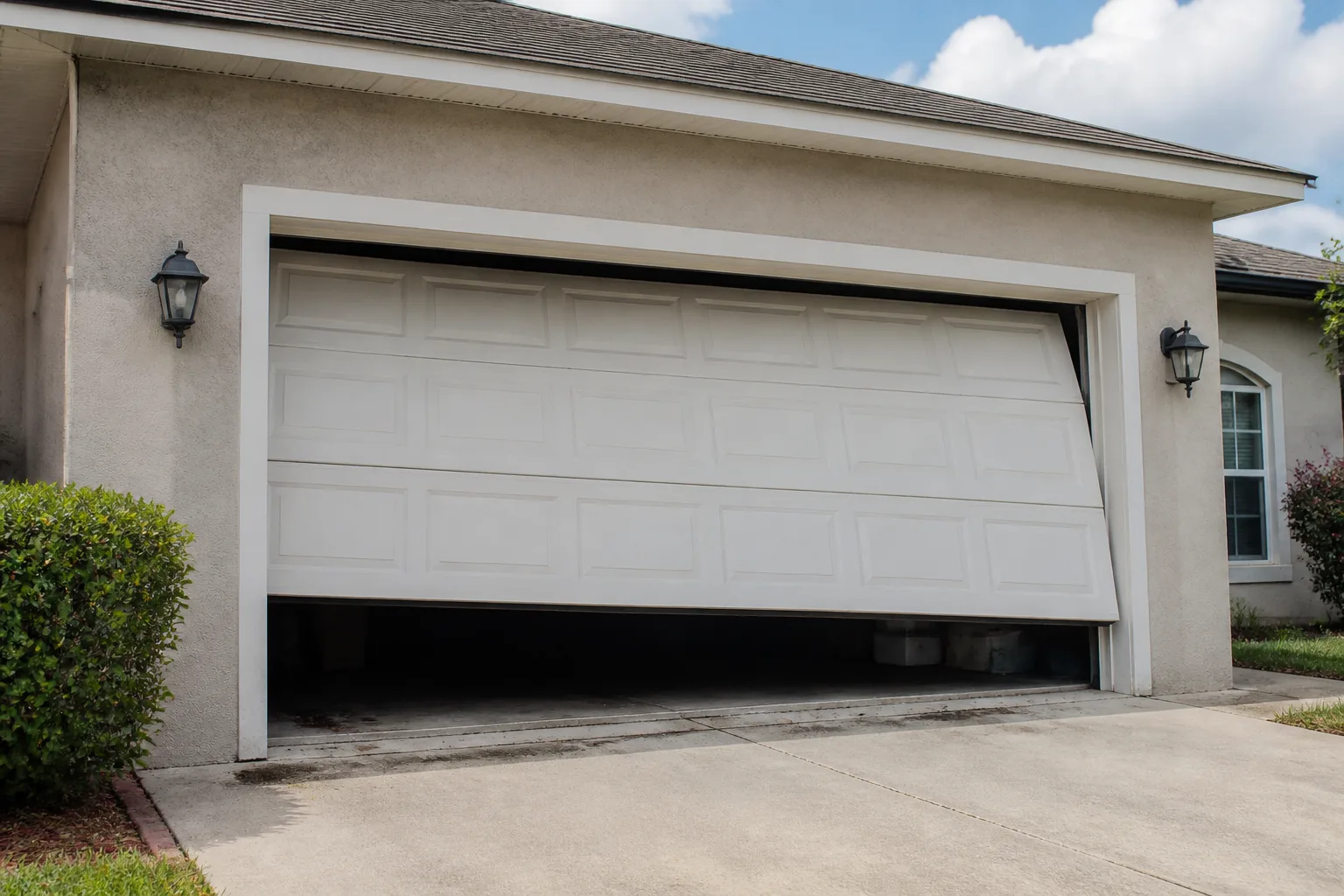
- Cable snaps or drum spins – door drops or jams at an angle.
- Track bends, panel cracks – now it’s structural, not mechanical.
Every link in that chain has an early warning. That’s what the rest of this post is about.
Sign 1: The Door Is Slow, Heavy, or Won’t Stay Halfway Up
This is the single most reliable spring warning, and it’s the one homeowners most often blame on the opener. If your door opens slower than it used to, or you can lift it a few feet by hand and it sinks back down instead of holding, the springs have lost tension. They’re doing less of the lifting, so the opener is doing more.
Springs are the most dangerous part of any garage door repair. A torsion spring under load stores enough energy to cause serious injury, which is why we handle spring work directly rather than handing it off, and why we’d rather you didn’t test one by hand beyond that simple halfway check. Here’s how to do the balance test safely, standing on the ground:
- Close the door and disconnect the opener using the release cord (usually a red handle).
- Lift the door by hand to about waist height.
- Let go. A healthy door stays put. A door that drifts down has weak springs.
- Reconnect the opener before using the door normally.
That test takes 30 seconds and needs no tools. If the door sinks, stop running it. Call us and we’ll take a look. Our technicians have up to 8 years of experience with spring systems, and the price is quoted and agreed before any work starts.
Sign 2: Rust, Sagging Seals, and Humidity Problems Specific to Apopka
Central Florida’s humidity does things to a garage door that drier climates don’t. Three local warning signs come up again and again in Apopka, and each one points to a different failure coming down the road.
- Rust streaking on the spring coils. Pitting on a torsion spring is a stress point. A rusted coil is more likely to snap than a clean one, so visible rust means it’s time for a professional inspection, not a can of spray paint.
- Gaps under the bottom seal. A worn or flattened seal lets humid air and, frankly, palmetto bugs straight into the garage. If you can see daylight under the door, the seal needs replacing, and the door’s down-limit may need adjusting too.
- Swollen wood frames. Older wood door frames absorb moisture and swell, which throws the door out of alignment. The door starts to bind, the opener strains, and the whole chain from the section above gets moving.
None of these are emergencies on their own. All of them are cheap to fix at the warning stage and expensive once they cascade. If you’re noticing any of them in your Apopka home, that’s the moment to get a free estimate rather than wait for a failure.
Sign 3: The Opener Is Struggling (And It Might Not Be the Opener)
This is the most common misdiagnosis we see. A door that reverses randomly, stops halfway, or grinds loudly while the motor runs fine is usually a mechanical problem, not an opener problem. Homeowners replace a perfectly good opener when the real issue is a binding track, a worn roller, or a spring that’s quit doing its share.
Before you price a new opener, check these mechanical symptoms:
- Binding track: Look for dents or bends in the rails. A door that catches partway along its travel is binding, and the opener is just reporting the problem.
- Worn rollers: Wobble in the rollers as the door moves, or rollers that look flat rather than round.
- Loose hardware: Hinges and brackets that have worked loose let panels shift and rattle.
- Misaligned safety sensors: If the door reverses on the way down with nothing in the way, the sensors are out of line or dirty. That one is a two-minute fix, not a replacement.
The reverse can happen too: a genuine opener fault on a LiftMaster, Chamberlain, or Genie unit behaves differently from a mechanical bind, and knowing which is which saves you money. That’s why we diagnose the door and the opener together. One call covers the door and the opener, so nobody points a finger at the other guy.
Sign 4: The Sounds, Decoded
Your door makes a noise every time it moves, so “noisy” isn’t useful on its own. What matters is the specific sound profile, because each one points to a different part. Once you know them, you can tell what’s wearing out from across the garage.
- Rumbling or a low grinding that gets louder over time: worn steel rollers. Smooth nylon rollers quiet down, steel ones get rough as the bearings wear.
- A rattle or clatter at the start and stop: loose hardware. Hinges, brackets, and bolts working loose let the door shake.
- A high-pitched squeal or squeak during travel: friction from dry or wearing parts, often the rollers or the torsion tube.
- A rhythmic tick or snap: a fraying cable catching on a drum or pulley. This one deserves attention soon, because a snapping cable is dangerous.
- A grinding from the opener head itself, with the door moving freely: a stripped gear in the opener. That’s a genuine opener repair, not a door problem.
If you’re in Apopka and a decibel comparison is the most use your garage door has had all week, you’re not alone. It’s a boring hobby. Fixing the noise early is a cheaper one.
Sign 5: The Door Has Stopped Going All the Way Down – or At All
A door stuck open leaves the garage unsecured and a car trapped inside it. That’s an urgent situation, not a weekend chore, and it’s where emergency garage door service earns its place as a real service rather than an upsell. If a spring has snapped or a door is jammed at an angle, don’t force it and don’t run the opener against it. Forcing a door with a broken spring can turn a single-part repair into a cable and track job.
For a truly stuck door, our emergency service is built for exactly this. We answer 24/7, with fast dispatch from 7am to 7pm, Sunday through Friday, closed Saturday. A call outside dispatch hours is booked into the next opening. The price is still quoted and agreed before any work starts, emergency or not. If it can be fixed, we’ll fix it. If it can’t, we’ll tell you honestly.
When It’s Time to Call a Pro
Some checks are yours to make: the balance test, a look at the seal, listening for a new sound. The rest of this work lives above your head, under a spring that stores serious energy, so it isn’t a DIY job. Call a professional if you notice any of the following:
- The door won’t stay halfway up during the balance test.
- You can see rust or a gap on the spring coils.
- A cable looks frayed, or the drum is spinning free.
- The door is binding, dropping, or jammed at an angle.
- The opener is grinding, or it reverses with nothing in the way after a sensor check.
If you’re not sure which it is, that’s fine too. One visit from a trained technician sorts out the door and the opener together, and you get a written estimate before anyone touches a thing.
The Bottom Line
Most garage door failures announce themselves well in advance. The slow opening, the rust on the coil, the new squeal, the palmetto-bug gap under the seal each one tells you something is wearing out before it breaks. Catching the first link keeps the chain from running. Whether your home has a builder-grade door or a premium Clopay or Amarr system, the warning signs are the same, and the earlier you act, the cheaper it stays.
If you’re in Apopka and need help, Apopka Garage Door Repair Pros offers free estimates. We work on the brand you already own and handle the door and the opener in the same visit. Call (844) 558-0733.
Frequently Asked Questions
A worn spring means the door feels heavy and won’t stay halfway up during the balance test. A broken spring means the door won’t lift at all, and you’ll often see a visible gap in the spring coil. Either way, call (844) 558-0733 and let a technician confirm it before you run the opener again.
Probably not. If the motor runs and the door strains or binds, the problem is usually mechanical: a weak spring, a binding track, or a worn roller. Our team diagnoses the door and the opener together, so you’re not paying for an opener when the door needs the repair. Call (844) 558-0733 for a free estimate.
Yes. Humidity speeds up corrosion, and rust pitting on a torsion spring creates a weak point where it can snap under load. Visible rust is a reason to get the springs inspected rather than ignored. Call us and we’ll look at the door and the opener on the same visit.
Usually, yes. A stuck or jammed door is exactly what our emergency service is for. We answer 24/7, with fast dispatch from 7am to 7pm, Sunday through Friday, and same-day service is available for urgent failures. Call (844) 558-0733 and we’ll get it secured and repaired.
Written by the team at Apopka Garage Door Repair Pros.
Need Garage Door Help?
Call Apopka Garage Door Repair Pros - the local pro we connect you with is licensed and insured, here with fast help in Apopka.
(844) 558-0733